
Agreeing a price for an Ajman property and completing its registration are different stages of the purchase. A buyer can have a signed commercial agreement, a payment receipt and a set of keys without yet possessing the expected registration output. The practical objective is to connect the negotiated sale to the correct Department of Land and Real Estate Regulation service and then check what has actually been issued.
This guide focuses on sale registration, including the department's separately listed remote-sale route. It complements the Ajman property project-data guide, which examines project information. Here the unit of analysis is the transaction: the parties, the existing ownership record, the selected service, the fee assessment and the resulting certificate.
Identify the asset and the right before choosing a service
Write a transaction description before opening an application. Is the subject land, an entire building, a completed unit or an off-plan contractual position? Is the seller an individual or a company? Which document currently records the interest? What precise right should appear in the buyer's name at the end?
The Ajman government catalogue describes its ordinary sale-registration service as recording sales between the parties or their legal representatives. For individuals, it lists an initial sale contract from a real-estate office if applicable, an original ownership document where it is not updated with Emirates ID, and developer clearance or NOC for units.[1]
Those requirements do not establish that every buyer may acquire every property. Before committing funds, ask the department to confirm the buyer's eligibility for the specific asset, registered right and ownership structure. Present nationality and company details accurately. Do not substitute a neighbourhood's marketing description for confirmation about a particular plot or unit.
Where the existing record is an initial registration certificate, ask what stage it represents. Ajman's published real-estate development law distinguishes the initial register for off-plan units; Article 34 addresses registration of transactions affecting those units. That framework is a reason to identify the applicable register, rather than describing all certificates as equivalent completed-property title deeds.[3]
Keep the answer with the contract. If the asset or buyer entity changes, revisit it. A confirmation obtained for one purchaser should not become a general statement about an entire development.
Decide whether the ordinary or remote route fits
A current Ajman government service page separately describes remote registration of a property or unit sale without requiring parties to attend in person. Its published sequence uses Digital ID, document submission and approval, fee payment, electronic signing, transfer of the sale amount to the seller's account and retrieval of the resulting ownership document.[2]
This is a significant practical distinction. Older explanations that every sale necessarily requires an in-person signing should not be treated as the complete current service picture. Equally, a published remote service is not confirmation that a particular foreign company, representative, mortgage arrangement or identity account is eligible for that route.
Before organising completion, ask these questions together:
| Issue | Decision to record |
|---|---|
| Service selection | Which department service applies to this asset and transaction? |
| Identity access | Can each necessary signatory use the required digital identity process? |
| Representation | What authority and verification are required for somebody acting for a party? |
| Existing finance | Which lender actions must occur before the chosen service can complete? |
| Money movement | Which approved payment arrangement will be used, and who confirms settlement? |
| Final output | Which certificate will issue and how will the buyer retrieve it? |
The table is an editorial preparation tool, not a substitute application form. Obtain a clear answer for unresolved rows before promising a completion date to a buyer, seller, tenant or removal company.
Build a fee assessment rather than copying one percentage
Ajman Emiri Decision No. 9 of 2025 provides a more precise fee reference than the English catalogue’s inconsistently rendered unit entries. Its schedule distinguishes property from unit sales and uses assessed value in the following entries:[4]
| Schedule item | Published charge |
|---|---|
| Property sale, excluding warehouses: seller | 1% of assessed property value |
| Property sale: UAE/GCC buyer | 2%, minimum AED 2,500 |
| Property sale: other-nationality buyer | 3%, minimum AED 3,000, plus applicable ownership fees |
| Unit sale: buyer | 2% of assessed unit value, minimum AED 2,500 |
| Ownership document issuance | AED 350 |
The remote-service page adds useful detail: it identifies a seller charge of 1% of assessed property value, an AED 1,000 operational fee collected for Ajman Bank, and additional land-ownership transfer fees for expatriates based on area and use, with a stated AED 10,000 minimum.[2]
The same decision distinguishes approval for certain family or legal-representative sales, listed at AED 200, from approval for other proxy sales, listed at 2% of assessed value or ownership share.[4] Have the department classify the actual relationship. Do not combine every entry into one universal quotation: request an assessed schedule for the asset, parties and selected channel.
A useful budget has separate rows for government registration, certificate issuance, any additional ownership fee, the chosen channel's operational charge, representation, developer clearance, lender costs and agreed brokerage. Mark each row as confirmed, provisional or not applicable. Record who bears it under the contract; commercial allocation and the department's assessed amount are separate questions.
Hypothetical example: the low headline fee that fails the budget
A buyer compares two Ajman properties using a simple percentage multiplied by the advertised price. One is a unit in a development; the other is land requiring a different assessment. The buyer assumes both transactions will have the same extra charges.
The better comparison begins with two department-specific fee assessments and two closing checklists. Differences may arise from the asset category, relevant valuation, ownership treatment or chosen completion channel. This example deliberately supplies no invented total: the important decision is to obtain comparable assessments before deciding which property fits the cash budget.
Prepare the signing and payment file together
A registration file should answer who owns, who signs and what is being transferred. A payment file should answer who owes, who receives and which event triggers release. Keep both files consistent. A correct ownership document does not validate an unrelated bank-account instruction, and a successful bank transfer does not prove registration has completed.
For practical preparation, reconcile names across identity documents, the contract and ownership record. List any differences in spelling or company naming and ask how to resolve them. Confirm whether original documents, digital records or additional company evidence are required for the selected service. Do not send an indiscriminate bundle of sensitive documents to every person involved.
Agree a completion sequence that identifies the person responsible for each action. Who checks the final application? Who authorises payment? Who verifies that the receiving account belongs to the appropriate party? Who receives the department's notifications? Who retrieves the issued document?
If an account, representative or contract term changes close to completion, reopen the relevant checks. Treat urgency as a scheduling problem, not evidence that a new instruction is genuine. Independently reach the department, bank or counterparty through a trusted channel rather than relying solely on contact details contained in the changed message.
The Ajman household commute guide can help a purchaser test the home decision beyond transaction costs. A registration-ready apartment can still be a poor household choice if daily transport and time commitments were ignored.
Verify the output and complete the operational handover
The department's service catalogue identifies title deeds, ownership certificates or preliminary registration certificates as possible outputs.[1] Check the actual document against the intended result. Confirm the buyer name, asset identifier, recorded interest and any details the department advises should be reviewed. If something differs, raise the issue through the application's official channel while the file is fresh.
Keep the approved application reference, fee assessment, receipts, signed documents and final certificate in one closing pack. Preserve original electronic records with their verification elements where provided. A cropped image in a messaging application is a convenient reference, not a good master archive.
Then complete the practical handover. Record keys and access devices, meter readings, condition, outstanding work and the contact responsible for each issue. Ask how the ownership change should be reflected with the building manager, developer, utility provider and any tenancy arrangements. These are proposed coordination steps; the applicable legal and service requirements depend on the property.
For a home already occupied by a tenant, do not improvise the treatment of rent, deposits or notices. Reconcile the existing agreement and obtain appropriate advice where obligations are uncertain. The Ajman renting and Tasdeeq guide provides a useful parallel view of the tenancy documentation.
Questions to resolve before committing to a date
Does an online application mean the sale is complete?
No practical completion plan should treat submission alone as the final result. Track the required approvals, signatures, payments and issued record under the selected service. Keep each milestone distinct.
Can the seller's representative complete the transaction?
The ordinary catalogue recognises legal representatives. Confirm the actual instrument and transaction with the department, including any representation-related fee, rather than importing Dubai's acceptance periods or fee assumptions into Ajman.[1]
Is the published five-minute service duration a complete timetable?
Both service pages list five minutes, but a sensible transaction schedule must also allow for document preparation, identity access, approvals, finance and the parties' readiness. Do not promise that an unresolved property sale will be completed five minutes after first contact.[1][2]
Where should the buyer investigate next?
Use the official department application route linked from the government catalogue for case-specific requirements. For evaluating the broader investment story, the UAE property-market evidence guide helps separate reported market activity from a particular property's cash flow and holding risk.
Official sources and editorial method
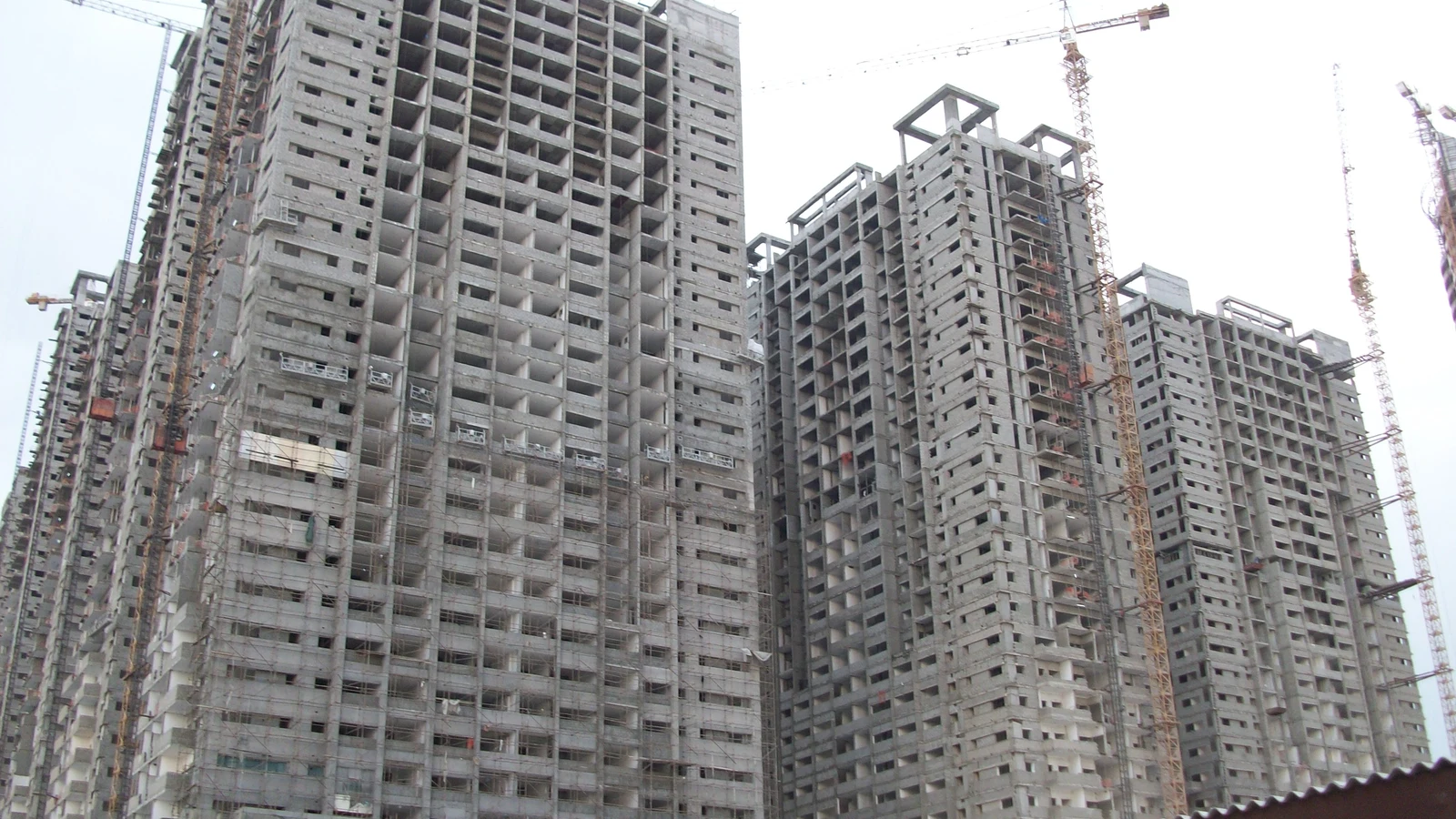
Sources checked on 8 November 2026. Numbered references support the official facts stated. Planning frameworks and hypothetical scenarios are CYUAE editorial analysis, not individual legal or tax advice. Photographs are contextual; image credits identify their source and licence. They do not document a particular application or case.
- Department of Digital Ajman / AjmanRE — Sale Registration of a Real Estate / Real Estate Unit ↗
- Department of Digital Ajman / AjmanRE — Remote Registration of Property / Real Estate Unit Sale ↗
- AjmanRE — Law No. 2 of 2020 organising real-estate development, Article 34 ↗
- AjmanRE — Emiri Decision No. 9 of 2025, service-fee schedule, items 1, 17–20 and 67 ↗