
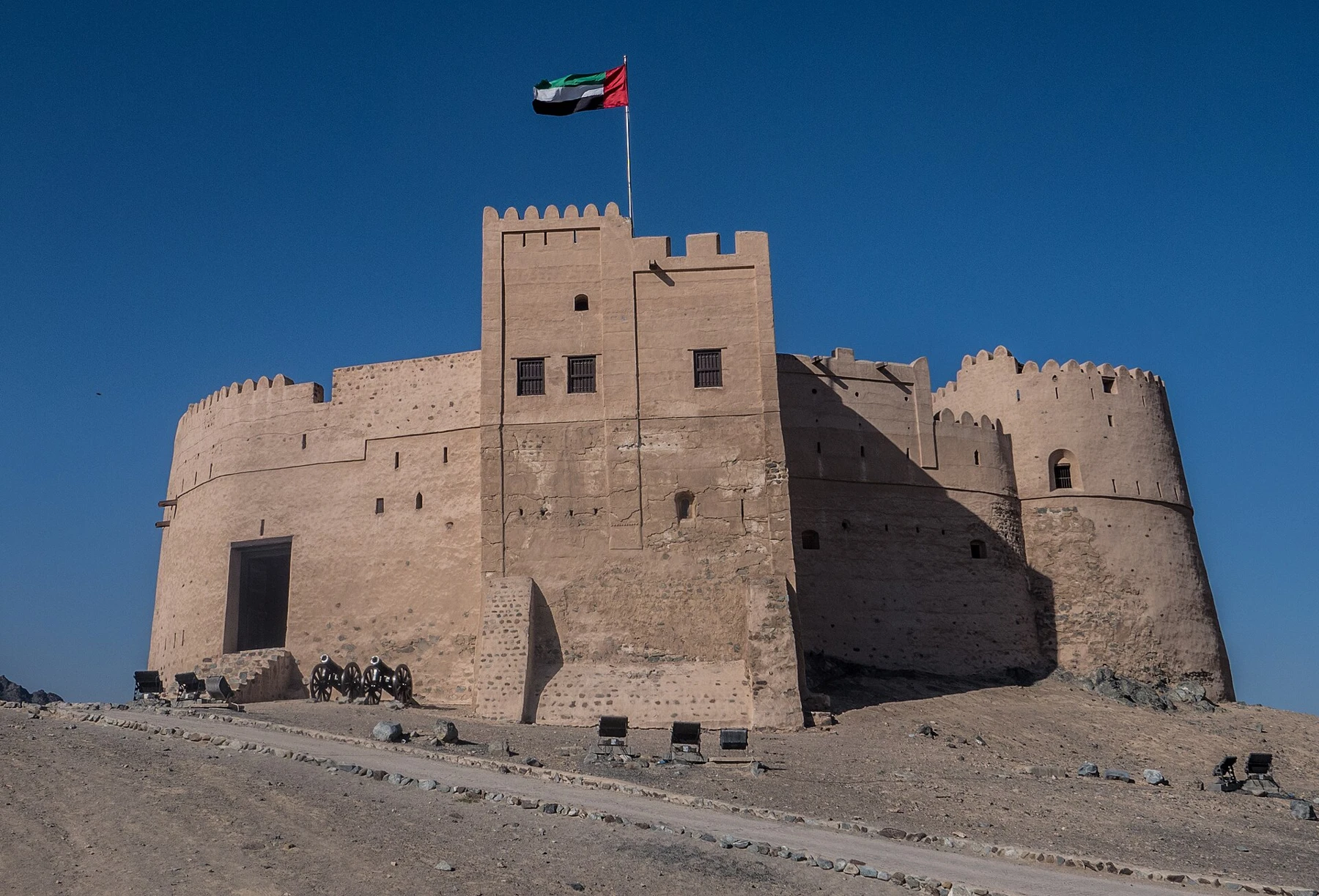
A route through Fujairah's heritage landscapes becomes more interesting when the stops are connected by a question. Al Hayl and Al Bithnah invite questions about how people organised settlement, movement, water and protection in a mountain environment. A visitor can approach the buildings as evidence within a landscape rather than as isolated monuments to be photographed before driving on.
This article develops a thematic route, not a fixed driving itinerary or a confirmation that every site is open. Current access, roads, conservation arrangements and programmes must be checked with the responsible institutions. Follow local instructions and do not enter farms, private property or restricted areas on the basis of a general tourism description. The suggested observations are editorial learning tools, not archaeological conclusions about features that have not been professionally assessed.
Choose the question that connects the stops
A useful organising question is how a settlement depends on its environment. Buildings need materials; people need water and food; movement creates connections and potential vulnerabilities. The visitor can investigate those relationships through institutional interpretation and careful observation without pretending that every visible feature has an obvious or single purpose.
This approach is different from collecting a series of “oldest” or “largest” claims. It values the relationship between places rather than a ranking. Before travelling, choose two or three questions the group wants to explore. For example: how does a building relate to a valley, how is water discussed in the local interpretation, and what can restoration reveal about preservation? A focused route allows enough time to consider those questions instead of turning the day into a race between names on a map.
Understand Al Hayl's official description
Discover Fujairah describes Al Hayl as a fortified residential compound and defensive structure in Wadi Al Hayl. The tourism authority's more detailed account discusses the building's setting and restoration. [1][2] These descriptions provide a starting point for interpreting the relationship between domestic life, authority and observation across a landscape.
Do not assume that a residence and a defensive structure served the same purpose in every period. Ask the institution which elements belong to which phases and what is known about their use. A historic place may contain several layers of activity and later preservation. Keeping those layers separate makes the account more informative. It allows a visitor to appreciate the whole site while avoiding an oversimplified story in which every room and tower is assigned to one moment or one function.
Read the valley as context, not a backdrop
The surrounding terrain can help a visitor understand why a settlement or structure might be placed in a particular location. Observe the relationship between slopes, approaches, cultivated areas and the permitted visitor route. Then compare those observations with the official explanation. Geography can generate good questions, but it does not independently establish a complete history.
A useful exercise is to draw a simple sketch showing the building and a few surrounding features. The sketch need not be technically accurate to support attention. Label observations separately from interpretations. “A view across the approach” is an observation; “this was the only route used by traders” requires evidence. That distinction keeps the landscape legible without turning a short visit into a set of unsupported claims about movement, conflict or economic life.
Approach Al Bithnah through water as well as fortification
Discover Fujairah places Al Bithna Fort within the Wadi Ham mountain setting. Emirates Nature-WWF describes a conservation project connecting the village's falaj, heritage and environmental education. [3][4] Together, these sources offer a route into questions about how water, settlement and the interpretation of heritage can be considered alongside a fort.
Use the project's published goals carefully. A goal or programme description is not proof that every proposed visitor component is currently open or completed. Ask about the present arrangements before planning an activity. The broader learning opportunity is to understand water as part of a lived landscape. It can connect the history of settlement with contemporary questions about conservation and community needs, rather than leaving the fort isolated from the resources and work that helped make settlement possible.
Distinguish a falaj explanation from permission to explore
A description of a water system can make a visitor curious about wells, channels and cultivated land. That curiosity should follow the appropriate route. Do not enter farms, touch infrastructure or assume that a feature identified online is available for independent inspection. Confirm what can be visited and how it should be approached.
A functioning or restored system can have meanings and uses beyond tourism. Respect for those uses is part of understanding the place. The visitor can learn from official interpretation, an authorised guide or an approved programme without needing physical access to every feature. This is an important cultural habit: knowledge does not create entitlement. A good account can explain why a system matters while acknowledging that some parts of the landscape are private, sensitive or governed by specific management arrangements.
Compare materials without inventing a chronology
Notice the materials visible in the buildings and ask how the institution explains their use and restoration. A surface can reveal texture and construction choices, but appearance alone does not establish age. Similar-looking materials may belong to different periods or conservation interventions. Ask which features were retained, rebuilt or adapted for the visitor experience.
This is especially useful when two sites look different. Instead of assuming that the rougher or more weathered one is older, investigate the evidence. Restoration practice, exposure and later use can affect what is visible. A careful comparison might identify questions about local resources and building methods without forcing a conclusion. The visitor leaves with a more accurate understanding when the account preserves what is known and clearly marks what remains to be established.
Plan the journey around current conditions
A valley or mountain setting requires practical preparation separate from historical interest. Confirm current road and access information, check relevant weather guidance and follow warnings or closures. An article describing a place as accessible in general does not establish conditions for the intended day or vehicle.
Allow enough time for the actual journey and the group's needs. Do not add a stop simply because it appears close in a map view without checking the route and access. If conditions make the preferred route unsuitable, change the plan. The purpose of a thematic day is to learn about the landscape, not to defend a preselected itinerary against contrary information. A shorter route can still answer the organising questions when the group gives attention to the places it can visit appropriately.
Set a manageable pace for observation
A heritage route involves more than driving between buildings. Arrival, orientation, walking, reading and discussion all require time. Choose a small number of meaningful observations at each stop and allow the group to compare them. A participant who is interested in one feature should have room to investigate it without being hurried toward the next photograph.
A practical rhythm is to alternate observation and conversation. Look first, read or ask next, then discuss what changed in the group's understanding. This prevents one person from explaining the entire site before others have had a chance to notice it. It also encourages participants to recognise that a good question can be an achievement in itself. The route becomes an exercise in attention rather than an examination of how much historical information someone can repeat.
A family learning exercise
Give each participant a theme: water, materials, movement or preservation. At each site, ask them to identify one relevant observation and one question. The observations can be simple and age-appropriate. A child noticing the relationship between a doorway and a courtyard is participating meaningfully even without knowing specialist vocabulary.
At the end, compare the themes. Which observations required a guide's explanation? Which were visible but still uncertain? Which assumptions changed after reading the official material? This exercise helps the group understand how evidence is assembled. It also prevents a familiar pattern in which the adult with the most confidence supplies a story for every feature, whether or not that story is supported. The goal is shared learning, not a performance of expertise.
A hypothetical route decision
Imagine a group planning Al Hayl, Al Bithnah and several additional destinations in one afternoon. Their initial schedule allows little time for walking or questions. A more coherent plan would identify the central theme, confirm access to the selected sites and remove stops that add movement without improving understanding.
If water and settlement are the main interest, the group might spend more time investigating the approved interpretation around Al Bithnah and treat another heritage stop as a separate future visit. If architecture is the main interest, they might compare a few clearly explained features across two sites. These are editorial options, not fixed recommendations for current access. The example shows why a good itinerary is a set of choices. More locations do not automatically produce a deeper account.
Photography should preserve the relationship
A close-up can reveal material and texture, while a wider view can show a structure's setting. Use both where permitted and appropriate. Record the place and the explanation relevant to the image. A photograph of a restored feature should not later be captioned as an untouched historical scene simply because that wording feels more dramatic.
Avoid photographing people as central subjects without appropriate consent. Do not step into restricted or cultivated areas to achieve a composition. The route's meaning depends partly on recognising that heritage landscapes remain connected to institutions, communities and present uses. A responsible image can communicate that relationship rather than removing every sign of contemporary life to create an imagined timeless scene. Visual beauty and accurate context can support one another.
Interpret conservation projects as work in progress
A project description may state ambitions involving restoration, education or community benefit. Read the tense and scope carefully. An intention, an activity under way and a completed outcome are different claims. Emirates Nature-WWF's material provides useful context for the conservation questions around Al Bithnah, but current visitor arrangements should be established separately. [4]
This distinction improves public writing. Instead of presenting every announced goal as a finished result, explain what the source actually says and identify what requires a later update. The same discipline applies to other UAE projects. It allows readers to appreciate the direction of work while understanding the evidence available at a particular date. A credible heritage account does not need to turn a valuable ambition into an achievement before the responsible organisation reports it as such.
A landscape-reading table
| Theme | Observation prompt | Evidence needed for a stronger claim |
|---|---|---|
| Water | Where does interpretation discuss supply, cultivation or management? | Institutional explanation of the relevant system |
| Movement | How does the building relate to visible approaches? | Historical evidence about routes and use |
| Materials | What construction textures and methods are visible? | Dating and conservation records |
| Authority | How are residence, gathering and defence explained? | Site-specific interpretation |
| Preservation | Which elements appear restored or adapted? | The institution's account of interventions |
| Present use | What activities remain connected to the landscape? | Appropriate local or institutional information |
Use the table to guide questions rather than assign functions to every feature. A visitor can observe a relationship without fully explaining it. The point is to know when a claim requires a source beyond the immediate view and to seek that source rather than fill the gap with an attractive assumption.
Review the route after the visit
Write down what the group learned about each place and what connected them. If the same broad sentence could describe both sites without changing any details, the account may be too generic. Add the specific observation or institutional explanation that made each stop distinct. Remove unsupported dates or labels that entered the conversation through memory rather than evidence.
Then identify one question worth pursuing further. It may concern a water system, a restoration technique or the relationship between settlement and routes. A useful visit does not close every subject. It creates a better basis for continued learning. Fujairah's valleys and heritage places are particularly rewarding when the visitor treats them as connected but distinct parts of a landscape, rather than as interchangeable examples of “traditional UAE” scenery.
Notice what the route leaves out
A thematic itinerary is a selection. Choosing water, settlement and preservation makes certain features visible while leaving other histories less explored. Acknowledge that limit. The route does not provide a complete account of every community, period or activity associated with the places visited. It offers one useful set of questions that can support further learning.
This awareness helps prevent a short outing from becoming an oversized claim about the emirate. A visitor can explain why the selected theme was valuable without presenting it as the single key to Fujairah. Another itinerary might focus on coastal exchange, contemporary environmental management or domestic architecture and reveal different relationships. The strongest cultural account makes its perspective clear enough that the reader can understand both its contribution and its boundaries.
For a group discussion, ask which question could not be answered through the chosen stops. Perhaps the evidence about everyday household work was limited, or the group wanted a more detailed account of restoration materials. Identify a responsible institution or specialised source for the next stage rather than inventing a conclusion to make the day feel complete. An unanswered question can be evidence that the visit created attention. It becomes a weakness only when the writer conceals it behind a confident story that the material consulted does not support.
Frequently asked questions
Is this a guaranteed route open to visitors?
No. Confirm current access, roads, programmes and relevant instructions with the responsible institutions. A thematic connection between places does not establish permission to travel through private or restricted land.
Can the buildings be understood without a guide?
Careful observation and official material can support a meaningful visit, but specific historical or technical questions may require expert interpretation. Recognise that limit instead of inventing answers from appearance alone.
Why include water in a heritage itinerary?
Water helps connect buildings with settlement, work and environmental management. The Al Bithnah project material provides a useful institutional starting point for that connection. [4] It should be investigated through approved interpretation and access arrangements.
Official sources and editorial method
Sources checked on 31 October 2026. Official facts are distinguished from CYUAE analysis and clearly labelled hypothetical examples. Confirm current access, eligibility, fees and service requirements with the responsible institution before acting.



