Dhayah Fort is most rewarding when approached as a relationship between a fortified position and the landscape around it. The view matters, but it becomes more informative when the visitor asks why people cultivated, moved through and defended this particular setting. A photograph can record the scene; a careful visit can connect the scene to questions about water, settlement, communication and authority.
This guide offers a way to prepare for and interpret a visit without inventing a single historical story from several different periods. It is not a live access notice or an archaeological report. Confirm current visitor arrangements with the official destination or responsible heritage authority. The observation exercises and proposed visit structure are original editorial recommendations, intended to help visitors learn while respecting the site and its limits.
1. Distinguish the hill, the fort and the wider heritage landscape
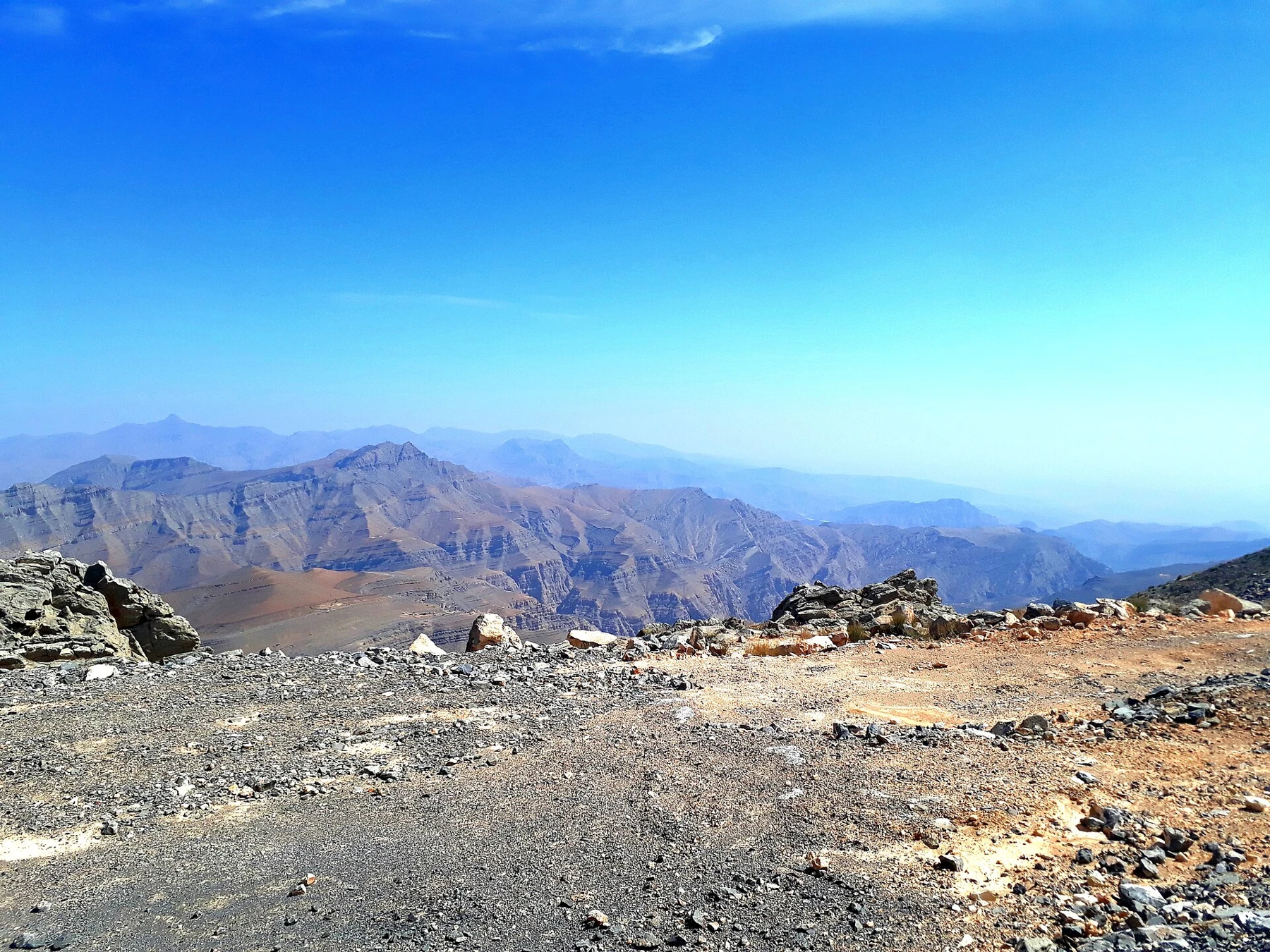
Visit Ras Al Khaimah describes Dhayah Fort as a hilltop landmark within an oasis setting, with views connecting mountains, cultivated land and the coast. Its destination material distinguishes the surrounding archaeological history from the nineteenth-century fortified structure. [1] That distinction should guide the visit: a long history of occupation is not the same thing as the construction date of every visible wall.
Before arriving, prepare a simple vocabulary. A site is a place of evidence; a structure is one element within it; a landscape can contain several places and periods. Visitors do not need specialist training to keep these categories separate. They need only avoid allowing one impressive date in a brochure to become a description of everything they see. This creates space for a more accurate and interesting account of how the place changed over time.
2. Use the official interpretation before adding your own story
Read the official site description and any available visitor material. Note which statements concern the building, the surrounding landscape and particular historical events. Keep questions for a guide or relevant institution rather than resolving uncertainty through confident imagination.
During the visit, distinguish three layers: observation, institutional interpretation and personal inference. “I can see cultivated land below” is an observation. A statement about how a particular system functioned requires evidence. A thought about why the position may have felt secure is an interpretation that should be labelled as such. This method does not make the experience less vivid. It makes the visitor more aware of how understanding is built and prevents an appealing narrative from moving beyond what the evidence supports.
3. Make water a central question
An oasis invites questions about the relationship between settlement and water. Look at the visible pattern of cultivated land, terrain and routes, then ask what the official interpretation explains about their historical connections. Do not assume that a present appearance proves an unchanged system across every period.
A useful family question is: what would people need to know in order to live and work here reliably? The answers may include seasons, access, maintenance, cooperation and the location of resources. These are analytical prompts rather than factual claims about an individual historical household. Their value is that they turn the landscape from scenery into a set of practical constraints. Visitors begin to understand that settlement involves recurring work and coordination, not simply the presence of fertile land beside an attractive viewpoint.
4. Examine the logic of elevation
A high position can create visibility, but visibility has several possible uses. It may help a visitor think about observation, communication, orientation or defence. Ask what the official interpretation establishes for Dhayah rather than treating a general principle as proof of a specific historical practice.
Notice the relationship between the hill and the surrounding routes. From the ground, certain features may feel distant or concealed; from a higher position, their relationship can become clearer. This is a useful exercise in perspective. It also illustrates a broader lesson about historical interpretation: a structure’s purpose cannot always be understood from its interior alone. The building and its environment need to be considered together, while remaining careful about the conclusions that the visible scene can actually support.
5. Prepare for the physical visit
The official destination page describes a stepped ascent and warns that the approach is uneven and unsuitable for some mobility aids. It advises daylight visiting because the route has no lighting. [1] These points are sufficient reason to plan around the group’s actual abilities rather than assuming that a heritage attraction is physically effortless.
Ask about current access and conditions before departure. Consider footwear, weather, water, rest and the needs of children or older participants. A group should be willing to revise the visit if someone is uncomfortable. These are practical planning recommendations, not an individual fitness assessment. The objective is to preserve attention for the heritage experience. A rushed or overambitious approach can turn a thoughtful visit into a test of endurance that some participants did not knowingly choose.
6. Plan a ground-level observation before the ascent
Spend a few minutes orienting at ground level where access permits. Identify the hill, the route and the surrounding setting. Ask each participant to choose one feature they want to understand better from above. This creates a purpose for the climb beyond reaching a photograph.
At the higher viewpoint, return to the original questions. What became easier to understand? Which assumptions proved wrong? What remains unclear? This before-and-after comparison is an informal learning exercise, not an official tour sequence. It is particularly useful for families because it gives participants different things to notice without requiring the same historical knowledge. It also slows the pace enough to make the visit memorable. The group is comparing evidence rather than simply collecting a sequence of views.
7. Discuss defence without romanticising conflict
A fort can encourage dramatic stories about courage and battle. Historical conflict deserves careful treatment, particularly when visitors encounter unfamiliar names and relationships. Use the official account for the events associated with the site and avoid adding unverified dialogue, motives or exact scenes.
A more productive discussion asks what a fortified place reveals about vulnerability and organisation. Who would need protection? What resources and coordination would a defended position require? How might the wider settlement relate to the fort? These are questions for interpretation and further research, not answers asserted by the visitor. They move the conversation beyond admiration for walls toward the human systems that make defence possible. They also acknowledge that conflict involves consequences for ordinary people as well as the actions of leaders.
8. Read restoration as part of the site's modern life
Heritage structures often require conservation, repair and presentation to remain accessible. Ask what the institution explains about those interventions. Do not assume that every visible surface is unchanged from the structure’s earliest phase, or that restoration makes a place historically meaningless.
The important question is how the work helps visitors understand the site and preserves the evidence that matters. A visitor can appreciate craftsmanship while asking what has been reconstructed and why. This is a useful opportunity to discuss the difference between maintaining a usable building and conserving a historical place. The goals can overlap, but they are not identical. A thoughtful account of Dhayah should therefore include the modern responsibility to care for the site, rather than treating heritage as something that simply survives without decisions or effort.
9. A hypothetical family itinerary
Imagine a family travelling to Dhayah with visiting relatives who have different levels of mobility and interest. The plan should begin by confirming current arrangements and discussing the physical approach. The group can then decide whether everyone intends to make the ascent and what alternative is suitable if not.
A useful sequence is orientation, a selective observation exercise, the visit at an appropriate pace and a short discussion afterwards. Avoid attaching several ambitious activities that make the heritage stop rushed. The success of the day should not depend on every participant reaching exactly the same point or taking the same photograph. It should depend on an informed, respectful experience that the whole group understood in advance. That makes the visit more inclusive and reduces social pressure to continue beyond someone’s comfort.
10. Photograph relationships rather than only the monument
Where photography is permitted, consider images that show the fort’s relationship to the surrounding landscape. A close view can reveal materials and form; a wider view can show position and context. Keep both, with a note identifying what the image actually depicts.
Respect barriers, protected areas and the privacy of other visitors. A dramatic angle does not justify climbing on structures or entering a restricted area. When sharing photographs, distinguish the visible scene from the historical explanation attached to it. Avoid superlatives unless a reliable source supports the precise claim. A caption that accurately identifies the place and explains one observed relationship is often more valuable than a sweeping statement about the oldest or most important site in the region.
11. Use a simple evidence notebook
A small notebook can turn a short visit into lasting knowledge. Divide a page into three columns: what was observed, what the institution explained and what remains a question. Add the source or display reference where useful. This does not need to be a formal academic exercise.
The method is valuable because memory tends to merge these categories after a visit. An idea suggested by one participant can later be remembered as a fact on an official panel. Recording the distinction protects the integrity of the account. It also provides a satisfying next step: unresolved questions can be researched through appropriate official and scholarly material. The visitor leaves with a route into deeper understanding rather than a false impression that every significant issue was settled during one brief stop.
12. Connect Dhayah with another kind of Ras Al Khaimah evidence
A wider itinerary can compare Dhayah’s landscape perspective with a museum or another heritage setting, subject to current access and realistic travel planning. The point is comparison, not the accumulation of attractions. Different institutions and places answer different questions.
For example, a fort visit may make spatial relationships visible, while a museum can explain objects, chronology and interpretations in more detail. A heritage settlement may reveal aspects of domestic life or built form that are less apparent at a hilltop position. Do not force the sites into one simple story if their evidence concerns different periods or communities. The stronger learning outcome is to recognise the kinds of questions each place is equipped to address and how those accounts can inform one another.
13. Questions for a guide or heritage institution
Prepare a short list of questions that invite explanation: which parts of the visible structure belong to which phases? What evidence supports the account of the surrounding settlement? What conservation work has been undertaken? Which interpretations remain uncertain? What should visitors read next?
These questions are more useful than asking only for the most dramatic fact. They allow a knowledgeable guide to explain methods and limits, not merely recite dates. If an answer is not available during the visit, record the question rather than inventing a resolution. Good heritage interpretation makes uncertainty manageable. It shows that knowledge can be careful and compelling at the same time, and that a place’s importance does not depend on presenting every detail as completely settled.
14. A planning and interpretation checklist
| Before the visit | At the site | After the visit |
|---|---|---|
| Confirm current access and physical requirements | Follow permitted routes and instructions | Identify one revised assumption |
| Read the official description | Separate observation from interpretation | Check an unanswered question |
| Match the plan to the group | Allow time for orientation and rest | Preserve accurate photo captions |
| Choose a few questions | Examine building and landscape together | Connect with another source of evidence |
Use the checklist flexibly. A visitor does not need to complete every exercise to have a meaningful experience. Its purpose is to protect the conditions for attention: enough preparation, a manageable physical plan and an honest account of what has been learned. A crowded itinerary can undermine those conditions even when every individual attraction is worthwhile.
What to do when a landscape question remains unanswered
A visitor may leave Dhayah uncertain about a visible feature or a historical connection. Preserve that uncertainty as a question with a clear location and description. Ask the relevant institution for an appropriate source rather than searching for any explanation that resembles the scene. Similar-looking structures can belong to different places and periods. A careful unresolved question is a more valuable outcome than a confident answer borrowed from an unrelated site.
Frequently asked questions
Is Dhayah Fort only a viewpoint?
The view is part of its appeal, but the site can also support questions about settlement, water, defence and heritage conservation. Use the official interpretation to distinguish supported history from personal inference.
Can every visitor comfortably make the ascent?
Do not assume so. The official destination page identifies physical limitations. Confirm current conditions and assess the plan against the actual group rather than a generic attraction label.
Does one date describe every part of the site?
No such conclusion should be made. A landscape can contain evidence from several periods, and a visible structure can have its own construction and restoration history. Read those categories separately.
What is the best learning question for children?
Ask what people would need to live, work and communicate in this setting. Keep the answers connected to evidence and allow questions to remain open where the visit does not provide a reliable explanation.
What should a public caption include?
The correct place name, a clear description of what is shown and a source for any historical claim. Avoid converting a personal impression into an official fact or a global ranking.
Official sources and editorial method
Sources checked on 31 October 2026. Official facts are distinguished from CYUAE analysis and clearly labelled hypothetical examples. Confirm current access, eligibility, fees and service requirements with the responsible institution before acting.