
“Dibba” can sound like a simple destination name until an itinerary requires an exact address, authority or service. A traveller needs to distinguish the particular place intended rather than assume that every attraction, operator and administrative process using the name belongs to the same jurisdiction. That geographical care makes a visit more coherent and helps prevent practical mistakes hidden by a broad regional label.
This guide focuses on Dibba Al Fujairah as an entry point into the east coast. It connects official municipal and destination information with an original itinerary-planning method. It is not a border-entry guide or a confirmation of access to another jurisdiction. If a proposed journey crosses an administrative or international boundary, establish the relevant current requirements through the responsible authorities and operator before booking or departing.
Start with a precise destination
Dibba Municipality presents Dibba Al Fujairah as a coastal city with historical, geographical and natural dimensions. The Ministry of Culture's separate Dibba Al Hisn record explicitly identifies that locality as part of Sharjah and notes that the wider Dibba area has different administrative sections. [1][2] Those distinctions matter when a traveller arranges an activity, searches for a heritage place or interprets a story associated with the name.
Use an exact destination and official location reference in the itinerary. A familiar name in a booking conversation is not enough. Ask which town, emirate or country contains the departure point and activity. This is particularly important where transport is arranged by someone other than the traveller. The goal is to make the geographical assumptions visible while there is still time to resolve them, rather than discover a mismatch after arriving with incomplete documents or an unsuitable plan.
Choose the purpose of the visit
Dibba can be approached through coast, heritage, a quieter stay or a broader east-coast route. Decide which of these is the main purpose. A destination becomes easier to understand when the group knows what it wants to learn or experience, instead of combining every available activity into one day.
For a cultural visit, allow time to investigate the relevant heritage site and its interpretation. For a coastal stay, focus on accommodation, access and the activity arrangements. For a family outing, consider the balance of movement, rest and shared interests. None of these approaches is inherently more authentic. The useful distinction is between a plan built around the group's needs and one assembled from attractive images without considering how the parts fit together.
Treat the fort as a local historical question
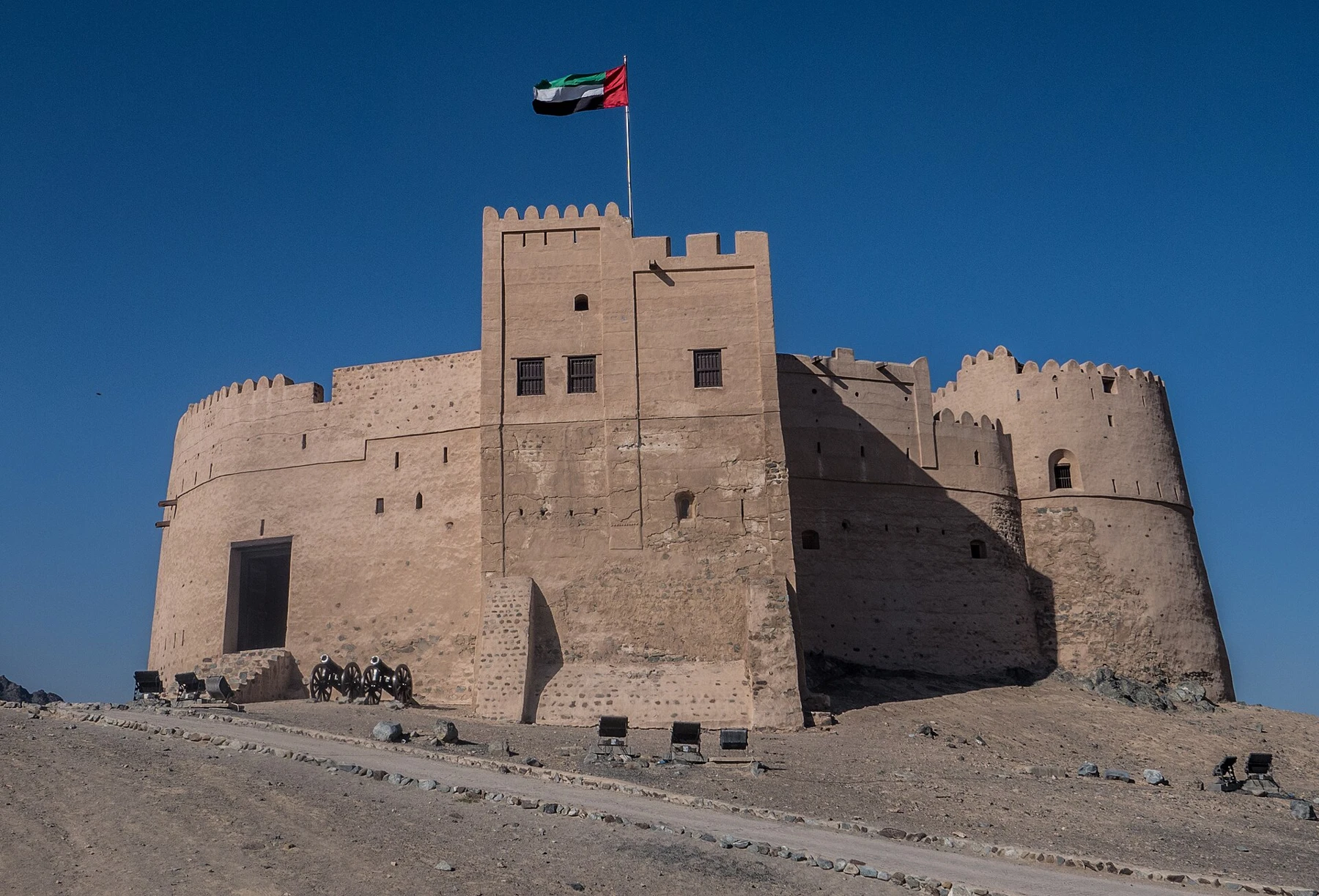
Fujairah's official tourism material describes Dibba Fort and its restored structures, connecting the site with the surrounding coastal and agricultural setting. [3] Use the institution's description as a starting point for questions about location, materials, use and restoration. Avoid extending a broad historical narrative into precise claims that the material consulted does not establish.
A fort can be read through its relationship with the landscape. What can be seen from the permitted viewpoint? How are enclosure, entry and internal space organised? Which elements are identified as restored? These questions encourage careful looking without requiring the visitor to invent a complete strategic history. A strong visit makes room for uncertainty and directs specific questions to the responsible institution rather than filling gaps with a familiar story from another place.
Separate local heritage from regional history
A reference to ancient Dibba does not automatically establish that every surviving building or archaeological object belongs to the same period or administrative area. Historical place names can cover relationships that do not map neatly onto a modern itinerary. Treat each claim at the level of precision supported by its source.
When reading a display or article, ask which location is being described and what evidence supports the interpretation. A museum object, excavation and restored building are different kinds of evidence. The visitor can appreciate the wider historical importance of the region while still distinguishing those elements. This is especially valuable when explaining the visit to children: it shows how history is investigated, rather than presenting a collection of dramatic dates that appear certain only because the questions behind them have been removed.
Build an itinerary with geographical logic
Place the actual stops on a map and consider the journey between them. Confirm current access and programme information through official sources. Do not assume that a list of places sharing the word Dibba can be visited under one arrangement or reached without a change in the practical requirements of the trip.
Group stops by purpose and location rather than by the order in which they were discovered online. Allow time for arrival, parking, orientation, questions and rest. A plan that appears short on a map can become tiring when each stop requires repeated transitions. The purpose of a geographical itinerary is to reduce unnecessary movement so that the group can pay attention to the place. It should not turn the day into a test of how many destination names can be covered before returning home.
Verify operators independently
For an organised activity, establish the operator's legal identity, exact departure point, what is included and the relevant requirements for participants. Confirm who provides transport, instruction, equipment and support. A seller's familiarity with the area does not remove the need for a clear description of the service being purchased.
If the activity involves travel beyond the intended jurisdiction, ask for a precise explanation and verify the applicable requirements through responsible authorities. Do not accept a general assurance that “everything is arranged” as a substitute for knowing what documents, permissions or conditions apply to the actual traveller. This is not an allegation about an operator. It is ordinary planning discipline when an experience depends on several organisations and potentially different administrative systems.
Give the coast its own preparation
A coastal activity needs a suitability and conditions assessment separate from the cultural itinerary. Ask the responsible operator about current weather and sea conditions, participant requirements, supervision and changes. A destination's popularity does not establish that an activity is appropriate for every person on every day.
Be honest about experience and concerns. The group should agree that a changed or cancelled activity can be the correct outcome. This prevents travel costs and anticipation from creating pressure to proceed despite uncertainty. A sensible fallback can preserve the day without weakening safety or access requirements. The aim is to choose an experience that fits the participants and actual conditions, rather than force the environment to fulfil the programme imagined when the booking was made.
Make room for ordinary local life
A destination is more than its visitor attractions. When moving through Dibba Al Fujairah, recognise that the city is a place where people work, shop, travel and maintain daily routines. Observe respectfully without treating residents as an exhibit or assuming that a brief interaction explains the character of an entire community.
This perspective can make a visit richer. Notice how different activities coexist in the same setting, while avoiding unsupported conclusions about the people involved. A public account should describe what was actually observed and distinguish it from an institutional explanation or personal impression. The goal is a thoughtful encounter with a living place. Cultural curiosity becomes less useful when it turns people into symbols for a story the visitor had already decided to tell.
A family plan should assign responsibility
If the group includes children, older participants or people with different mobility needs, plan the transitions as carefully as the attractions. Who coordinates transport? Where will the group meet if it separates? Which participant needs a slower pace or a quieter alternative? Ask the relevant property or operator about specific facilities rather than relying on a general “family” label.
Keep the programme flexible enough for one part to be shortened without disrupting the whole day. A child who becomes interested in a particular building or object may learn more from a short, focused discussion than from completing every stop. Adults also benefit from a pace that allows questions and rest. A successful itinerary supports the actual group rather than a hypothetical traveller with unlimited energy and no competing needs.
Read online photographs as partial evidence
A photograph can establish a view at a particular time, but it cannot confirm present access, operating conditions or the complete experience. An attractive image may omit the journey, surrounding activity or limitations relevant to a participant. Use photographs to generate questions, then resolve those questions through current information.
For your own images, preserve the location and context. Do not label a photograph simply “Dibba” if the precise place matters to the account. Avoid publishing people as central subjects without appropriate consent. A clear caption can be more informative than a superlative: it identifies where the image was made, what the institution says about the subject and which part is the writer's personal response. Accuracy makes the image useful to someone planning a different journey later.
A hypothetical itinerary decision
Imagine a group whose first plan includes a fort, a marine activity and a meal at a property they found online. During preparation, they discover that the activity's departure point and the fort are not where the group had assumed. The correct response is to revise the itinerary and verify the relevant requirements, not to hide the uncertainty behind a familiar destination name.
They might select a simpler programme within the intended area or organise a separate properly prepared trip for the other activity. Neither outcome is a failure. The preparation has done its job by exposing a mismatch before travel. This example illustrates the value of geographical precision: it turns a vague collection of plans into a decision the group can understand, fund and carry out responsibly.
Use a location-and-responsibility table
| Itinerary component | What to establish | Why it matters |
|---|---|---|
| Accommodation | Exact property and location | Determines the real journey and access arrangements |
| Heritage stop | Institution, site and current entry information | Keeps interpretation tied to the correct place |
| Organised activity | Operator and departure point | Clarifies responsibility and participant requirements |
| Transport | Route and any relevant boundary considerations | Prevents assumptions about documents or permissions |
| Shared meeting point | A precise, accessible location | Supports group coordination if plans change |
| Public account | Accurate location and source attribution | Prevents one area's story being assigned to another |
The table is an editorial tool, not an official travel clearance. Its purpose is to make assumptions explicit. Where an answer remains uncertain, ask the responsible organisation rather than fill the blank with information from a different destination using the same name.
Combine research with realistic expectations
A well-researched trip still needs room for change. Opening arrangements, programmes and conditions can differ from what a previous traveller experienced. The group should understand which elements are confirmed and which remain dependent on conditions or availability. Keep a practical contact list and the relevant booking references accessible.
Avoid interpreting every changed plan as poor value. Sometimes the more informed decision is to spend longer at fewer places or return on another occasion. The east coast rewards attention to geography and local context; it does not require a visitor to complete a grand regional circuit at every opportunity. A focused visit can produce a stronger understanding because there is time to connect what is seen with the questions that made the journey worthwhile.
Make the visit useful after returning
Record three things learned about the particular place, the sources that supported them and questions that remain. Check whether any part of the account has become more certain in the retelling than it was in the evidence. Correct a mistaken location or unsupported date before sharing it publicly.
This final step turns an outing into a reusable way of learning. It also helps the visitor compare future east-coast experiences without flattening them into one generic destination. The value of Dibba Al Fujairah lies partly in its specific combination of coastal setting, local heritage and contemporary life. Recognising that specificity is more rewarding than using the name as a label for every nearby experience that happens to appear in the same travel search.
Establish a single geographical record for the group
Create one shared itinerary containing the exact location names, booking references and responsible contacts. When a participant suggests an additional stop, add it to that same record and check how it changes the route. This avoids a common coordination problem in which different people hold slightly different versions of the day and assume everyone else understands the same destination name.
Use plain labels that preserve the jurisdiction where relevant. The record need not be complicated, but it should be precise enough that someone joining later can understand the plan without reconstructing several message threads. If a location changes, update the shared version rather than relying on an informal correction that reaches only part of the group.
This method is especially useful when transport, accommodation and an activity are booked through different organisations. Each confirmation may describe its own component correctly while the combined itinerary still contains a mistaken assumption. A single geographical record helps reveal that mismatch before it affects the trip. It also makes a changed plan easier to communicate calmly: everyone can see which component moved, which requirements need checking and which parts remain unchanged.
The same discipline improves the account written afterwards. The visitor can identify the actual place rather than attach a broad regional label to every photograph. A small amount of careful recording produces both a smoother journey and more accurate cultural communication.
Frequently asked questions
Does every attraction called Dibba belong to Fujairah?
Do not assume so. The Ministry of Culture's Dibba Al Hisn record identifies that locality as part of Sharjah and describes administrative distinctions in the wider area. [2] Verify the exact place and relevant authority for the intended activity.
Can this guide confirm travel into another jurisdiction?
No. It does not establish a traveller's eligibility, document requirements or access permission. Verify the current rules with the responsible authority and operator before making a commitment.
What makes a first visit more successful?
Choose a clear purpose, use exact locations, confirm the arrangements and leave time to observe. A smaller coherent itinerary is often more useful than a large collection of uncertain stops. The aim is an informed experience rather than a destination count.
Official sources and editorial method
Sources checked on 31 October 2026. Official facts are distinguished from CYUAE analysis and clearly labelled hypothetical examples. Confirm current access, eligibility, fees and service requirements with the responsible institution before acting.



