
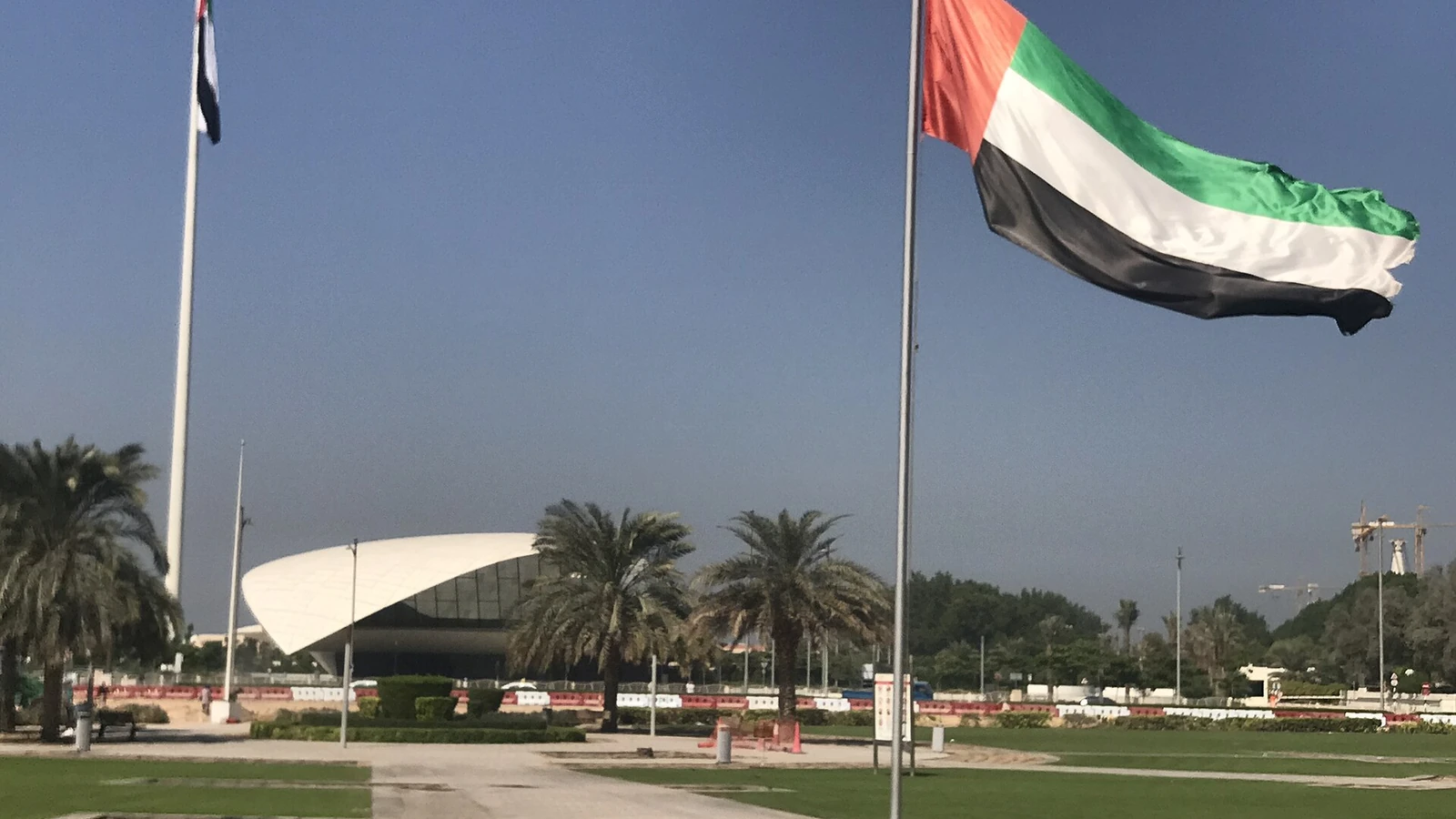
Etihad Museum offers a useful starting point for understanding the UAE as a federation. A visitor can leave with photographs of the building, or with a clearer distinction between the events that created the state, the documents that recorded those decisions and the institutions that followed. The second outcome requires a little preparation rather than specialist historical knowledge.
This guide proposes a focused visit organised around evidence and questions. The interpretation and suggested itinerary below are editorial recommendations, not a claim of personal attendance or a description of a guided tour currently being sold. Admission information was checked against official sources on 10 November 2026; the museum's live booking endpoint could not be retrieved during that check.
Start with the difference between a federation and a city
A Dubai museum can tell a national story. That geographical distinction matters: learning about the formation of the UAE is different from learning only about Dubai's urban development. Ask which decisions concerned the country collectively, and which matters remained associated with individual emirates.
The National Library and Archives records the proclamation of the UAE on 2 December 1971 by six emirates, followed by Ras Al Khaimah's accession on 10 February 1972. Its account also places the federation within negotiations beginning in 1968 and explains that the provisional constitution defined federal institutions while other powers remained with the emirates. These dates are historical milestones, not a claim that every administrative arrangement was completed at one moment. [1]
For a broader geographical frame, read our guide to experiencing the seven emirates. Carry that distinction into the museum: the location of an exhibit, the origin of its subject and the scale of the decision it describes need not be identical.
Prepare three questions before entering
Write down three short questions: What problem was a proposed union intended to solve? What had to be agreed between its participants? How did an agreement become an operating institution? These questions prevent a sequence of portraits, documents and dates from becoming an undifferentiated celebration of progress.
They also leave room for careful observation. If an exhibit answers only one question, do not force it to answer all three. A photograph can establish who was present without proving every participant's private motivation. A signed document can record an agreement without describing every negotiation that preceded it.
Read the building and the historical site separately
Visit Dubai, the emirate's official tourism platform, identifies Union House within the museum site as the place where the constitution was signed in 1971. It describes galleries using photographs, films and interactive displays, especially for 1968–1974. The contemporary museum building and the historical signing location therefore contribute different kinds of evidence. [2]
Use architecture as an introduction, then return to the material inside. A building's symbolism is a curatorial invitation; an original record has a different evidential role. Confusing the two can make a visit memorable without making its historical conclusions dependable.
| What you encounter | A productive question | What to avoid assuming |
|---|---|---|
| A dated photograph | Who, where and when does its caption identify? | That the image explains everything discussed that day |
| A document or reproduction | Who produced it, for what purpose and at which stage? | That a reproduction is the original object |
| An oral account or film | Whose perspective is being presented? | That one account exhausts the event |
| Architectural symbolism | Which idea does the design invite you to consider? | That symbolism is itself a historical document |
| A timeline | Which developments are grouped together? | That adjacent events automatically caused one another |
This method works beyond one museum. The point is to assign the right weight to each kind of material rather than treating every display as interchangeable proof.
Build a visit around two close readings
A useful editorial plan is to select two displays for concentrated attention, then use the rest of the visit to provide context. This is a proposed learning method, not an official recommended route or promised gallery sequence.
At the first display, identify a decision. Note its date, participants where stated and the action recorded. At the second, look for an institutional consequence: a responsibility, procedure or public function. Ask how the later arrangement relates to the earlier decision, and mark the connection as an interpretation unless the museum explicitly documents it.
Take brief notes in your own words. A strong note might read: “The caption establishes a meeting and date; I still need to understand what was agreed afterwards.” That is more useful than copying an entire panel or attaching an unverified quotation to a historical figure.
A hypothetical family learning exercise
Imagine two adults visiting with a teenager. Each chooses one item and records four things: the date, the kind of evidence, one fact the label supports and one question it leaves open. Afterwards, compare the items rather than competing over how many rooms were completed.
The teenager might choose a photograph while an adult selects a document. Their discussion can explore why an image is easier to remember but a document may answer a more precise question. No specialised examination vocabulary is required. The exercise rewards attention and teaches the difference between remembering a scene and explaining an event.
Check admission categories before buying
Dubai Administrative Resolution No. 256 of 2024, issued on 22 November 2024 and effective on issue, sets Etihad Museum admission at AED25 for individuals, AED20 per person for groups of at least five and AED10 for full-time students aged 5–24. It exempts children under five, persons with disabilities with one escort, senior UAE citizens and valid ICOM cardholders. [3]
Use the correct category and bring supporting identification where relevant. A student's age alone does not replace the full-time student condition in the resolution. A tourism-company tariff is not an individual visitor discount.
An older Dubai Culture services directory used a different minimum group size. [5] The later resolution is the clearer published authority for the tariff, but the payable category and any current promotion should still be confirmed at purchase. Avoid paying a third party because it presents an unexplained “official” surcharge.
For readers unfamiliar with the city's transport choices, our Dubai public transport and nol guide helps organise the journey. Check the actual walking connection and return route rather than assuming a station name guarantees an easy final approach.
Confirm hours and access for the actual day
Dubai Culture's museum workshop document publishes daily opening from 10am to 8pm, with last entry at 7pm. It also describes complimentary wheelchairs subject to availability. [4] These published planning details are not a date-specific guarantee: confirm holiday arrangements, gallery access and any assistance required before travelling.
The official Visit Dubai listing gives the museum's address as 1 Jumeirah Street and links to Dubai Culture's booking service. The dedicated museum and booking endpoints timed out during this source check. [2] That technical result is not evidence that the museum is closed or tickets are unavailable. Use the official listing's contact route if the booking page does not load.
For a visitor with mobility, sensory or fatigue requirements, ask about the whole sequence: arrival point, step-free route, seating, toilets, assistance and collection after the visit. Our accessible Dubai travel guide explains why a single accessibility label cannot settle every part of a journey.
Connect national history with everyday history
Etihad Museum and a heritage district can complement each other without telling the same story. A federation-focused visit examines political decisions and documentary evidence. A separate neighbourhood or trade-history visit can introduce the routines, skills and exchanges within which people lived.
Al Shindagha and Dubai Creek provides that different line of enquiry. If combining visits, make one the primary learning objective and treat the other as an optional extension. Transport, meals and attention compete for the same day; a longer checklist does not automatically produce deeper understanding.
Afterwards, write a five-sentence account containing two established facts, one clearly labelled interpretation and two unanswered questions. This simple discipline produces a more reliable memory than a collection of captions detached from their sources.
Questions visitors actually need answered
Is this a museum only about Dubai?
The subject is the formation of the UAE, although the museum is in Dubai. Keep the emirate hosting the institution distinct from the national scope of the history presented.
Should children memorise all the dates first?
No. A sequence of decision, evidence and consequence is a useful starting point. Add dates to anchor that sequence. Asking children to notice how a conclusion is supported can be more productive than testing recall throughout the visit.
Does a published closing time mean entry is possible until then?
No. Last admission and closing are different. Confirm both, and allow enough time for the purpose of your visit rather than treating the final admission window as a recommended itinerary.
What should I check again before leaving home?
Confirm the day's hours, admission category, operational booking link, any tour arrangement you want and assistance requirements. Historical dates need a reliable reference; a ticket and an access arrangement also need confirmation for the day they will be used.
Official sources and editorial method
Sources checked on 10 November 2026. Numbered references support the official facts stated. Planning frameworks and hypothetical scenarios are CYUAE editorial analysis, not individual legal or tax advice. Photographs are contextual; image credits identify their source and licence. They do not document a particular application or case.
- National Library and Archives — The Formation of the Federation ↗
- Visit Dubai — Etihad Museum official tourism listing and booking link ↗
- Dubai Legislation Portal — Administrative Resolution 256 of 2024, museum ticket prices ↗
- Dubai Culture — Etihad Museum workshop document, published hours and access information ↗
- Dubai Culture — Services directory, older group-size wording ↗