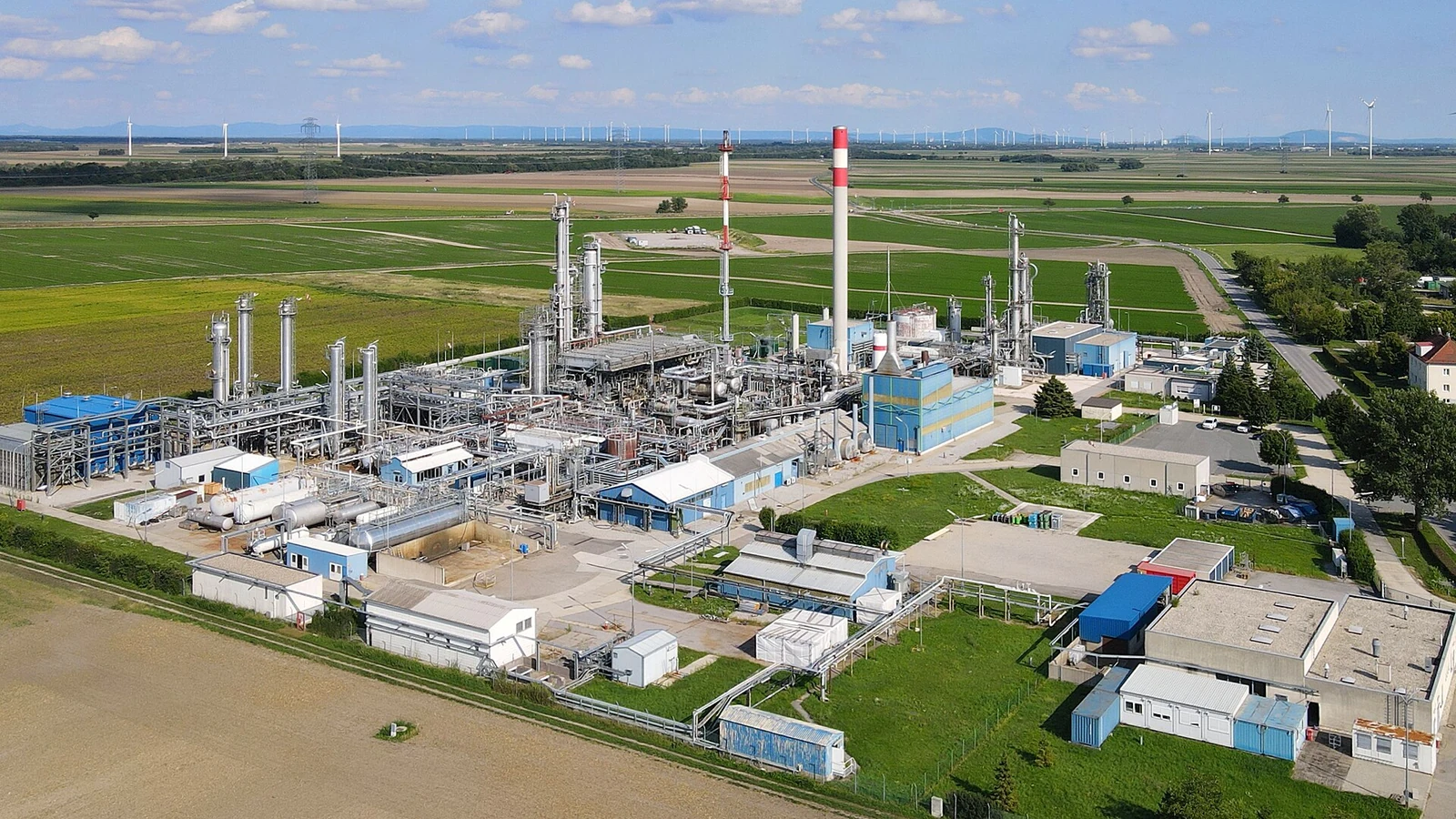
ADNOC has taken a final investment decision for the Ruwais Diyab Unconventional Gas Development in Abu Dhabi. The announcement, made at ADIPEC on 2 November 2026, concerns a development decision and a future production plan. It does not mean that the planned output is already entering the market today.[1]
For readers following the UAE's industrial economy, that distinction is essential. A project can be economically important long before it produces a measurable operating contribution. Suppliers, employers and investors should identify the stage reached, the stated timeline and the evidence needed for their own decisions.
What the announced plan contains
ADNOC states that the project is planned to deliver 345 million standard cubic feet per day of raw gas from 2029 over a 25-year period, with possible future expansion up to one billion standard cubic feet per day. The plan includes on-site processing and new pipeline links into the UAE gas network.[1]
Related reference: Starting a Business in Abu Dhabi: Match the Licence to the Activity, Customer and Operating Model.
The potential higher figure should remain a potential figure. It is not interchangeable with the initial planned output, and neither number should be presented as a current daily production result. Equally, a long operating horizon does not establish the exact timing of every future construction, supply or employment requirement.
Abu Dhabi Media Office places the decision within ADNOC's broader gas-growth strategy and describes ADNOC Onshore's technical and project-delivery work.[2] Those are the announced programme's context, rather than a public invitation for every supplier to submit a commercial proposal.
Why project stages change the questions to ask
| Stage or statement | What it establishes | What it does not establish by itself |
|---|---|---|
| Final investment decision | The announced commitment to advance the development | Current production at the planned rate |
| Planned 2029 output | A stated future delivery objective | Completion of every intervening milestone |
| Potential expansion | A possible higher future scale | An unconditional commitment to that figure |
| Supplier interest | A reason to investigate commercial fit | Qualification, tender invitation or contract award |
This framework helps readers avoid combining figures from different stages into a single claim. It also gives future reporting a clear structure: which milestones have actually occurred, which objectives remain and whether the disclosed scope has changed.
The supplier opportunity begins with qualification
ADNOC's Supplier Hub states that suppliers must register and complete relevant pre-qualification to participate in sourcing events. It distinguishes registration from qualification for product or service groups.[3] A press release about a project is not an alternative route around that process.
Related reference: Fujairah's Maritime Services Economy: How a Supplier Should Evaluate a Port-Adjacent Opportunity.
For a hypothetical engineering firm, the practical first step is to identify the relevant service category and compare its actual capabilities with the published route. Compile the company's legal and technical records, responsible contacts and evidence of delivery capacity. Do not assume that another firm's successful qualification proves the applicant will receive the same treatment.
The Hub's tendering guidance identifies an Ariba Network ID, relevant product or service pre-qualification and the ability to deliver the required work. It describes In-Country Value as a factor that can improve competitiveness, while expressly saying an ICV certificate is not required merely to participate in ADNOC tenders.[4] This is a reason to read the actual invitation carefully rather than turn one evaluation factor into a universal promise of an award.
Evaluate the commercial commitment before chasing scale
An expanding sector can still be a difficult market for an unprepared supplier. The company needs to understand the work package it can perform, the resources it would commit and how payment terms interact with delivery costs. A large potential market does not resolve those operating questions.
Consider a deliberately hypothetical small manufacturer. It identifies a product that may be relevant but would need additional testing and a larger inventory commitment. A useful decision file compares the cost of qualification, the evidence of demand and the company's ability to fund delivery. It does not record expected revenue as if a contract had already been signed.
Related reference: Cash Flow, Pricing and Profitable Growth in Dubai: Why Revenue Alone Is Not a Business Strategy.
Separate general readiness expenditure from a cost tied to a specific awarded order. The former may support several opportunities; the latter needs a clear contractual basis. That distinction helps a founder avoid treating every conference conversation as a reason to increase fixed overhead.
What industrial customers should watch
Customers interested in future energy availability should follow the responsible operators' disclosures for actual supply arrangements and service conditions. A national production plan does not, by itself, determine the price or connection terms available to a particular business.
The useful reporting milestones are specific: changes in project scope, disclosed delivery progress, operating readiness and eventual production information. Avoid inferring a project's environmental performance or commercial pricing from the general description of its strategic purpose. Those questions require their own evidence.
Questions behind the investment headline
Is the announced 345 million figure current production?
No. ADNOC describes planned raw-gas output from 2029. The announcement concerns the investment decision and development plan.[1]
Is the possible one-billion figure guaranteed?
The announcement describes that scale as future potential. Keep it separate from the initial stated production plan.[1]
Does the announcement mean supplier applications are being accepted for a specific contract?
This article does not establish a particular open tender. Use ADNOC's official supplier and sourcing channels, check the relevant category and verify an actual invitation.[3][4]
What is the most useful next step for a small supplier?
Define a narrow commercial fit, establish the qualification route and model the resources required. A disciplined readiness decision creates a stronger position than relying on the scale of a headline alone.
Official sources and editorial method
Sources checked on 4 November 2026. Numbered references support the official facts stated. Planning frameworks and hypothetical scenarios are CYUAE editorial analysis, not individual legal or tax advice. Photograph captions identify whether an image shows the subject or provides general context, and record its source and licence. Contextual images do not document the announced event or an individual case.