
A camel-racing visit needs a different plan from a ticketed sightseeing stop. The key question is not simply where the track is. It is whether a meeting is taking place, where visitors are permitted to stand, how the group will get there and back, and whether everyone understands that sporting operations take priority over the visitor's photograph.
Ras Al Khaimah's official tourism authority identifies Al Sawan Camel Race Track in the Digdaga area as a place to experience this Emirati sporting tradition. Its visitor information describes a general September–April season and races usually on Friday mornings, around 6:30am–9:30am.[1] That is a seasonal pattern, not confirmation that a race will run on any particular Friday. This guide, checked on 5 November 2026, does not announce a confirmed meeting for 6 November.
Define the experience before arranging transport
A formal race, training session, organised guided visit and camel ride are different products. A provider may offer more than one, but they should not be treated as substitutes without explanation. If the purpose is to watch competitive racing, ask specifically whether the proposed date involves an actual race meeting.
Related reference: Planning a Ras Al Khaimah Visit: Combine Coast, City, Heritage and Mountains Without Rushing the Emirate.
If the purpose is cultural learning, a knowledgeable guide and permission to observe an appropriate area may matter more than watching a particular contest. If children expect to touch or ride animals, resolve that expectation before departure. Watching a sport does not automatically include animal interaction.
Write the desired outcome in one sentence. “We want to watch a confirmed race from an authorised spectator area” produces better questions than “We want the full camel experience.” The latter leaves almost every material detail open to interpretation.
Confirm the date instead of relying on a seasonal listing
The tourism authority describes winter Friday mornings and gives a usual seasonal schedule.[1] Read the qualifiers carefully. An evergreen attraction page is not a live fixture list, and a typical start time is not a guarantee that every heat will be available to a late-arriving visitor.
Contact the official destination information channel or a properly identified operator and ask for confirmation of the specific date, arrival point and viewing arrangement. If an intermediary supplies a programme, ask whether it is issued by the organiser and when it was checked. Keep that answer with the transport booking.
Related reference: The National Museum of Ras Al Khaimah: A Guide to Evidence, Trade and Everyday Life.
A useful confirmation message asks four things: is a meeting scheduled, what time should visitors arrive, where should they report, and are there any access restrictions for the group? This turns a general travel enquiry into an operational question that can be answered clearly.
| Decision | Evidence to obtain | Avoid assuming |
|---|---|---|
| Race date | A current date-specific confirmation | Every Friday follows the general pattern |
| Arrival point | A precise meeting location or entrance instruction | A map pin identifies a permitted spectator entrance |
| Viewing | Instructions from the organiser or authorised host | All areas near the track are public |
| Transport | Confirmed return arrangement | A vehicle will be waiting when you finish |
| Additional activities | Written inclusions and any separate conditions | Watching racing includes riding or feeding camels |
Understand the track as a working environment
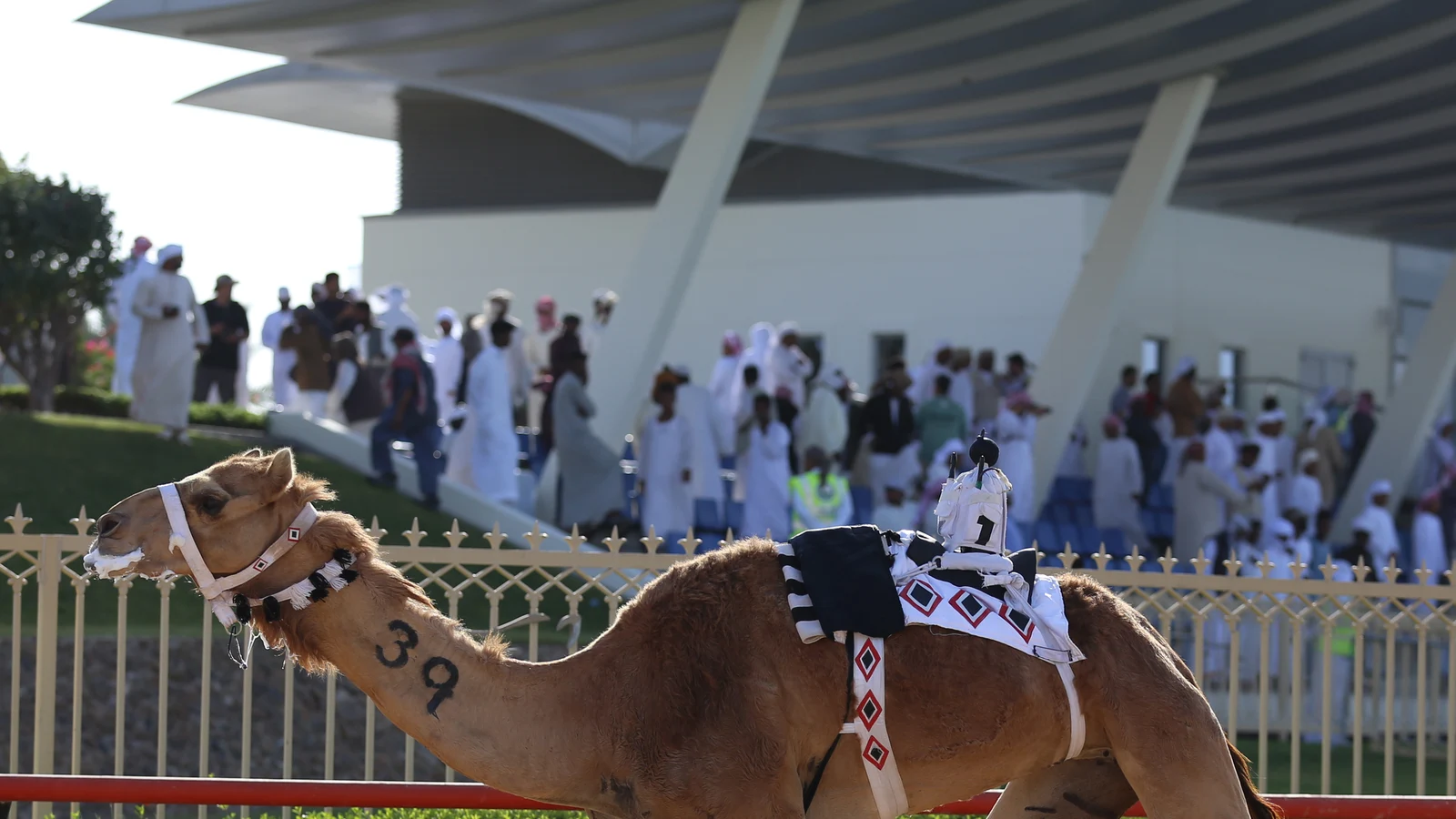
The official account describes separate running and vehicle tracks, with owners or trainers following the camels in vehicles and communicating through radio-controlled equipment. Robot jockeys form part of the contemporary racing setup.[1] Those facts help explain why movement around the venue needs care; they do not give a visitor permission to enter a particular lane or follow a convoy.
Stay in the area designated by the organiser or host. Do not cross a track because there appears to be a gap, position a child for a photograph near moving animals, or interpret another person's access as permission for your group. If instructions are unclear, stop and ask rather than improvising a route.
Keep the observation task simple. Notice how preparation, movement and communication connect. A visitor can learn about the sport's organisation without approaching handlers during a demanding moment or attempting to reproduce specialist behaviour.
Related reference: Suwaidi Pearls in Ras Al Khaimah: Understand the Craft, the Coastal Setting and the Visitor Experience.
Make transport and the return journey part of the same decision
An early start changes the economics of a trip. The relevant cost is not just the outward fare. Include waiting time, the return pickup, a possible change of plan, and any guide or package charge. Ask which charges are fixed and which depend on time or distance.
Do not accept an estimated journey time as a promise. Starting location, traffic, navigation and the correct access point affect the actual trip. Build a buffer around a confirmed arrival requirement rather than using a published attraction-to-city estimate as the entire transport plan.
For a hypothetical family staying on the coast, the sensible sequence is to confirm the race first, agree the pickup and return second, and only then decide whether another inland activity belongs in the day. Booking the whole excursion before confirming the central event transfers avoidable uncertainty to every later commitment.
Plan for dust, exposure and differing needs
The official tourism page describes a dusty outdoor experience and recommends comfortable clothing and something to cover the face.[1] Beyond those published pointers, prepare according to the actual forecast, each traveller's health and the conditions communicated by the host.
Related reference: Al Jazirah Al Hamra Heritage Village: Architecture, Pearling and the Evidence of Everyday Life.
Carry water, protect personal equipment from dust and avoid bringing more belongings than the group can manage comfortably. A camera bag, child's possessions and loose drinks can become awkward if the permitted viewing position changes. Keep hands available and the group's meeting plan clear.
Ask in advance about seating, toilets, accessible routes and assistance rather than inferring facilities from the phrase “family friendly.” Someone may be able to travel to the venue yet find the available viewing arrangement unsuitable. Describing the requirement precisely gives the organiser a chance to answer usefully.
A shorter visit can be the better visit. Leave room to stop if a child becomes distressed, dust is uncomfortable, or the group's needs exceed the available facilities. Continuing solely because the transport has already been paid for rarely improves the experience.
Observe heritage without turning it into a staged claim
Camel racing is presented by the tourism authority as a continuing Bedouin and Emirati tradition.[1] A thoughtful visitor can recognise that cultural continuity while also observing the contemporary technology and organisation involved. Heritage does not require the absence of change.
Avoid describing an ordinary moment as a ceremony unless there is evidence that it is one. A blanket, gesture or gathering may have a specific practical function that a visitor does not understand. Ask a knowledgeable person when appropriate, and distinguish their explanation from your own impression.
The same discipline applies to photographs. A compelling image of an animal does not establish the result of a race, the identity of a handler or the ownership of a camel. Captions should state what was actually observed and identify uncertainty where necessary.
Use an ethical photography approach
Ask before photographing people closely, especially when the image is intended for publication or commercial promotion. Respect a refusal without turning it into a negotiation. A sporting venue is also a workplace and a social environment; visitors do not acquire unrestricted personal access by arriving with a camera.
Choose a viewing position approved by the host, keep equipment out of movement routes and avoid using a long lens as justification for intruding into private moments. If a photograph requires entering an operational area, abandon the photograph unless authorised staff explicitly arrange safe access.
For a personal travel record, one clear contextual image and a short accurate explanation can communicate more than a sequence of close-ups without meaning. Do not label training as a competitive race or imply that a generic camel photograph documents a particular meeting.
A practical morning plan, with a fallback
An illustrative plan begins the previous day: reconfirm the meeting, transport, weather and access instructions; prepare essentials; and choose a fallback that does not depend on the race running. On the morning, arrive according to the organiser's instructions and check the permitted observation area before setting up equipment.
During the visit, divide attention between the race and the system that supports it. Notice what can be observed safely from your position, then ask a small number of focused questions at an appropriate moment. Leave while the group remains comfortable, not only when everyone has exhausted their attention.
If the meeting is cancelled or access changes, use the fallback rather than pressuring a driver or guide to find an unofficial entry. A clear cancellation and transport policy is therefore useful even for a short cultural excursion.
Frequently asked questions
Are races confirmed every Friday?
No. The official page gives the usual Friday-morning pattern within the season. Obtain a date-specific confirmation before travelling.[1]
Is this the same as a camel-riding excursion?
No. Spectating, training observation and riding are distinct activities. Check exactly what a provider offers and what permissions apply.
Can visitors drive alongside the racing camels?
The description of support vehicles is not a visitor-access invitation. Follow the organiser's rules and remain in authorised areas.
Should we book an entire day around it?
Only after confirming the central event and the group's practical needs. Keep sufficient flexibility for a changed schedule or a shorter visit.
What makes the visit educational?
Accurate observation, respectful questions and an understanding of how a living sporting tradition operates today. The quality of the visit depends more on those choices than on collecting the closest possible photograph.
Official sources and editorial method
Sources checked on 5 November 2026. Numbered references support the official facts stated. Planning frameworks and hypothetical scenarios are CYUAE editorial analysis, not individual legal or tax advice. Photographs are contextual; image credits identify their source and licence. They do not document a particular application or case.


