
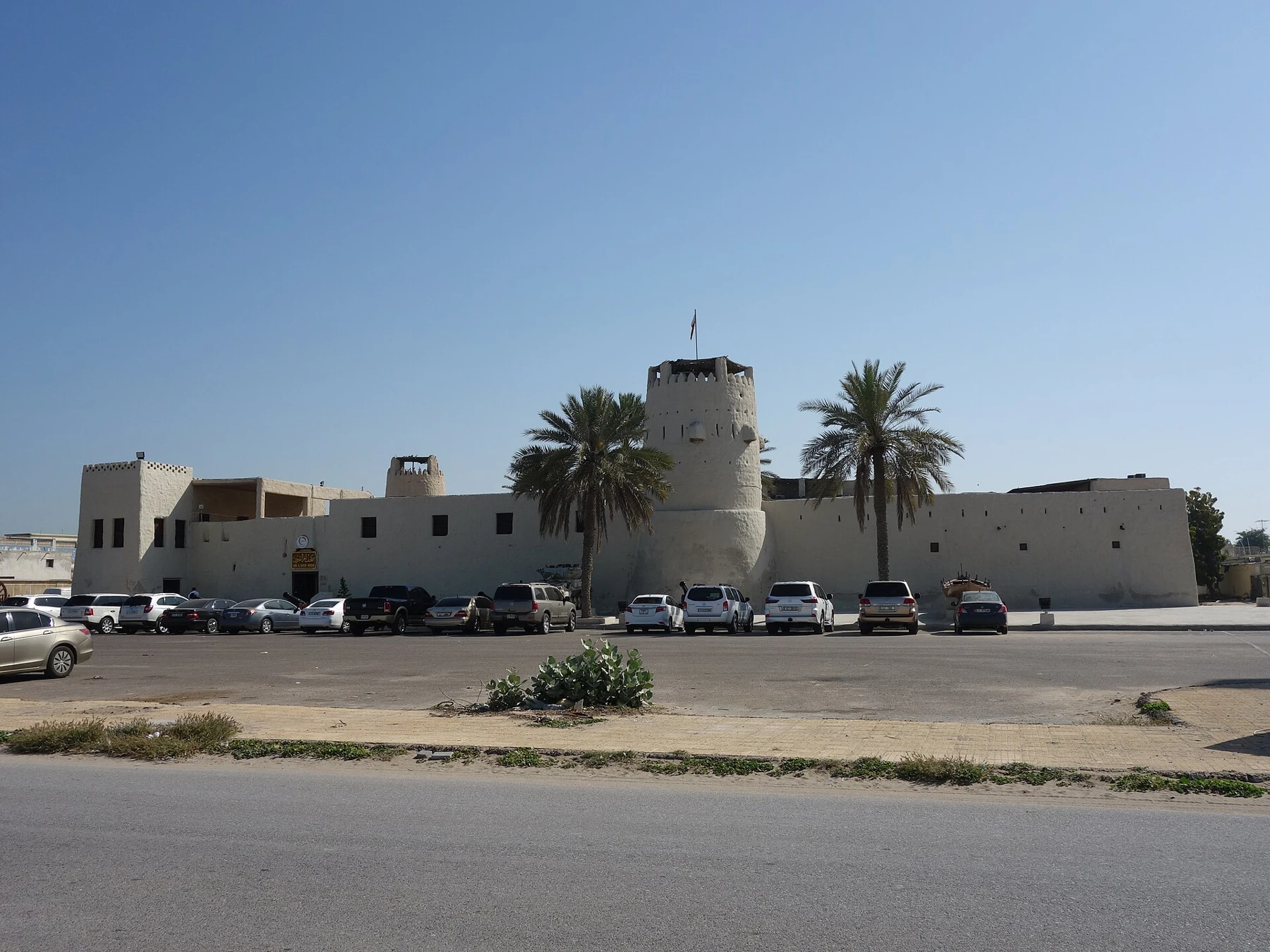
Ed Dur provides a powerful starting point for understanding the northern Emirates as part of older networks of movement and exchange. A coastal archaeological site invites questions about people arriving, goods changing hands, beliefs taking physical form and a settlement maintaining its connections over time. The value of a visit or reading project lies in learning how those questions are investigated, rather than reducing the site to a dramatic label about a vanished city.
The National Cultural Map identifies Ed Dur as a trading settlement on the coast of Umm Al Quwain, flourishing from the late first century BCE into the third century CE. It describes connections reaching Mesopotamia, Persia and India, alongside a temple, fort, buildings and tombs. [1] Those concise institutional facts establish the subject of this guide. The interpretation exercises and planning framework below are original editorial suggestions, not claims to new archaeological findings or a guarantee of current visitor access.
Start by locating the settlement within a connected region
A modern map can make an archaeological site look isolated because it is represented by a single pin. A historical investigation asks what made that place connected. Coastline, routes, landing places, resources and neighbouring communities become part of the question. The aim is to reconstruct relationships from evidence, not to imagine that the present road network explains the movement of people two thousand years ago.
Begin with the official site account and a map appropriate to the investigation. Identify which geographical features are described by the institution and which are assumptions introduced by the reader. Coastal environments can change, and a contemporary photograph cannot by itself establish the historical location of every activity. Where a guide or specialist discusses a reconstruction of the landscape, ask what evidence supports it and what remains uncertain.
This habit protects the reader from a common mistake: treating a visually plausible story as an established account. Good historical understanding develops through a chain of supported inferences. It can remain engaging while acknowledging that some details are still under investigation.
Separate a settlement’s chronology from a single object’s date
A site can contain evidence from several phases. An individual object, a structure and a whole settlement do not necessarily share one date or one period of use. When a display or guide describes Ed Dur, pay attention to the scale of the claim. Is the date attached to an object, a building phase, a burial context or the settlement’s wider period of prominence?
Keep a simple chronology with distinct lines for different kinds of evidence. Do not force every observation into one moment because that makes the story easier to remember. A settlement’s importance may lie partly in how its use changed. Continuity, rebuilding and shifting connections can be historically meaningful even when they complicate a short summary.
For families, a useful question is “what was happening here, and how do we know when?” It encourages attention to evidence without requiring specialist vocabulary. For writers, the equivalent discipline is to preserve the institution’s degree of precision. A broad date range should not become an exact year in a caption merely because an exact date looks more authoritative.
Trade is a system of relationships, not a list of exotic objects
The official account places Ed Dur within long-distance exchange. [1] To understand what that means, examine how an object could become evidence for a connection. Its material, form, production technique, inscription or discovery context may contribute to the interpretation. The mere appearance of something unfamiliar to a visitor is not enough to establish where it came from or how it travelled.
Ask whether a particular interpretation concerns direct contact, an exchange network involving several intermediaries or a broader cultural relationship. These possibilities carry different implications. A settlement could participate in a wide network without every trader travelling the whole distance represented by the objects found there. Avoid making the most dramatic route the default explanation.
A hypothetical museum exercise might compare three objects with different stated origins. The group records what the labels establish, what questions remain and which additional evidence would distinguish one route from another. The lesson is not that any particular route has been proven by the exercise. It is that historical exchange must be investigated as a mechanism rather than celebrated only as an impressive geographical span.
Read buildings in relation to activities
A temple, a defensive structure, ordinary buildings and burial places address different aspects of a settlement’s life. [1] Their presence should prompt questions about organisation, belief, security and memory. It should not encourage a visitor to assign every structure a confident function without institutional interpretation.
When looking at a building, distinguish the visible fabric from the explanation offered about it. Ask how the proposed use was inferred and whether several phases are represented. Consider how a building relates to circulation, neighbouring structures and the activities people needed to perform. The shape of a wall can be observed directly; the meaning of a room may require a more complex argument.
This distinction is especially valuable when writing about archaeology online. A photograph can establish that a feature is visible, but it rarely establishes its full historical function. A responsible caption can state the institution’s interpretation and direct readers to the source. It need not pretend that the writer has independently verified the archaeological analysis.
Burial evidence requires care and respect
Tombs and burial-related finds can inform an archaeological account, but they are also evidence of human lives and practices. Treat them with the respect appropriate to that context. Follow all site restrictions and avoid presenting sensitive material as a curiosity detached from the people it concerns.
A thoughtful question asks what a burial context can reveal about practices, objects or social relationships, and what it cannot reveal without further evidence. A single example should not be made to represent every person in a community. Differences can be significant, but their meaning needs specialist interpretation. The visitor’s role is to learn from that explanation rather than invent a hierarchy from the appearance of a photograph.
For educational use, decide in advance how the subject will be discussed with children. A calm explanation of evidence and care is more appropriate than sensational language. The purpose is to develop an understanding of how archaeologists approach the past responsibly, including the limits and ethical responsibilities of their work.
Plan access before planning an itinerary
An entry in an official cultural directory establishes that a site is recognised and provides a route for further enquiry. It does not necessarily establish unrestricted public access on a chosen day. Confirm current arrangements with the responsible local cultural authority or authorised operator before travelling. Ask about tours, entry conditions, photography, physical access and any restrictions relevant to the group.
This matters because archaeology is not an ordinary open-air backdrop. Conservation, research and safety can affect access. A visitor should not interpret the presence of a road, a map pin or an older travel photograph as permission to enter. If a site is not accessible, ask whether a museum or guided interpretation provides an appropriate alternative.
Build the day around confirmed arrangements rather than attempting to persuade someone to accommodate an improvised visit. That approach respects the institution’s responsibilities and reduces disappointment for the group. It also leaves time for a meaningful experience: the value of Ed Dur is not measured by how quickly a traveller can stop, photograph a sign and leave.
An evidence-led visit for a family or small group
Before the visit, give each participant a question. One might examine evidence of exchange, another the relationship between buildings, and another how the institution communicates uncertainty. Bring those questions together afterwards. Different observations can produce a richer account than asking everyone to memorise the same dates.
During the visit, record the source of important explanations. A label, a guide’s description and a personal inference should remain distinguishable. If taking notes or photographs is permitted, use them to preserve context rather than merely create a large visual archive. A small number of well-labelled observations can be more useful than dozens of images whose location or meaning is later forgotten.
The group should also be free to ask basic questions. Archaeological terminology can make visitors feel that uncertainty is a sign of ignorance. In reality, asking what a term means often opens the most useful explanation. The aim is to understand the reasoning behind the account, not to imitate specialist language without grasping it.
A useful comparison with Mleiha
Readers already familiar with Sharjah’s Mleiha material can use Ed Dur to consider how different settlements participate in regional networks. The comparison should begin with the official account of each place, keeping their chronologies, geography and evidence separate. It should not assume that similarities prove identical functions or direct relationships in every period.
Create a comparison table with columns for location, stated period, types of evidence, institutional interpretation and unanswered questions. Leave uncertain entries blank or label them clearly. A table is useful because it exposes where the reader knows something about one site and has merely assumed the same thing about the other.
The educational gain comes from learning how to compare responsibly. A visitor may discover that a broad category such as “ancient trading centre” contains many different mechanisms and forms of evidence. That is a more valuable conclusion than ranking sites by how impressive they appear in a short promotional description. Each place deserves attention on the terms supported by its own record.
Avoid the language of effortless certainty
Archaeological writing often becomes less accurate when it tries too hard to sound exciting. Words such as “proved,” “first” or “lost” can carry implications beyond the evidence actually consulted. Use them only where the responsible source supports the precise claim and preserve any qualification that matters.
The Cultural Map account notes a proposed connection with the ancient name Omana. [1] That should retain its tentative character when repeated. A possibility does not become certain because it appears in an attractive headline. This is a general interpretive principle that applies to names, functions, dates and routes throughout heritage writing.
A strong article can still be vivid. It can explain the significance of a question, describe the evidence that makes it interesting and show why the answer matters. The reader gains more from a clear account of what is known and how it is known than from a dramatic conclusion that requires the writer to erase uncertainty. Precision is an editorial strength, not an obstacle to curiosity.
Turn the visit into a lasting learning record
Afterwards, write a short account organised around three categories: established information from the institution, observations made during the visit and questions for further research. Add the date and source links. This simple structure prevents memory from blending evidence and imagination into one undifferentiated story.
For a school project or public article, check names and captions against the official material before sharing. If an image shows a reconstruction, say so. If an explanation came from a guide, attribute it appropriately. If access arrangements were confirmed for one date, avoid presenting them as permanent operating information. These controls are modest, but they materially improve the reliability of cultural content.
Ed Dur’s broader value is that it changes the way the UAE can be understood. The country becomes part of a long history of exchange, settlement and adaptation rather than a story beginning only with recent urban growth. A careful visitor encounters that history through evidence, with enough humility to recognise that an archaeological place is more complex than any single visit can explain.
Questions to ask the institution
Which parts of the site or interpretation are accessible to visitors at present? Which materials are best suited to a first visit? Are guided explanations available, and in which languages? What physical conditions should participants prepare for? Which photography or conservation restrictions apply? Where can a visitor find an authoritative account after leaving?
For historical questions, ask which interpretation is broadly established and where active research continues. A useful guide may distinguish a feature’s identification from ongoing debate about its meaning. That distinction gives the visitor a more honest understanding of scholarship. It also helps avoid the impression that new findings make the whole earlier account worthless. Knowledge can develop through revision while retaining reliable foundations.
Before booking transport or arranging a group, obtain the current practical answers directly. The article’s purpose is to improve preparation and interpretation, not to substitute for the institution’s live instructions. A well-planned visit begins by respecting those instructions and ends by preserving the source trail that made the learning possible.
Frequently asked questions
Is Ed Dur simply an outdoor museum? Treat it as an archaeological place with its own conservation and access conditions. An official directory entry does not establish that every part is open to independent visitors.
Can visitors identify the origin of an object from appearance alone? Appearance may prompt a question, but an archaeological attribution depends on evidence and specialist analysis. Use the institution’s interpretation and retain its qualifications.
Should every feature be assigned to one date? No. A site can contain several phases, and dates may refer to different scales of evidence. Keep the settlement chronology distinct from an individual object or building phase.
Can a short visit explain the whole settlement? It can provide a strong introduction if organised around a few clear questions. Further reading and an accurate record of sources help develop understanding afterwards.
What is the most valuable preparation? Confirm access, read the official account, choose questions and plan to record the difference between evidence, interpretation and personal response. That preparation makes the experience both more respectful and more informative.
Official sources and editorial method
Sources checked on 31 October 2026. Official facts are distinguished from CYUAE analysis and clearly labelled hypothetical examples. Confirm current access, eligibility, fees and service requirements with the responsible institution before acting.



