
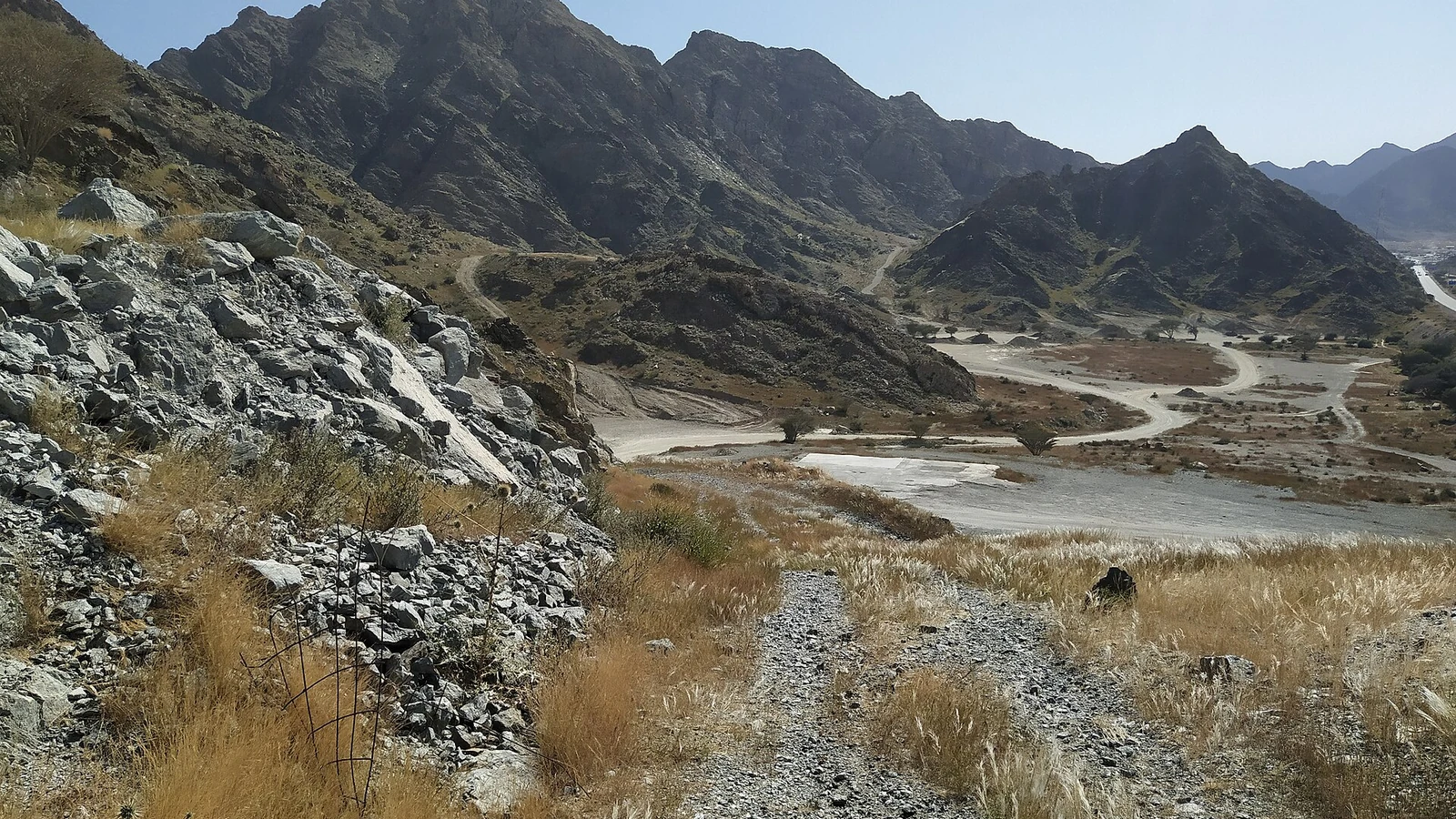
A photograph of a dramatic ridge, a climbing wall or a zipline does not tell a visitor whether an activity is suitable for their group. It also does not establish the current access position. In Fujairah, the practical task is to identify the exact activity, the organisation responsible and the conditions applying on the intended day.
This guide focuses on that booking decision. It is distinct from a general hiking itinerary or a claim that every outdoor activity follows the same permission route. Official information was checked on 4 November 2026. The preparation methods and hypothetical examples below are CYUAE analysis; they do not replace an operator's assessment or the competent authority's instructions.
Start with the correct organisation and activity
Fujairah Adventures Center's official website describes its role in developing the emirate's adventure sector and infrastructure. Its public FAQ says hiking is allowed during the official adventure season, announced annually through its social channels.[1] Do not infer a universal season start from cooler weather or an old social-media post.
Related reference: Jebel Jais Hiking: Route Choice, Group Readiness and a Safer Mountain Day.
The Center's e-services directory separately lists company annual activity permits, temporary event permits and a local-guide service.[2] The existence of those service categories does not mean an individual visitor should automatically apply for a company's annual permit. Establish which party is responsible and which permission applies to the proposed activity.
A commercial park is a different booking context. Fujairah Adventure Park publishes its own activity packages, participation conditions and operating terms.[3][4] A park booking should not be represented as proof of access to every mountain route in the emirate. Equally, a trail photograph does not establish the terms of a supervised attraction inside a managed venue.
Define the booking before comparing prices
Write down the activity name, location, date, expected duration, operator and people taking part. Clarify whether the proposal is a guided trail, a technical climbing activity, a managed attraction or an organised event. Avoid accepting the word adventure as a complete product description.
Then ask what is included: supervision, equipment, briefing, transport within the site, rentals and any separate activity charge. Obtain a written explanation of what happens if the group is unsuitable, the activity is unavailable or conditions require a change.
Related reference: Al Aqah Beach and Coastal Activities: Planning a Fujairah Stay Around the Experience You Actually Want.
A cheap headline price can conceal a poor fit. The right comparison is between activities that the actual group can use, with the same important inclusions and a clear understanding of the conditions.
| Decision | Ask before paying | Keep as a record |
|---|---|---|
| Exact activity | What are we booking and where does it take place? | Activity name, date and location |
| Permission | Who is responsible for the applicable approval? | Operator's explanation and confirmation |
| Participant fit | Which limits apply to each person? | Activity-specific conditions |
| Equipment | What is supplied and what must we bring? | Written inclusion and clothing list |
| Changes | What happens if the activity cannot proceed? | Current cancellation or rescheduling terms |
These are preparation questions, not additional official application requirements created by this article.
Confirm the current season and site position
For a mountain activity, ask the Center or responsible operator about the current official season and the particular route. Do not use the Center's general FAQ to conclude that every trail is open, unrestricted or appropriate for an inexperienced group. The exact site may involve further instructions.
A route being visible on a map is not the same as permission to enter. Confirm the meeting point and authorised approach rather than following an informal track because another visitor used it previously. If an organiser cannot explain the proposed access, resolve that uncertainty before transferring a deposit.
Related reference: Al Hayl and Al Bithnah: A Fujairah Heritage Route Through Valleys, Water and Settlement.
Check conditions again close to departure. A booking made earlier does not establish the position after a weather change, operational restriction or revised instruction. Ask who will contact participants and what channel will carry a cancellation or route change.
Assess every participant individually
A group's strongest member does not determine the suitability of everyone else. Consider experience, comfort with heights, ability to follow instructions, stamina and any condition the operator needs to assess. Give relevant information through the appropriate private channel rather than assuming a group organiser can make a medical decision.
The commercial park's activity page publishes different conditions for different products. For example, its zipline listing specifies a 40–110kg weight range and a maximum height of 190cm; its Action Tower package gives a different minimum weight.[3] Those are product-specific operator statements, not limits for every Fujairah outdoor activity. Recheck the selected product before paying and let staff perform any required admission assessment.
Imagine a hypothetical family in which one child does not meet a chosen activity's condition. The sensible planning response is to find a suitable alternative or separate the programme responsibly. Buying a broader package does not remove an individual restriction, and disappointment at the gate is not a reason to pressure staff to ignore it.
Use equipment and clothing instructions as part of the decision
The park's published terms require participants to follow staff instructions, wear appropriate clothing and closed-toe shoes, and complete its waiver process. They also state that prices and schedules can change and that operating arrangements depend on conditions.[4] Read the current terms before treating a screenshot as the whole booking contract.
For a guided activity elsewhere, obtain that operator's own list. Ask whether a particular item is supplied, mandatory or available to rent. A general sports shoe may not satisfy a technical activity's equipment requirements. A helmet brought from home should not be assumed acceptable without the operator's confirmation.
Keep the packing list specific enough to use. Identify the item, who carries it and whether it needs checking before departure. Do not copy a mountaineering list onto a short managed-park visit or assume a park's rental provision applies to a remote route.
Make the schedule suitable for the group
A realistic plan includes the journey, check-in, briefing, equipment fitting, activity and return. It also allows for a decision not to participate. A tightly packed itinerary can create pressure to rush a briefing or continue after the group has lost capacity.
Consider a hypothetical group choosing one main activity and one optional activity. The second is attempted only if the first finishes comfortably and the operator confirms suitability. This preserves a useful choice instead of creating an obligation to complete everything purchased.
For children, agree which adult is responsible at each stage and where companions will wait. Ask about the actual arrangement for non-participating visitors. Do not assume someone can accompany a participant onto a route or platform simply because they travelled together.
Read the change and cancellation terms carefully
Separate a customer changing their mind from an operator changing a programme. Identify the published treatment of each situation and ask about unclear wording before paying. This guide does not create a universal refund entitlement or decide how a particular booking dispute would be resolved.
The park's website contains inconsistent general operating-hour references across pages.[3][4] That is a reason to confirm the selected date directly, not to publish one version as a guaranteed closing time. Save the current booking confirmation and any specific answer about last check-in or activity availability.
If the organiser revises an activity, ask what changed, which alternative is offered and what action the customer needs to take. Keep the original and revised messages together. A clear record makes it easier to distinguish a schedule change from an unexplained absence of service.
Questions to resolve before departure
Does a booking prove that the whole group can participate?
No. Check the activity-specific conditions for each participant and follow the operator's assessment. A group reservation and an individual's suitability are different decisions.
Does an annual activity permit apply automatically to a visitor?
The Center's directory describes its annual service as a company permit to operate activities.[2] Ask which permission applies to the proposed relationship rather than selecting a service by its name alone.
Can an old route report establish today's access?
Use it as background only. Confirm the current season, site instructions and conditions through the responsible organisation.
What makes a booking ready to proceed?
The group can identify the exact activity, responsible operator, access position, individual conditions, equipment, timing and change process. That is a stronger starting point than an attractive image or an unusually low price.
Official sources and editorial method
Sources checked on 4 November 2026. Numbered references support the official facts stated. Planning frameworks and hypothetical scenarios are CYUAE editorial analysis, not individual legal or tax advice. Photograph captions identify whether an image shows the subject or provides general context, and record its source and licence. Contextual images do not document the announced event or an individual case.


