
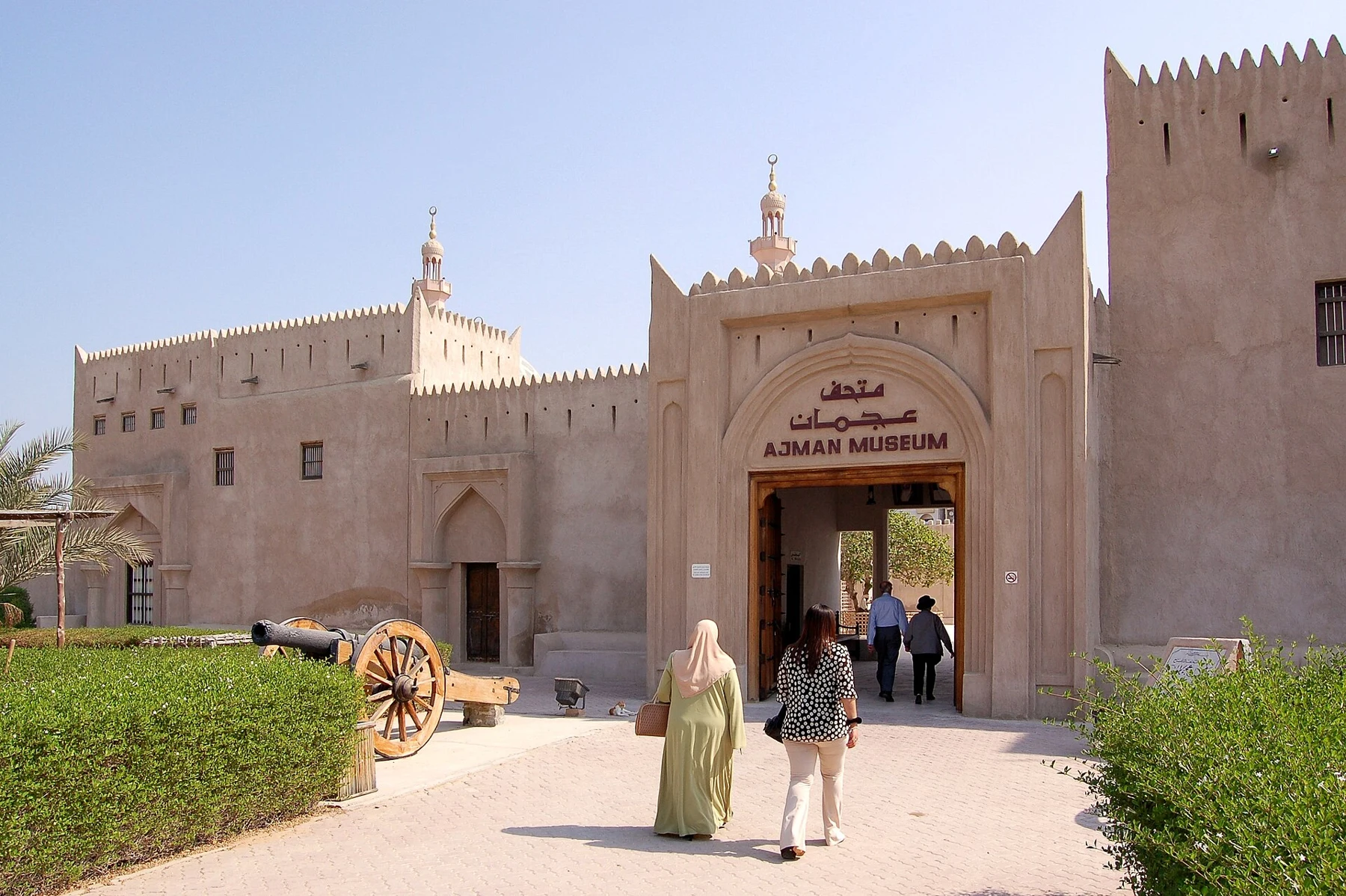
Manama offers a useful correction to the habit of describing Ajman only through the coast. An inland visit changes the questions a traveller asks. Water, settlement, movement and the reuse of historic buildings become more visible as organising themes. The destination does not need to compete with a major city’s concentration of attractions to be worth understanding. Its value can lie in the attention it encourages.
This guide is for visitors who want to build a considered outing rather than collect a place name. It separates the official description of Manama and its museum from editorial suggestions about interpretation and planning. It does not confirm today’s opening times, admission terms or access to any particular structure. Those practical questions should be resolved with the responsible institution before departure. A slow visit still needs accurate arrangements; simplicity should not be confused with an absence of preparation.
Locate the actual destination first
The UAE Government identifies Manama as one of Ajman’s inland exclaves. [1] For planning purposes, that means the emirate name alone is not a sufficient guide to distance or journey time. Identify the specific place, route and intended stops on a current map. Do not assume that an address carrying “Ajman” belongs to the coastal city.
Explain the geography to the group before travelling. Someone expecting an urban museum visit may pack or schedule differently from someone expecting a day inland. Confirm which destination the navigation is taking you to, and keep the institution’s contact information available. Where access or document questions arise from a route, resolve them through the appropriate authority. A confident recollection of an old journey is not the same as current route information. Accurate orientation saves time that can then be spent on the place rather than on correcting avoidable assumptions.
Begin with the museum’s institutional account
The National Cultural Map describes Al Manama Museum as a fort adapted into a museum, with material concerning heritage, crafts and traditional architecture. Its description also refers to a well, palm trees and irrigation associated with a falaj system. [2] These are useful starting points for interpretation, but they should not be expanded into claims about every feature without further evidence.
Ask the museum what is currently displayed, what interpretation is available and which parts of the site visitors may enter. A broad institutional description may remain relevant while the practical display arrangement changes. If a feature is unavailable during the visit, avoid treating that absence as evidence that the source is wrong or the institution has failed. First establish what the source describes and what the day’s access includes. This distinction allows a visitor to preserve historical context while responding sensibly to current arrangements.
Use water as an interpretive thread
A reference to irrigation can organise a strong visit because it links landscape with everyday work. Ask how water was obtained, moved and used, and what evidence supports the explanation. The precise answers should come from the institution or a reliable specialist source. A visitor should not infer a complete technical history from seeing a channel or a group of trees.
The educational value lies partly in the questions themselves. Water encourages discussion of maintenance, cooperation, cultivation and the relationship between resources and settlement. These are analytical themes, not claims that a particular social arrangement has been established at every site. A family can examine how a practical resource influences decisions without requiring a simplistic moral story. The aim is to learn how people solved problems in a particular environment and to recognise the limits of what a short visit can reveal.
Read the fort through changes of use
A fort used as a museum has at least two functions for the visitor: it is a historic structure and a contemporary place of interpretation. Its current circulation, lighting and displays are part of the museum experience. They should not automatically be read as the original arrangement of daily life within the building.
Ask which components are historic, restored or adapted. If the institution does not provide a detailed answer, describe the uncertainty rather than resolving it imaginatively. A careful observation might note the relationship between rooms and open space, then ask how those spaces were used. That is stronger than assuming that every visible object belongs to the room in which it is now displayed. Heritage interpretation becomes more interesting when visitors understand the difference between the place’s past and the methods used to communicate that past today.
Make room for objects without reducing people to objects
A collection of tools, jewellery or craftwork can reveal skills, materials and forms of exchange. It can also become a decorative shorthand for an entire community if the visitor stops at appearance. Ask what an object’s label actually establishes: its date, material, provenance, use or relationship to a broader practice.
Where the evidence is limited, avoid assigning the object a more complete story than the institution provides. It is reasonable to ask who might have used it and what work it required, but those should remain questions unless supported. This matters when writing or teaching about heritage. Historical people had varied circumstances and relationships; they should not be flattened into one timeless image of “traditional life.” An attentive museum visit can introduce that complexity in accessible language, helping visitors respect the difference between a representative display and a complete account of a community.
Plan a visit around three layers of evidence
A practical observation method separates the building, the collection and the landscape. Each layer can support different questions. The building may suggest movement and organisation; the collection can introduce materials and work; the wider setting can prompt questions about resources and connectivity. Connections between them should be investigated rather than assumed.
| Layer | A useful question | A limit to recognise |
|---|---|---|
| Building | Which spaces and features are explained by the institution? | Visible form alone does not date every component |
| Collection | What does the label establish about the object? | One object does not describe every household |
| Landscape | How is water or cultivation interpreted? | A short observation cannot establish an entire environmental history |
| Museum presentation | What is original, recreated or explanatory? | A display arrangement is not necessarily a historic room arrangement |
The table is an editorial learning tool. It helps visitors remain curious while calibrating their confidence to the evidence available.
Confirm practical arrangements with precise questions
Before travelling, ask about opening, admission, available interpretation, accessibility and any booking requirement. State the actual group: adults, children, mobility needs and preferred language. A vague question such as “Is it suitable for everyone?” is less useful than asking about steps, walking surfaces, facilities and the expected visit format.
Keep the answers together with the contact date. If travelling with guests, share a short summary so everyone knows what is confirmed and what remains optional. Avoid treating a historical tourism PDF as a current ticket page. Older material can explain the destination while requiring a separate operational check. This approach prevents a common failure in cultural outings: an organiser researches the story extensively but neglects the small practical dependency that determines whether the intended experience can happen at all.
A hypothetical visit with children
Imagine a family choosing Manama because the children have recently asked how people lived before modern utility systems. The organiser confirms the museum arrangements and prepares a simple observation task: find evidence of materials, tools and water use. The children do not need a lecture before arrival; they need a few questions that help them notice details.
During the visit, adults encourage descriptions before explanations. What can be seen? What does the label say? Which question remains? Afterwards, the family compares its notes and checks any unresolved claim against the institution’s account. This is a hypothetical educational example, not a programme offered by the museum. Its strength is that it gives children permission to be precise without expecting them to know every answer. A few well-supported observations can become a more lasting memory than an adult’s improvised story about an entire historical period.
A hypothetical repeat visit for residents
A resident who has already seen the museum may benefit from returning with one narrower question. Instead of trying to repeat the same complete experience, the visitor might focus on the relationship between a particular craft and the materials used, or on how the museum explains the building’s adaptation.
Before returning, check whether the relevant interpretation is available and whether a staff member can address the question. The visit can then be shorter but more deliberate. This is useful for people who assume that a cultural place becomes exhausted after one encounter. Institutions can support different forms of attention over time, even when the displays are familiar. The visitor’s understanding changes as new questions emerge. A repeat visit becomes worthwhile when it investigates something specific rather than simply recreating the first set of photographs.
Use journey time as part of the learning design
An inland outing includes travel, and travel affects attention. A group that arrives tired or rushed may have less capacity for interpretation. Plan breaks and a realistic return commitment. Avoid scheduling so tightly that a useful question must be abandoned because the next item on a crowded itinerary has already become urgent.
The organiser should know which parts of the day are fixed and which can move. A confirmed opening or appointment may be a constraint; an optional meal location may be flexible. This is an editorial planning principle rather than a statement about a particular route. It works because it preserves the purpose of the journey. The trip is not improved merely by filling every hour. Margin allows the group to respond to its actual energy and to spend longer with a question that turns out to be more interesting than expected.
Photograph the context as well as the attractive detail
A close image of a craft object can be visually engaging but difficult to interpret later without its label or setting. Where photography is permitted, record enough context for a responsible caption. Note the institution, the object’s stated description and whether the display is an original artefact, a reconstruction or an explanatory arrangement.
Follow restrictions and respect other visitors. A quiet museum environment can be disrupted by treating every display as a staged portrait background. Ask before photographing staff or making them central to an image. When sharing, do not convert uncertain impressions into facts for the sake of a stronger caption. A clear statement about what was observed invites readers into the actual institution. An exaggerated claim may circulate more quickly but leaves others with a weaker understanding of the place and the evidence behind the story.
Avoid reading the inland setting as a lifestyle guarantee
A visitor may find the pace and setting appealing and imagine relocating, opening a business or buying property. That response can motivate useful research, but it is not itself a decision framework. A leisure visit reveals a particular moment, often selected around comfortable activities and limited commitments.
A resident or business must investigate daily access to work, services, customers and other requirements using actual locations. The relevant authorities and conditions must be checked for the proposed activity. Keep those investigations separate from the cultural account. The place deserves to be understood without being immediately reduced to an investment proposition. Likewise, a consequential commercial decision deserves stronger evidence than a pleasant outing can provide. Respecting those boundaries makes the visitor’s appreciation more credible and the later practical enquiry more disciplined.
Frequently asked questions
Is Manama part of coastal Ajman city? The government describes it as an inland exclave of the emirate. Plan the actual destination and route rather than relying on the emirate name alone.
Can a small museum justify a dedicated outing? It can, when the group has a clear purpose and the practical arrangements fit. The value of a visit depends on the quality of attention, not only the number of rooms or objects.
Should references to water or a falaj be treated as permission to explore nearby land? No. An interpretive description does not establish visitor access. Follow current site boundaries and guidance.
How can an account remain interesting without exaggerated historical claims? Explain what the institution establishes, what was observed and what questions remain. The process of understanding can be as engaging as a dramatic but unsupported conclusion.
What Manama can add to a wider UAE understanding
Manama encourages a view of Ajman that includes inland settlement and heritage. It also offers a practical lesson in cultural literacy: different kinds of evidence answer different questions. A building, a collection, an institutional description and a personal impression should remain distinguishable even when they contribute to one account.
Plan a manageable outing, verify access and arrive with a small number of thoughtful questions. Leave room to notice how the museum presents its material and how the surrounding setting changes the interpretation. The result can be a quieter, more precise understanding of the emirate—one grounded in attention rather than in the pressure to make every destination sound spectacular.
Prepare a short source note for anyone sharing the visit
If several people will post photographs or write about the outing, share a concise source note afterwards. Include the museum’s name, the official links consulted and any details that remain uncertain. This avoids a situation in which one person’s improvised explanation is repeated by the whole group as though the museum had established it.
The note can distinguish a factual description from the group’s interpretation. For example, the institution may explain an object’s material while the visitors discuss what its use might have required. Both can be worth sharing, but they should not be presented with identical certainty. This practice is particularly valuable for teachers, guides and content creators who translate a short visit into material for a larger audience. Accuracy at that stage has a multiplier effect: a careful distinction helps many readers, whereas an attractive mistake can become harder to correct once repeated without its original context.
Official sources and editorial method
Sources checked on 31 October 2026. Official facts are distinguished from CYUAE analysis and clearly labelled hypothetical examples. Confirm current access, eligibility, fees and service requirements with the responsible institution before acting.



