
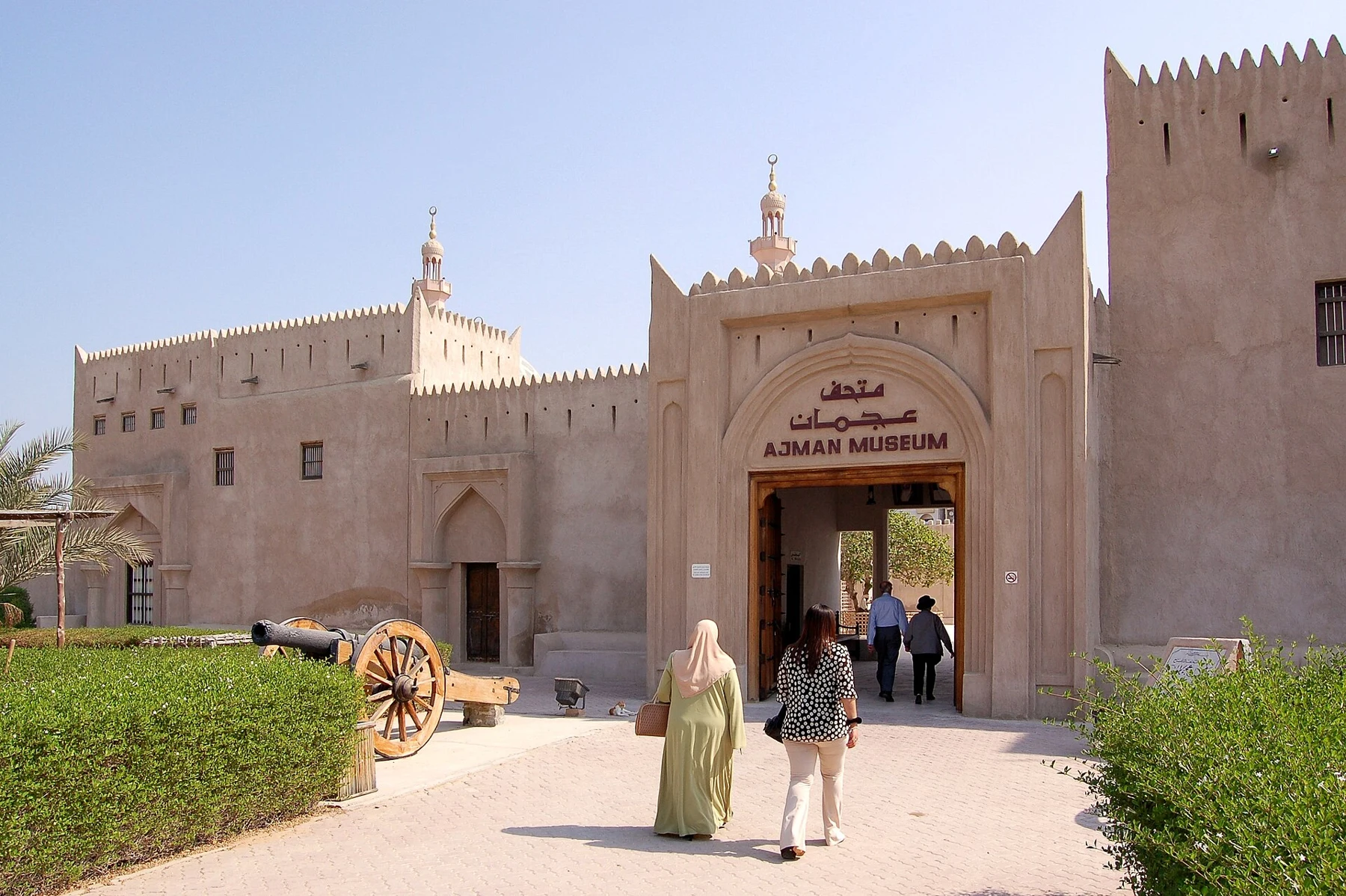
Masfout asks a visitor to think differently about Ajman. The emirate is often imagined through its coastal city, yet a trip inland introduces another geography and another set of planning questions. A mountain backdrop may provide an appealing photograph, but the more useful experience comes from understanding the destination’s separation from the coast, choosing realistic activities and respecting the limits of what a day can contain.
This article offers a planning method for a first or repeat visit. It does not give a live road-status report, promise entry to any site or prescribe an independent hiking route. The official sources establish the destination and heritage context. The itineraries, questions and decision tools below are original editorial suggestions. Check practical arrangements directly for the intended date, particularly where a route or activity depends on access permissions, weather or operator availability.
Understand the inland geography before choosing the schedule
The UAE Government’s emirate exploration page identifies Masfout as one of Ajman’s inland exclaves. [1] That administrative fact has a practical consequence: the name “Ajman” is not sufficient to estimate a journey between the coastal city and every place within the emirate. Begin with the actual origin, destination and route rather than assuming that local branding implies a short urban transfer.
Look at the map together with everyone travelling. Establish the intended stops and identify which ones require a booking or a guide. A route suggested by an older tourism description should be checked against current navigation and official instructions. If the proposed journey involves any border or document question, resolve it with the responsible authority before departure. Do not let an online comment about someone else’s drive become the basis for a group’s document or access assumptions.
Treat the gate as a beginning, rather than the whole visit
Ajman Tourism describes Masfout Gate as an entrance landmark set against the Hajar Mountain environment. [2] A landmark can provide orientation and a useful starting point for questions about the area. It should not be asked to carry an entire itinerary simply because its photograph is recognisable.
For a thoughtful visit, separate the symbolic arrival from the experience being planned. Will the group investigate a heritage place, undertake a suitable guided outdoor activity, spend time observing the landscape or combine a small number of these elements? The answer should shape the timetable. A photograph at the entrance may be a pleasant record, but it does not establish that the visitor has understood the destination or that nearby terrain can be entered freely. Use the first stop to orient the group, verify the next stage and adjust the plan if necessary.
Read a fort or castle as a place with a function
The National Cultural Map describes Masfout Castle as a historic defensive structure and a heritage attraction. [3] That context opens a better line of observation than simply asking which viewpoint produces the best picture. What can its position suggest about visibility and movement? Which questions about construction, use or restoration require an institutional explanation?
Do not assume that a feature seen today belongs to one original building phase. A visitor may not be able to distinguish an old component from a later repair without interpretation. Where access is available, read the site information and ask the responsible guide. Where it is not, respect the boundary rather than manufacturing a more intimate encounter. A careful account can describe the location and its stated heritage role while remaining honest about what the visit did not establish.
Choose one central purpose for the day
A short trip becomes incoherent when every participant expects a different main event. One person may imagine a walk, another a cultural visit and another a long meal in a scenic setting. These preferences can coexist, but only if the organiser makes the trade-offs explicit before departure. Ask each participant which part matters most and which part is optional.
A workable plan selects one central purpose and one supporting experience. The central purpose receives protected time, while the supporting experience can be changed if conditions or energy differ from expectations. This recommendation is about group logistics, not a claim that Masfout requires a particular minimum stay. The advantage is that a delay does not turn every subsequent stop into a rushed obligation. A focused visit is more likely to leave clear memories because participants have enough attention to understand what they are seeing.
Verify practical access separately for each activity
A destination page can establish that a place exists without confirming today’s opening arrangements. A road view can establish proximity without proving permission to park or enter. A social photograph can show that someone was present without revealing how they obtained access. These are different forms of evidence and should be used for different questions.
Before leaving, confirm the actual meeting point, current access, any required booking and what participants need to bring. If an activity is guided, ask who provides the service and which conditions could change it. Preserve contact details in a form accessible during the journey. If information remains unclear, revise the itinerary around a confirmed option rather than filling the gap with confidence. The purpose is not to eliminate spontaneity. It is to prevent an avoidable uncertainty from consuming the time intended for the destination itself.
Build an outdoor plan around the least prepared participant
A mountain setting can create a misleading sense that everyone must hike. Visitors have different levels of comfort with uneven surfaces, sun exposure, physical effort and unfamiliar routes. Explain the group accurately when seeking advice. A person who enjoys urban walks may have little experience with the terrain involved in a particular outdoor activity.
Choose appropriate clothing, footwear and supplies according to the confirmed plan and current guidance. Do not use a general description of cooler mountain conditions as a promise about the day. Agree beforehand that changing an activity is acceptable if it no longer fits the group. This reduces pressure on someone who might otherwise hide discomfort to avoid disappointing others. A good outing creates the conditions for everyone to participate with reasonable confidence; it is not a test of who is willing to endure the most difficult option.
A simple itinerary design table
| Element | Planning decision | Evidence or check |
|---|---|---|
| Journey | Actual start, route and return plan | Current navigation and relevant authority guidance |
| Main purpose | One protected experience | Confirmed access or booking |
| Supporting stop | Optional activity with flexibility | Current availability |
| Group fit | Requirements of the least prepared person | Operator or site advice |
| Fallback | A valid alternative if the plan changes | A confirmed, permitted option |
| Reflection | Time to discuss what was learned | Notes and reliable source links |
This is a planning structure, not a recommended fixed route. It works because each element has a decision owner. Without that ownership, groups can arrive with a shared destination name but incompatible assumptions about how the day will unfold.
A hypothetical heritage-focused visit
Imagine a resident household hosting visitors who want to understand the UAE beyond its major urban attractions. The organiser first verifies a heritage stop and any access arrangements, then builds the journey around that confirmed experience. A second, less demanding stop is included only if it can be reached without compressing the main visit.
Before departure, the group selects a question about the relationship between settlement and landscape. During the visit, participants record observations rather than trying to answer the question immediately. Afterwards, they compare what the site information established with what they inferred themselves. This is an editorial example, not a report of an actual itinerary. Its value lies in the method: establish the purpose, secure the necessary arrangements, leave room for attention and distinguish evidence from impression. The resulting story is more credible than a list of locations visited too quickly to understand.
A hypothetical mixed-ability outdoor visit
Now imagine a group attracted mainly by the landscape, with participants whose walking experience differs considerably. The organiser asks a suitable operator or responsible source about a realistic activity and describes the group’s limitations clearly. It then establishes the start, expected effort, essential equipment and criteria for changing the plan.
The group agrees on a fallback before travelling. That fallback is treated as a legitimate version of the day, not as failure. If conditions change or someone is uncomfortable, the decision can be made without negotiating the group’s pride in the moment. A short, well-managed outing may leave more energy for conversation and observation than an ambitious route. The useful measure of success is whether the experience fits the people and conditions, not whether it appears impressive when reduced to a single image online.
Use photography to support an accurate account
Landscape photography can make distance, steepness and scale difficult to interpret. A dramatic angle may suggest a route or access opportunity that the photographer did not actually use. When sharing images, avoid captions that invite others to repeat an activity without understanding its conditions. Identify whether the photograph was taken from a permitted viewing place or during an organised experience where that distinction matters.
For heritage subjects, preserve the source of any factual claim. If a caption gives a date, function or designation, check it against an authoritative description. Do not convert a personal reaction into a statement about the place’s official significance. A useful travel account can be vivid and modest at the same time: it can explain what was seen, what was learned from the institution and what remained unanswered. That honesty helps the next visitor plan more responsibly.
The value of leaving time unassigned
People often regard an empty section of an itinerary as poor planning. In an inland trip, some flexibility is a useful resource. It allows for a slower arrival, an additional question, a change in group energy or a practical delay without forcing every later decision into urgency. The unassigned time is not an invitation to enter an unverified site; it is margin within a responsible plan.
Think of the day as a sequence with dependencies. A booked activity depends on arrival. A return commitment depends on a realistic departure. Food and rest depend on the actual group’s needs. The organiser should know which items can move and which cannot. This makes spontaneous choices safer because they are made within clear boundaries. A plan with no margin may look efficient on a screen but can be fragile in real conditions, especially when several people have different needs.
Avoid turning a visitor impression into an investment thesis
A pleasant mountain outing may lead a visitor to imagine a business or property opportunity. That curiosity is reasonable, but it is the beginning of a new investigation. Visitor enjoyment does not establish demand for a particular product, permission to operate, the economics of a location or the rights attached to a property.
If a commercial idea emerges, write it separately from the travel notes. Identify the proposed customer, actual activity, relevant authority, premises requirement, route to market and cost assumptions. Ask what evidence would disprove the idea, not only what made the place appealing. A destination can be attractive while a particular venture remains poorly matched to it. Keeping the leisure and commercial decisions separate protects both: the trip can be enjoyed for what it is, while the business question receives the more demanding evidence it requires.
Common questions about planning Masfout
Is it enough to use a generic Ajman city itinerary? No. Start with the inland destination and the actual journey. The emirate’s coastal and inland settings should not be assumed to share the same logistics.
Does an appealing mountain backdrop mean that independent hiking is appropriate? That cannot be concluded from an image. Establish the route, permission, suitability and current conditions with the responsible source.
Can the visit still be worthwhile without a demanding outdoor activity? Yes. A focused heritage or landscape experience can be valuable when it fits the group and is interpreted carefully. Physical difficulty is not a measure of cultural depth.
Should every historical detail be resolved before visiting? No, but distinguish a confirmed institutional explanation from a personal inference. Record questions and use the linked sources or site guidance to investigate them.
Return with a clearer understanding of the emirate
Masfout can help a visitor see Ajman as a place with several geographies rather than one coastal image. That understanding is strengthened by precise planning: use the real route, verify the intended activity, match it to the group and keep the difference between evidence and impression visible.
A well-designed visit does not need a crowded list of stops. It needs a purpose, reliable arrangements and enough time to notice what the destination reveals. When those elements work together, the journey inland becomes more than a detour. It becomes a way to ask better questions about the relationship between landscape, settlement and heritage in the UAE.
Make the return journey part of the decision
Before adding another stop, consider the group’s return commitments. A destination can be enjoyable while the complete day becomes tiring because the organiser treated the journey home as an afterthought. Review the intended departure and which activities remain optional. If someone must work or care for others afterwards, that responsibility belongs in the plan from the beginning.
A practical group agreement identifies the point at which the itinerary will be shortened. It should be based on real needs, not on the wish to complete every item listed online. The organiser can explain that preserving a comfortable return is part of a successful visit. This prevents the final stage from being driven by sunk cost: the idea that because the group has already travelled, it must keep adding experiences regardless of fatigue. The day is complete when its purpose has been met responsibly, not when every possible attraction has been attempted.
Official sources and editorial method
Sources checked on 31 October 2026. Official facts are distinguished from CYUAE analysis and clearly labelled hypothetical examples. Confirm current access, eligibility, fees and service requirements with the responsible institution before acting.



