
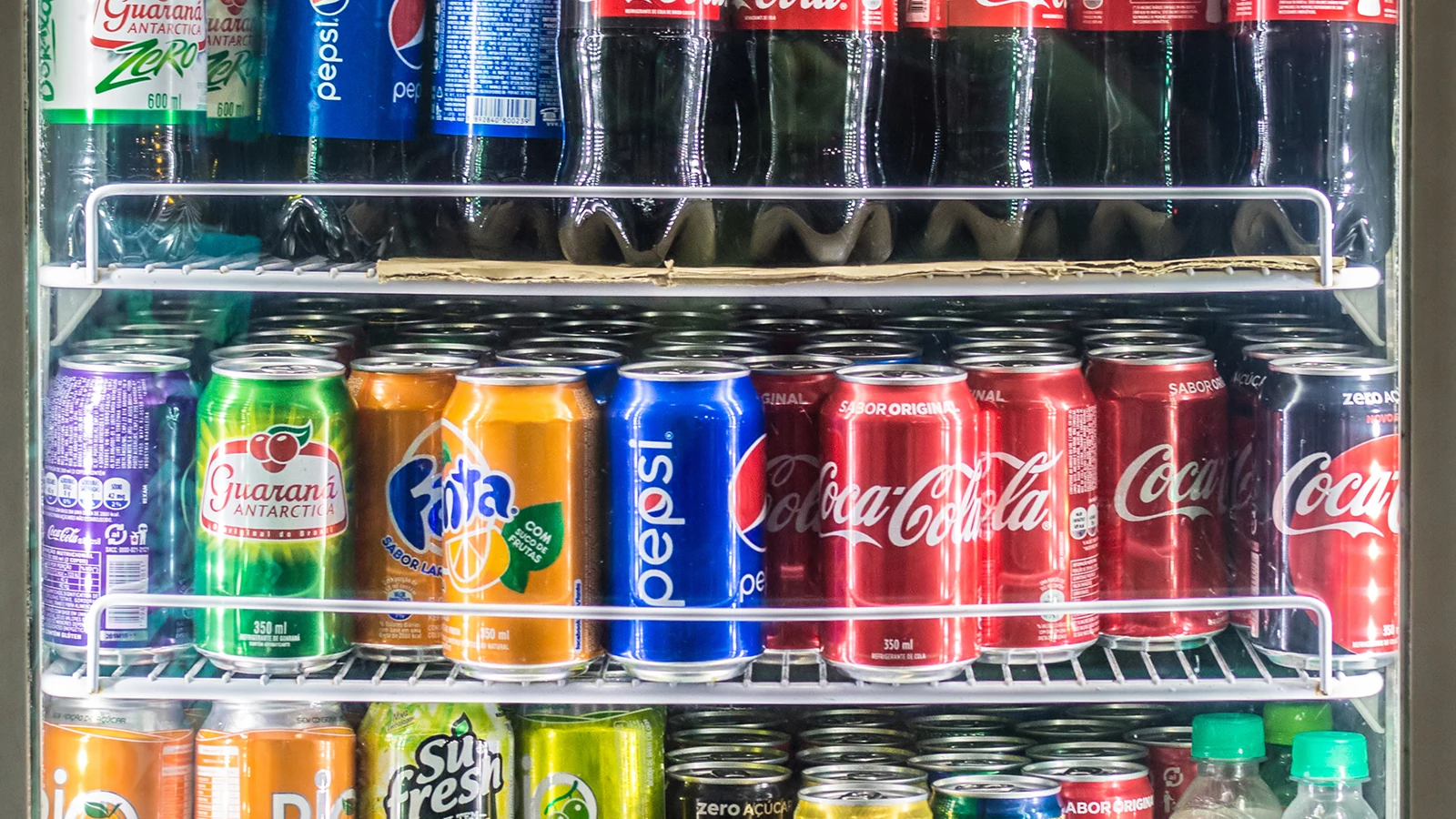
An Umm Al Quwain distributor negotiating a drink order needs two different measurements. The concentration of sugar and other relevant sweeteners determines the band. The volume of finished drink determines the amount payable in that band. A unit of syrup can represent several litres of finished beverage, so a margin model that uses only the bottle size can misstate the order economics before the first shipment arrives.
The federal tiered volumetric model took effect on 1 January 2026 under Cabinet Decision 197 of 2025, which replaced Cabinet Decision 52 of 2019. The decision establishes AED 0.79 per litre for the moderate band. The Federal Tax Authority’s February 2026 taxable persons guide confirms that figure. An FTA overview page reviewed for this article displays AED 0.97 in its summary table. Use the rate in the operative decision and the detailed guide when checking a product calculation. [1][2][3]
Decide whether the product is a sweetened drink
Start with the intended use and ingredient list. The sweetened-drink definition covers products intended for drinking to which sugar, artificial sweeteners or other sweeteners have been added. It reaches finished drinks and products used to prepare them, including powders, gels and extracts. Plain juice with only naturally occurring sugar falls outside the sweetened-drink definition. When a producer adds sugar or another relevant sweetener such as honey, naturally occurring sugar also counts in the total. Artificial sweeteners are considered separately from the grams used to determine the sugar bands. [1][2]
Review the other categories before applying the table. Carbonated drinks ceased to be a separate excise category on 1 January 2026. Energy drinks retain the separate 100% rate on the excise price. Specified exclusions from the sweetened-drink definition include qualifying products with at least 75% milk or milk substitutes in the finished drink, infant formula and qualifying dietary or medical beverages. A restaurant exclusion applies to drinks prepared on the premises and served in open, unsealed containers for direct consumption. A sealed drink bought from a supplier requires its own classification. [1][2][6]
A purchasing team should ask the manufacturer for the recipe version used in the batch being quoted. A description such as “light,” “natural” or “no added cane sugar” can refer to several different formulations. Ask separately about fruit-derived sugar, added honey or syrup, and artificial sweeteners. Capture the answer against the exact flavour and pack size. A buyer comparing beverages for a new outlet can coordinate those questions with the food business premises and approval checks, while confirming the separate local approvals that apply to its own emirate.
Match the tested concentration to litres
Use the figures for the prepared drink and the applicable classification evidence. The FTA treats low-sugar and qualifying artificially sweetened drinks as excise goods at AED 0 per litre, with applicable product registration and reporting obligations. That treatment differs from a beverage outside the definition. [1][4]
| Band | Content per 100 ml of finished beverage | Excise per litre |
|---|---|---|
| High sugar | 8 g or more | AED 1.09 |
| Moderate sugar | At least 5 g and below 8 g | AED 0.79 |
| Low sugar | Below 5 g | AED 0 |
| Artificially sweetened | Only artificial sweeteners, or artificial sweeteners with less than 5 g of total sugar and other sweeteners | AED 0 |
For a hypothetical shipment of 1,000 cartons with 24 cans of 330 ml each, the volume is 7,920 litres. If the registered classification shows 6.4 g per 100 ml, the model gives AED 6,256.80. At 8 g per 100 ml, the same volume gives AED 8,632.80. The difference of AED 2,376 belongs in the purchase decision, even though the cartons and sale quantities look identical. These figures illustrate excise only. Keep freight, customs charges, VAT and the rest of the landed cost in separate lines.
The example also provides a check for unit errors. The amount for one can in the moderate band is AED 0.2607. At the carton level the unrounded equivalent is AED 6.2568. Retain the precision used in the product record when multiplying across stock. Article 10 provides for rounding at the goods level to four dirham decimal places upon registration, and rounding the periodic return amount due to the nearest fils. [1]
Verify concentrates against the finished drink
For concentrates and powders, the producer’s preparation instructions matter because they establish the finished beverage for the calculation. A hypothetical 250 ml bottle that makes 1.5 litres of a moderate-band drink represents AED 1.185 in excise under the stated assumptions. Applying the rate to 250 ml would miss most of the finished volume. Keep the stated yield, the preparation instructions and the classification together in the supplier file. [4]
When the instructions are absent or inaccurate, FTA Decision 10 of 2025 provides a prescribed method. It uses an accredited report for the concentrated unit and derives a finished volume in millilitres by multiplying the documented grams of sugar and other relevant sweeteners by 20. The FTA uses this volume to determine the dilution ratio. The decision excludes certain documented low-sugar liquid concentrates and products containing only artificial sweeteners from that fallback calculation. The public clarification shows the moderate rate applied to the calculated finished volume in its ordinary fallback example. [4][5]
A supplier can make this review easier by printing an unambiguous yield per pack. Ask whether the number means final beverage volume or water to add. In a tender, document which preparation the tested result represents and which the contract requires. A dilution instruction for one market can differ from the instructions on the pack delivered to the UAE. That mismatch belongs in the shipment readiness file before booking freight.
Connect the laboratory evidence to the registration
The FTA directs producers, importers and stockpilers of sweetened drinks to obtain the relevant MoIAT conformity certificate after testing through an accredited laboratory, and to submit it for product registration or amendment in EmaraTax. If acceptable evidence is missing, the high band applies until the correct classification is established. The service card lists product details, images and label information among the required material. It lists FTA product registration as free and estimates 20 business days from receipt of the completed application. Laboratory testing and conformity certification are separate steps. [1][6][7]
Build the evidence file in the order in which a colleague would need it on shipment day.
- Record the manufacturer, exact product, flavour, pack size, barcode and recipe revision.
- Match the current ingredients, retail label and preparation instructions to the tested sample.
- Keep the laboratory report and the MoIAT certificate together and confirm which variants they cover.
- Save the accepted EmaraTax product record with the supporting documents and check its classification against the purchase order.
- Reconcile litres, declared amounts and inventory received before closing the shipment record.
The FTA guide distinguishes responsibilities for activities such as import, production and stockpiling. Map the responsible party before signing a distribution or contract-packing deal. The Umm Al Quwain free trade zone operating guide helps frame the separate licence and movement questions where storage, customs clearance and mainland supply involve different entities. [2]
Questions buyers and producers ask
Can a reformulated drink keep the same tax treatment?
Recheck the classification evidence for the formulation that will actually ship. If a moderate-band product changes its syrup or preparation ratio, recalculate the expected economics and confirm any registration amendment required. Keep historical batches traceable to their own documents. That prevents a new certificate from being applied retrospectively to a different recipe in the inventory ledger.
Does a later certificate automatically recover the difference?
A later accepted report can establish the correct category. The special deduction in FTA Decision 11 of 2025 concerns qualifying periods beginning on or after 1 January 2026 and ending on or before 30 June 2026. It also has evidence and unsold-stock conditions. Review the proper correction route for the affected period before recognising a recovery in November cash forecasts. The guide to appointing and supervising a tax agent explains how to document responsibility if external help is needed. [1][8]
Which number goes into a wholesale quote?
Use finished litres and the rate supported by the product’s evidence. Where the certificate is still pending, price a separate cash scenario using the high band and decide which party bears the difference if the evidence is delayed. A quote should show the quantity and formulation assumptions so they can be checked when the consignment arrives.
Official sources and editorial method
Sources checked on 11 November 2026. Numbered references support the official facts stated. Planning frameworks and hypothetical scenarios are CYUAE editorial analysis, not individual legal or tax advice. Photographs are contextual; image credits identify their source and licence. They do not document a particular application or case.
- Cabinet Decision 197 of 2025, Articles 7, 10 and 13–15 ↗
- FTA — Excise Tax Taxable Persons Guide, February 2026 ↗
- FTA — Sweetened drinks overview, including the conflicting summary figure ↗
- FTA — Public clarification EXTP013, implementation and concentrate examples ↗
- FTA Decision 10 of 2025 — Calculation for concentrates without reliable preparation instructions ↗
- FTA — Implementation notice and MoIAT conformity certificates, 29 December 2025 ↗
- FTA — Excise Goods Registration service ↗
- FTA Decision 11 of 2025 — Transitional deduction scope and controls ↗