
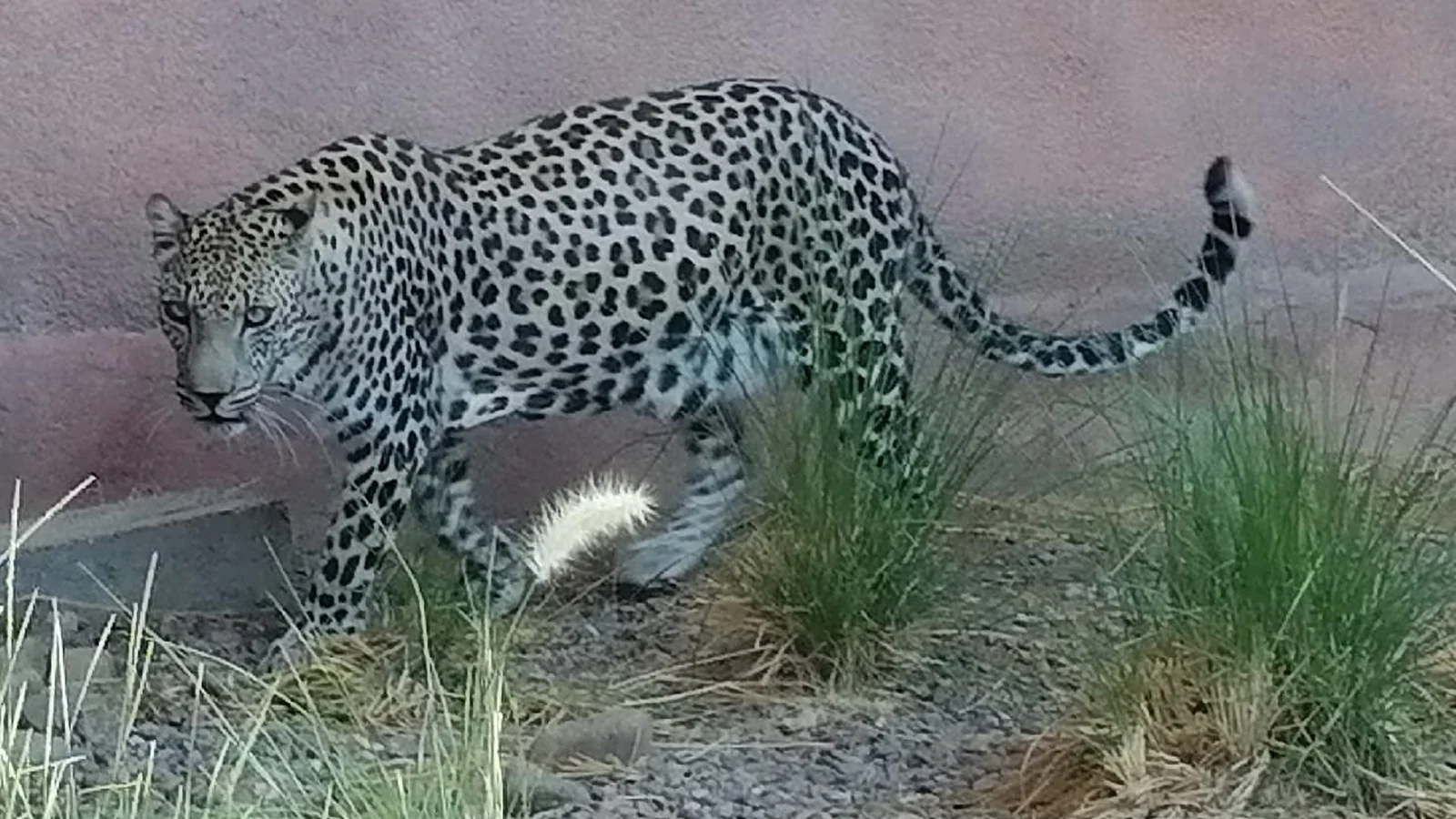
A family nature outing can become a sequence of photographs without much learning, or a demanding attempt to see every room before children lose interest. Sharjah Desert Park offers a more useful possibility: choose a few questions about the Arabian environment and let the exhibits help answer them.
The important preparation is to distinguish the public visitor experience from the wider conservation complex. A breeding programme mentioned on a destination page does not automatically provide public access. A museum's published display themes do not guarantee a particular activity on the day. This guide uses official information checked on 3 November 2026 and adds an editorial framework for an attentive, manageable visit.
Know which experience you are actually booking
Sharjah's official tourism description places the Desert Park around 30 kilometres east of Sharjah city, on the Al Dhaid Highway, E88, at interchange 9. It identifies several components, including Arabia's Wildlife Centre, the Natural History Museum and Botanical Garden, a children's farm and a breeding centre. Crucially, it states that the breeding centre is not open to the public. [1]
Related reference: Sharjah Museum of Islamic Civilization: A Visitor’s Guide to Reading Objects, Ideas and Scientific History.
That distinction should shape the family's expectations before departure. Do not promise children a behind-the-scenes encounter because conservation work takes place within the same complex. Ask the operator which public venues are available on the proposed date, what the ticket covers and whether any activity requires a separate arrangement.
Keep this destination separate from Sharjah Safari or a different wildlife attraction elsewhere in the emirate. Similar words in search results do not establish that the venue, ticket or travel route is the same.
Use the museum to connect geology, life and landscape
The Natural History and Botanical Museum is associated with Sharjah's Environment and Protected Areas Authority. The National Cultural Map describes its educational focus on natural history, plants and Emirati geology. [2] The Ministry of Climate Change and Environment's ecotourism information describes fossils, meteorites, desert-ecosystem interpretation and a garden with native plants. [3]
Those broad themes offer a useful way to organise the visit. A fossil raises questions about evidence of past life. A geological display can prompt questions about environmental change. A plant exhibition can connect survival strategies with the conditions visitors see outside the building.
Related reference: Khor Kalba Mangroves: Plan an East-Coast Nature Visit Around Observation and Conservation.
Avoid presenting every specimen as something collected at the museum's exact location. Read the label: where did it come from, what date or period is given, and is it an original specimen, model or reconstruction? The difference matters more than memorising a large number of names.
Confirm opening, ticket and accessibility details directly
The federal ecotourism directory publishes museum opening hours and admission figures. Those entries are useful leads, but the checked tourism page itself recommends contacting the venue about special viewings, events and activities. [1][3] This guide does not convert directory information into a guaranteed current operating schedule or bundled ticket price.
For a visit-specific answer, ask the museum or park operator to confirm the date, opening and last-entry times, available public venues, age bands and total charge. State the number of adults and children rather than asking only for “the ticket price.” Check how closures, holidays or school-group arrangements affect the plan.
The National Cultural Map lists the museum contact as +971 6 531 1411 and nhm@epaa.shj.ae. [2] Retain the response alongside the location. If a reply refers to one venue, do not assume it confirms all parts of the park.
Related reference: Sharjah Maritime Museum and Aquarium: Connect Coastal History with the Living Sea.
For accessibility, describe the actual requirement: step-free approach, wheelchair access, seating intervals, accessible toilets, sensory needs or a shorter route. “Family friendly” is not a substitute for those answers.
Choose three questions instead of a checklist of rooms
A focused family plan can work across several ages. Before leaving, choose one question each about land, plants and animals. The following are editorial prompts rather than a list of guaranteed exhibits:
| Theme | Question to explore | A useful record |
|---|---|---|
| Land and time | What evidence helps explain a past environment? | A labelled sketch or short note |
| Plants | Which feature is explained as helping a plant survive? | Species name and the label's explanation |
| Animals | How does the interpretation connect a species with habitat? | One supported relationship, not a guess |
| Conservation | What action is described and why is it needed? | Name of the programme or authority |
Keep the questions simple enough to answer in the time available. “How does every desert ecosystem work?” is too broad for one outing. “What does this label say about one plant's adaptation?” invites careful observation.
If a hoped-for display is unavailable, use another suitable example rather than treating the visit as a failure. Learning depends on attention, not on collecting a predetermined photograph.
Build a realistic rhythm for children and adults
Consider a hypothetical group with two adults, a six-year-old and a twelve-year-old. The family chooses one main museum visit, a break and one optional public area, subject to confirmation. The younger child is asked to find a shape or texture described on a label; the older child records the evidence behind one explanation.
After the first section, stop and ask what each person wants to investigate next. If attention is fading, shorten the visit. An extra venue is valuable only while the group has energy to engage with it. The suggested sequence is a planning example, not an official duration or a promise about current facilities.
Allow for the journey, ticketing, toilets, food and the return trip. Check whether refreshments and rest spaces suitable for the group are available. Take drinking water and appropriate sun protection for any outdoor portion, while following the venue's rules about food and drink inside.
A school group needs additional preparation: adult supervision, meeting arrangements, permission for photographs and a clear process if someone becomes separated. Ask about educational sessions before advertising them to parents.
Understand the conservation boundary
Public viewing and conservation work serve related but different purposes. Official tourism information identifies the breeding centre as closed to ordinary public access. [1] Respect that boundary without treating it as something to negotiate informally with staff.
A useful question is not “How close can we get?” but “What does the interpretation explain about the species' needs and the conservation work?” Photograph only where permitted. Avoid noise, tapping, feeding or trying to provoke an animal into a more dramatic response. Follow staff instructions for any children's-farm interaction rather than transferring rules from another attraction.
The same principle applies to plants and specimens. Do not pick leaves, collect material or handle an object simply because it appears robust. A learning environment can be interactive in some places and strictly observational in others; the signs and staff establish the distinction.
Treat the botanical visit as a separate learning lens
The Ministry of Culture's 2026 museum guide describes the Islamic Botanical Garden within the Desert Park complex as a scientific and environmental institution connecting plant knowledge with Islamic references. It notes that living displays change with seasonal growth. [4]
If this public venue is included in the confirmed plan, read botanical description and cultural reference alongside one another. They answer different questions: how a plant is identified and understood, and why it carries particular cultural or religious significance. Do not substitute a familiar common name for the label's exact identification.
For children, a practical exercise is to record one plant name, one stated characteristic and one question. Back at home, use a reliable botanical reference to investigate the question. Do not infer that a plant mentioned in a cultural display is suitable for self-treatment or safe to eat.
Turn the outing into a small record of learning
At the end, ask each visitor for one supported observation, one interpretation and one unanswered question. This is more revealing than asking only whether they enjoyed the day.
For example, “the label identifies this specimen as a fossil” is a recorded statement. “This suggests the environment was different” requires the exhibit's explanation and context. “I wonder how the specimen was dated” becomes a good follow-up question. Keeping the categories separate teaches the habit of checking evidence.
Save photographs with captions that identify the venue and subject accurately. A generic animal picture should not become proof of a particular breeding success, current population or conservation outcome. Use the authority's documented information for those claims.
Questions families should settle before travelling
Can visitors enter the breeding centre?
The official tourism page says it is not open to the public. Confirm which visitor venues and activities are available instead. [1]
Does one online ticket figure cover every part of the park?
Do not assume so. Ask the operator what the current charge includes for the group's ages and chosen date. This article does not present an unverified bundled price.
Is the museum only for younger children?
Its themes support different levels of enquiry. Adults and older children can investigate labels, geological evidence and interpretation; younger visitors can work with a smaller number of concrete observations. [2][3]
What makes the trip worthwhile if we see fewer venues?
A manageable visit that leaves the family with a few accurate, memorable ideas is a better educational result than rushing through a larger number of rooms. Let curiosity and the group's capacity determine the pace.
Official sources and editorial method
Sources checked on 3 November 2026. Numbered references support the official facts stated. Planning frameworks and hypothetical scenarios are CYUAE editorial analysis, not individual legal or tax advice. Photographs are contextual; image credits identify their source and licence. They do not document a particular application or case.
- Visit Sharjah — Desert Park, public venues and breeding-centre restriction ↗
- UAE National Cultural Map — Sharjah Natural History and Botanical Museum ↗
- Ministry of Climate Change and Environment — Natural History and Botanical Museum (Arabic directory) ↗
- Ministry of Culture — UAE Museums Guidebook 2026, Islamic Botanical Garden ↗


