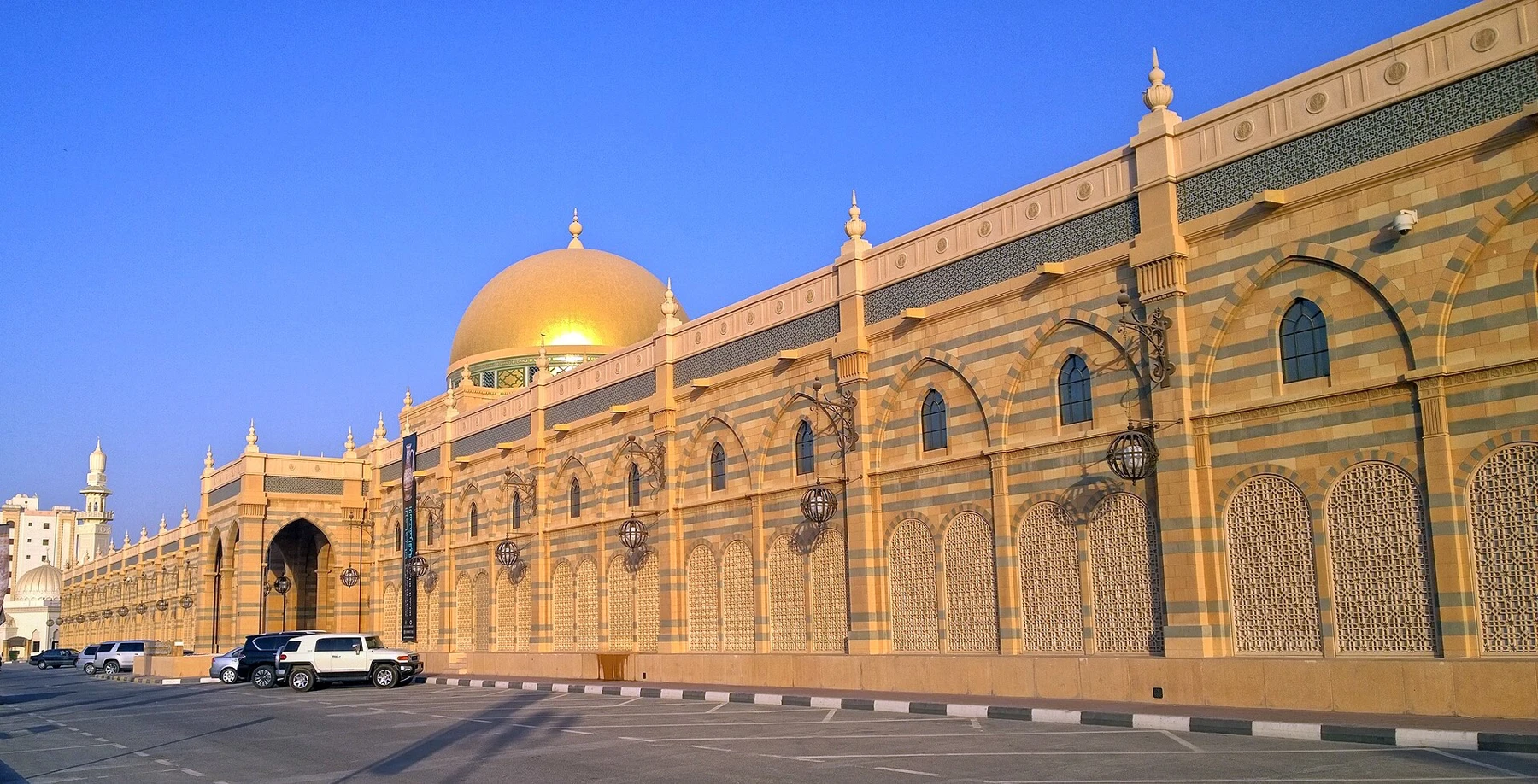
A worthwhile museum visit changes the questions a visitor can ask. At Sharjah Museum of Islamic Civilization, the opportunity is to connect material objects with faith, scientific enquiry, artistic production and the movement of knowledge across regions. The visit becomes more useful when the traveller approaches those subjects with curiosity and a method, rather than trying to remember every date on every label.
This guide provides that method. It is intended for residents planning a repeat visit, families introducing children to the institution, and travellers who want a cultural experience with more depth than a photograph beneath the dome. It separates a short statement of institutional facts from an original interpretation framework. The proposed route is editorial, not a promise about the order of displays or the availability of a particular programme.
Establish the institution’s context before choosing a route
Sharjah Museums Authority records that an earlier Islamic Museum opened in the Heritage Area in 1996 and that the collection was reinterpreted and relocated to the former Souq Al Majarrah, reopening under its present name in 2008. The Authority describes galleries addressing Islamic faith, science and technology, and collections of art and material culture. Its official page is the starting point for current visitor information. [1]
Those facts suggest an important distinction: the institution has a history as a museum, while the objects and ideas it presents have their own, much longer histories. A building’s previous function, the date a gallery opened and the period of an artefact answer different questions. Keeping them separate prevents a common mistake in travel writing, where the age of a collection, an institution and a structure are blended into one impressive-sounding claim.
Before travelling, identify the official page, confirm practical arrangements for the intended date and choose one or two subjects that interest the group. A visitor fascinated by engineering may plan differently from someone studying calligraphy or wanting an introduction to religious practice. Neither needs to treat the entire collection as a test of endurance.
Choose an enquiry rather than an obligation to see everything
A large display can overwhelm attention because every case appears to demand equal effort. Replace that pressure with an enquiry. Ask how people measured, how a material was transformed, how a text travelled, or how an object connected practical use with beauty. The question gives the visit a thread without forcing every object to fit the same interpretation.
For example, a visitor interested in measurement might look for instruments, diagrams, explanations of observation and the relationship between calculation and daily activity. Another might follow the changing treatment of surfaces: inscription, ornament, pattern and material. These are editorial ways of organising attention, not claims that the museum formally prescribes those routes.
An enquiry also helps the group recognise when it has learned enough for one visit. If participants can explain three objects with more precision than when they arrived, the day has produced something valuable. Completing every corridor is a weaker measure of success than gaining a clearer understanding of how an object, its context and its interpretation relate.
Read each object through four separate questions
First ask what the object is. Identify its material, form and stated function. Second ask what is known about its origin and period. Third ask how the institution explains its significance. Finally ask what remains uncertain or requires further context. These four questions can be used with a manuscript, a scientific model, a vessel or an architectural element.
The order matters. Visitors often begin with a dramatic conclusion and then select details that support it. Starting with the object slows that impulse. An attractive pattern does not, by itself, establish the identity of the maker, the owner or the circumstances of use. A label can provide some of those connections, but it should be read carefully rather than treated as decorative background.
Take a hypothetical metal instrument displayed with an explanatory model. The original item and the model may perform different educational roles. One is historical material; the other helps demonstrate a principle. Ask which part is original, what has been reconstructed, and how the explanation has been simplified for visitors. The distinction does not diminish the model. It helps the viewer understand what kind of evidence each component supplies.
Approach scientific history without turning it into a competition
Scientific displays can inspire pride, admiration and surprise. They can also tempt visitors into oversimplified stories in which one civilisation “invented everything” or knowledge moves in only one direction. A stronger approach asks about methods, institutions, translation, instruments and the people who preserved or developed an idea.
When a display describes an achievement, examine the wording. Is it discussing an observation, a theoretical proposal, a practical device, a refinement or the transmission of earlier work? Those categories are related, but they are not interchangeable. A visitor who notices the distinction gains a more accurate account of scientific development and a more interesting understanding of collaboration across time.
For a family discussion, ask what problem an instrument was meant to solve and what conditions made the work possible. What had to be measured? What materials were available? How might an error be detected? These questions connect historical science with an ordinary habit of careful reasoning. They invite respect for the work without requiring the visitor to make unsupported priority claims.
Respect the difference between explaining a tradition and speaking for it
A gallery addressing faith can offer an introduction to practices, texts and religious concepts. Visitors should approach that material attentively and respectfully. Read the institution’s explanations and ask appropriate questions where guidance is available. Do not assume that a short visit equips someone to speak for the beliefs or experience of all Muslims.
The distinction is useful for adults and children alike. A model, manuscript or architectural photograph can support a focused conversation, while lived religious experience remains broader than an exhibit. An informed visitor can say what the gallery explains without claiming universal expertise. That is a stronger cultural posture than either avoiding the subject entirely or reducing it to a few memorable facts.
If travelling with people from different backgrounds, establish a respectful pace. Allow time for questions and avoid turning uncertainty into embarrassment. Museums can make unfamiliar subjects approachable, but the group’s behaviour still determines whether the visit feels thoughtful. Quiet attention, careful language and willingness to learn are practical forms of respect.
A family learning plan that preserves curiosity
Give children observation tasks rather than a long factual quiz. One person can identify materials, another can notice repeated shapes, and another can record unfamiliar words. Compare observations after several displays. The aim is to make attention active without pretending that every child should enjoy the same object or absorb the same amount of detail.
A useful prompt is “What makes you think that?” It encourages a child to connect an interpretation to something visible. If the answer is based on a label, say so. If it is an imaginative guess, recognise it as a guess and look for information that could support or challenge it. This creates a simple distinction between evidence and inference that remains valuable outside the museum.
Avoid photographing every label as a substitute for engagement. A small number of permitted photographs, accompanied by notes about the question they raised, is easier to use afterwards. Ask before photographing other visitors or staff in a way that makes them the subject of an image. Follow the museum’s instructions for photography, restricted areas and group behaviour.
Plan practical arrangements from current information
Opening arrangements, admission categories, guided activities and temporary programmes can change. Check the official museum page and, where necessary, contact the institution for the intended date. Do not treat a cached travel article or an old visitor guide as a live booking confirmation. This article intentionally avoids turning an observed schedule into a permanent promise.
Consider the whole journey: travel, parking or drop-off, the group’s mobility needs, time inside and a suitable break. Ask about accessibility requirements in concrete terms. A person who needs step-free movement or a place to rest benefits more from a clear answer about the actual route than a general description that a destination is family friendly.
Leave space in the day for the museum to be the main activity. A rushed visit squeezed between several unrelated commitments may produce photographs without much comprehension. If the group becomes tired, use the chosen enquiry to select a smaller number of displays. A thoughtful partial visit is preferable to an exhausted attempt to complete everything.
Build a notebook that distinguishes evidence and interpretation
Use a simple three-column record: what was observed, what the institution stated, and what the visitor inferred. The categories do not need to look academic. Their purpose is to prevent a compelling personal response from gradually becoming a claim about the historical record.
| Notebook entry | Useful content | Common mistake to avoid |
|---|---|---|
| Observation | Material, shape, visible feature | Guessing an origin from appearance alone |
| Institutional explanation | The substance of a label or guide’s account | Removing the qualification attached to a statement |
| Personal interpretation | A question or connection the object inspired | Presenting an inference as a proven fact |
| Follow-up | A source or subject to investigate | Assuming one exhibit settles a broad historical debate |
This framework is particularly useful when preparing a school project, travel article or public social caption. It encourages accurate attribution and helps another reader understand how the account was formed. A caption can remain engaging while acknowledging that an explanation came from the museum rather than from the writer’s own specialist knowledge.
A hypothetical visit organised around navigation
Imagine a family interested in the relationship between knowledge and travel. Before arriving, they choose navigation as their enquiry. Inside, they look for material concerning observation, maps, instruments and the practical problems of finding a route. They record only a few examples, preserving the information needed to understand them.
During a break, each person explains one object or model to the others. Where explanations differ, they return to the label or ask for guidance rather than deciding that the most confident person must be correct. At home, they compare their notes with reliable institutional resources and identify what the visit did not explain.
The exercise produces more than a list of historical achievements. It reveals a chain: a practical problem, an attempt to understand it, an instrument or method, and an explanation preserved for later learners. That chain is the real educational value of a focused visit. It turns admiration into an understanding of how knowledge becomes usable.
Use the museum as part of a wider Sharjah cultural itinerary
The museum can sit within a broader exploration of Sharjah’s cultural institutions, but each venue should retain its own identity. A contemporary-art space, a heritage building and a historical collection use different methods. Comparing those methods can be illuminating; treating them as interchangeable attractions can flatten the experience.
When planning another stop, ask what question it adds. A visitor might compare how an object is interpreted in a historical gallery with how an artist uses material in a contemporary exhibition. The connection is an enquiry, not a claim that the two institutions tell the same story. It helps residents build a sustained cultural practice through repeat visits rather than consuming several venues in one hurried afternoon.
Keep travel and attention in balance. If the group has a limited window, choose depth at one institution. More locations do not automatically produce more understanding. A well-selected route should allow participants to recall not just where they went, but what changed in their thinking.
Questions visitors frequently ask
Is this a suitable first cultural visit in Sharjah?
It can be, provided the group chooses an achievable focus and confirms practical arrangements. A first visit should introduce a method of looking and a few important subjects rather than create pressure to master an extensive history. Different participants can follow different interests within a shared plan.
Should children be expected to understand every gallery?
No. Use observation tasks, short discussions and breaks. Children’s attention can be directed toward materials, functions and questions without requiring them to memorise a complete chronology. Adults should also be willing to say that they do not yet know an answer.
Can a display be used as the sole source for a broad claim?
Use the institution’s explanation for the specific subject it addresses, with its qualifications preserved. Broader historical claims may need further sources and specialist context. A museum visit is an excellent beginning for enquiry, but it does not make every visitor an authority on the entire field.
What is the most useful thing to do afterwards?
Write three things learned, one assumption corrected and two questions that remain. Identify the institution or publication that could help answer those questions. This small review turns a pleasant visit into a durable piece of learning and provides a clear reason to return.
The lasting value of a careful visit
Sharjah Museum of Islamic Civilization is most rewarding when the visitor treats its objects and explanations as an invitation to think more precisely. Beauty, craftsmanship, faith and scientific enquiry can each command attention. A method helps that attention become understanding instead of dissolving into a collection of impressions.
Leave with a clear account of how an idea was presented, what evidence supported it and where your own interpretation began. That is a useful standard for cultural travel across the Emirates. It makes a visitor more observant, a parent a more thoughtful guide and a writer more trustworthy. The achievement of the day is not simply having stood inside an important building. It is having learned to ask a better question about the objects, people and intellectual traditions encountered there.
Official sources and editorial method
Sources checked on 31 October 2026. Official facts are distinguished from CYUAE analysis and clearly labelled hypothetical examples. Confirm current access, eligibility, fees and service requirements with the responsible institution before acting.