
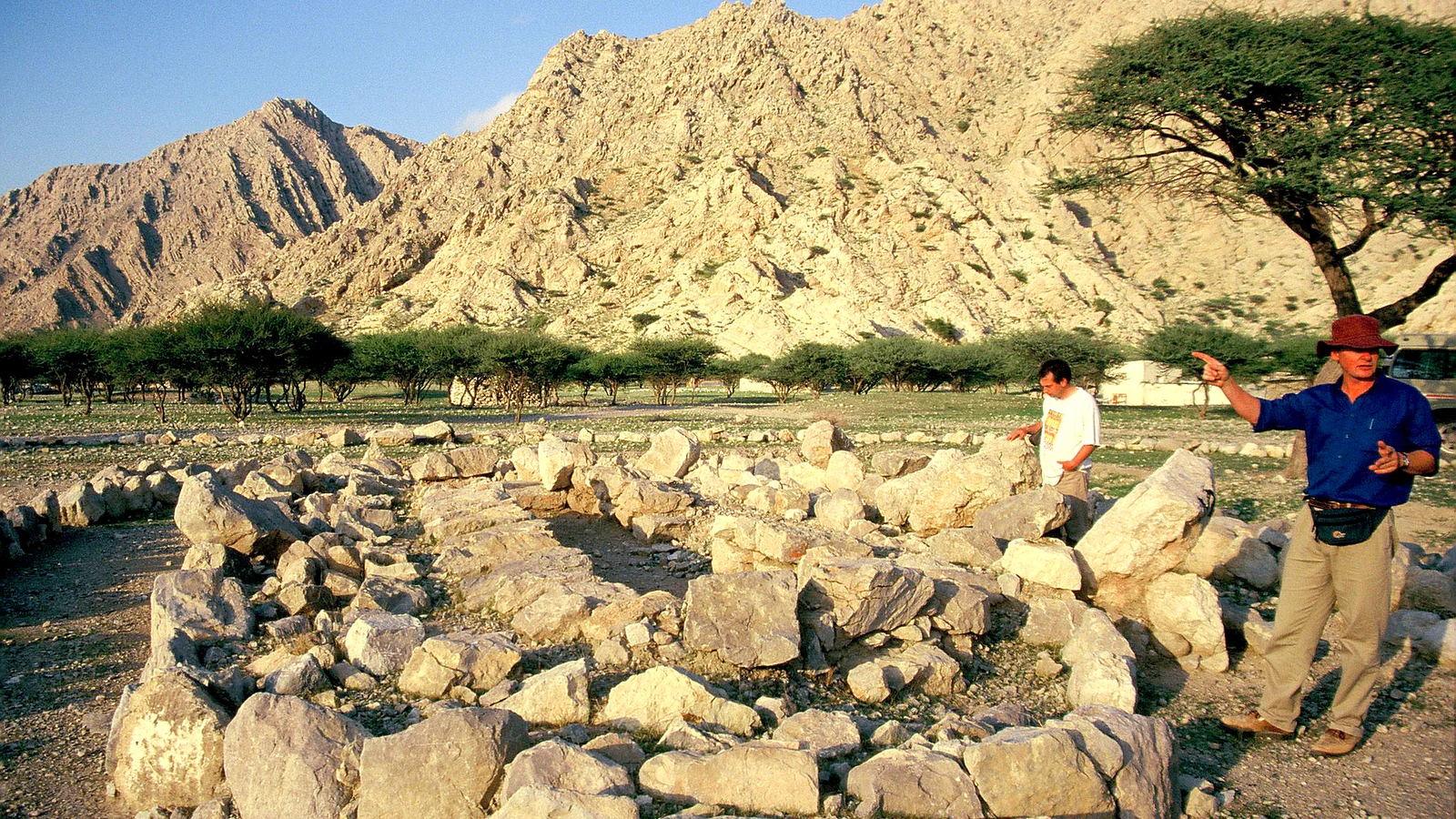
Shimal rewards a different kind of attention from a conventional sightseeing stop. Its value lies in relationships: between tombs and settlements, mountains and cultivated ground, water and building choices, and archaeological evidence and later stories. A photograph of one stone structure cannot explain those relationships on its own.
For a visitor, the first decision is practical. Which part of Shimal do you intend to see, and what access has actually been arranged? This guide brings together official heritage and tourism information checked on 3 November 2026. The proposed learning exercises and itinerary choices are editorial suggestions, not accounts of the author's firsthand visit or a substitute for the site's management instructions.
Understand that Shimal is a landscape, not one monument
The UAE National Cultural Map describes Shimal as a substantial archaeological area with tombs and settlement evidence extending across different periods. It distinguishes circular Umm an-Nar tombs, longer Wadi Suq tombs, later settlement traces, medieval remains and more recent houses. [1] The broad chronological range is the central point: things visible in the same landscape need not have been built or used together.
Related reference: The National Museum of Ras Al Khaimah: A Guide to Evidence, Trade and Everyday Life.
Ras Al Khaimah's Department of Antiquities and Museums places Shimal within the emirate's ancient history and explains the importance of its position near mountain resources, productive land and maritime access. Its account identifies major Bronze Age funerary structures and a later settlement investigated from 1986. [2]
Read these accounts as a framework for asking better questions. Where did people live relative to their burial places? What evidence supports an interpretation of food production or exchange? Which feature belongs to which period? A guide or interpretive panel can help connect the physical remains with the research behind them.
Confirm the exact site and accompanied-access requirement
Two official tourism pages contain an important operational condition. The page for the so-called Queen of Sheeba's Palace says access requires accompaniment by a Department of Antiquities and Museums team member. The Shimal Stone Houses page states the same condition for that site. [3][4]
Do not turn those named-site instructions into a promise that all other parts of the archaeological landscape are freely accessible. Equally, do not assume one appointment covers every feature. Ask the heritage authority which location is included, where to meet, whether advance permission is needed and what terrain the approved route involves.
Related reference: Dhayah Fort: Read Ras Al Khaimah's Oasis, Defence and Landscape from One Heritage Site.
The National Cultural Map lists the heritage contact number as +971 7 233 9900 and the email rakheritage@museum.rak.ae. [1] Use official contact details to establish arrangements rather than a pin dropped by a third-party map. If the requested visit cannot be confirmed, plan a different verified heritage stop instead of attempting to find an informal entrance.
A useful enquiry is specific
State the date, group size, ages and any mobility requirements. Name the intended feature, not simply “Shimal.” Ask whether photography is permitted, whether a guide is compulsory for that route, whether there are charges and how payment or booking works. Request the meeting location and cancellation instructions.
Keep the reply available offline. A saved general tourism page establishes interest, but an appointment confirmation establishes what has been agreed for your group. This article does not publish an admission price, fixed opening hours or a guaranteed same-day tour because those details were not established in the checked sources.
Separate archaeological interpretation from an evocative name
The official tourism account dates the palace associated with the Queen of Sheeba name to the medieval Julfar period, approximately the thirteenth to sixteenth centuries AD. It explicitly explains that the queen's association comes from folklore rather than historical or archaeological evidence. [3]
Related reference: Planning a Ras Al Khaimah Visit: Combine Coast, City, Heritage and Mountains Without Rushing the Emirate.
This distinction makes the visit more interesting. A place can carry a powerful local story while the surviving architecture belongs to another time. Repeating the name as if it proved the queen occupied the building would erase that difference.
Use a two-column note while preparing: “what the evidence supports” and “what the place is called or remembered as.” Put dates, excavated features and the authority's interpretation in the first column. Put legend and later naming in the second. Neither needs to disappear, but the reader should always know which kind of claim is being made.
The same discipline applies to photographs online. A dramatic caption may identify a structure loosely. Check that the image, location and stated period agree before using it in a school assignment or social post.
Read building choices through the problem they solved
The official Shimal Stone Houses description links the houses to date-palm gardens and seasonal life. It describes construction using wadi stones and mortar, with ventilation features and window arrangements. [4] Those details offer a better starting point than judging the buildings only by decoration.
The following questions are an editorial observation framework; they are not claims that every surviving building has the same design:
| Question | What to look for on the authorised route | What needs interpretation |
|---|---|---|
| How was the interior moderated? | Openings, shade and wall arrangement | Which features are original or restored |
| How did water affect the location? | Relationship to gardens and terrain | Evidence for particular supply systems |
| How were spaces used? | Entrances, room divisions and storage niches | Whether a function is known or inferred |
| How did the building change? | Joins, repairs and differences in material | Dating and later reuse |
A visible opening is an observation. Calling it a particular ventilation device is an interpretation that should be supported by the site's explanation. That simple separation helps adults and children avoid turning guesses into facts.
Plan around terrain, weather and the actual group
An accompanied heritage visit still requires personal preparation. Ask about distance, surfaces, stairs, shade and the possibility of a shorter route. A site described as approachable in promotional material may remain unsuitable for a particular visitor's mobility, heat tolerance or balance.
Take drinking water, suitable footwear and sun protection appropriate to the confirmed route and current conditions. Check the weather near departure. Avoid a timetable that depends on completing an outdoor walk in a fixed period regardless of how the group feels.
For a multigenerational family, agree a turnaround rule in advance. If one person becomes uncomfortable, who accompanies them back, and where can the group safely reunite? Ask staff rather than inventing a meeting point inside protected remains. Leave enough time for the approach and briefing so nobody feels pressure to rush.
This is also a reason to avoid stacking several demanding outdoor stops into one short afternoon. A useful heritage day should preserve attention for what is being explained.
Make a school or family visit evidence-led
Consider a hypothetical family with a teenager interested in archaeology and a younger child who prefers drawing. Instead of assigning a list of monuments to “complete,” give each person one small task on the permitted route.
The teenager records one statement, its source and the evidence used to support it. The younger child draws a permitted view without touching or climbing the remains. An adult notes one unanswered question to ask the accompanying staff member. Afterwards, compare how the same place produced different observations.
Keep the activity flexible. Do not promise visible finds, a particular wildlife encounter or access to an excavation. Archaeology is not a treasure hunt. The lesson is how people reach defensible conclusions from incomplete evidence and why some questions remain open.
A photograph can support that exercise if the site permits it. Record which feature it shows and avoid posing people on vulnerable walls for scale. Never rearrange stones, pick up fragments or enter an excluded area to improve an image.
Build a visit with a sensible alternative
Use the main museum or another confirmed heritage venue as an alternative if accompanied access is unavailable. Compare a landscape visit with a museum visit rather than treating one as a lesser version of the other: a museum can explain objects and chronology, while an archaeological landscape can reveal spatial relationships.
An efficient plan has one primary purpose, a confirmed meeting arrangement and one alternative. It does not need a long list of unverified stops. Include transport, a break and a realistic return window. If combining Shimal with another site, ask whether the same staff arrangement applies; do not infer that it does.
Questions to settle before setting out
Can I simply walk into the palace or stone houses?
The checked official tourism pages say those sites require accompaniment by a Department of Antiquities and Museums team member. Arrange access and follow the authority's instructions. [3][4]
Does the Queen of Sheeba name establish who lived there?
No. Official tourism information distinguishes the folklore name from the medieval dating and archaeological interpretation. Present the name with that explanation. [3]
Is there a verified ticket price in this guide?
No. Ask the authority about the exact visit and any associated cost. A price copied from an unrelated fort or a third-party itinerary would not establish Shimal's arrangements.
What should I bring away from the visit?
A clearer account of which evidence belongs to which period, how the landscape supported settlement, and which interpretations remain uncertain. Leave the physical evidence where it belongs and take only permitted photographs and carefully sourced notes.
Official sources and editorial method
Sources checked on 3 November 2026. Numbered references support the official facts stated. Planning frameworks and hypothetical scenarios are CYUAE editorial analysis, not individual legal or tax advice. Photographs are contextual; image credits identify their source and licence. They do not document a particular application or case.


