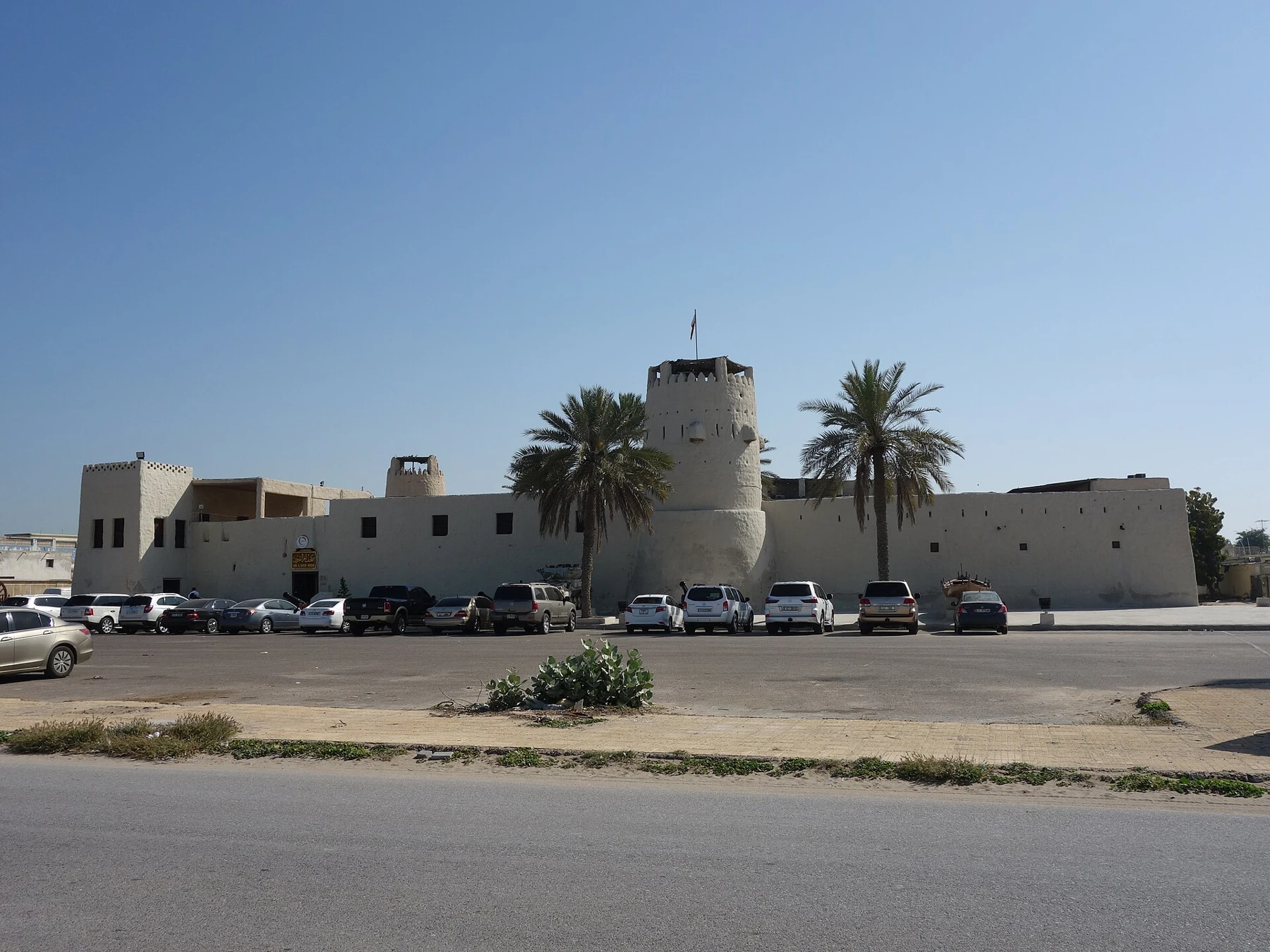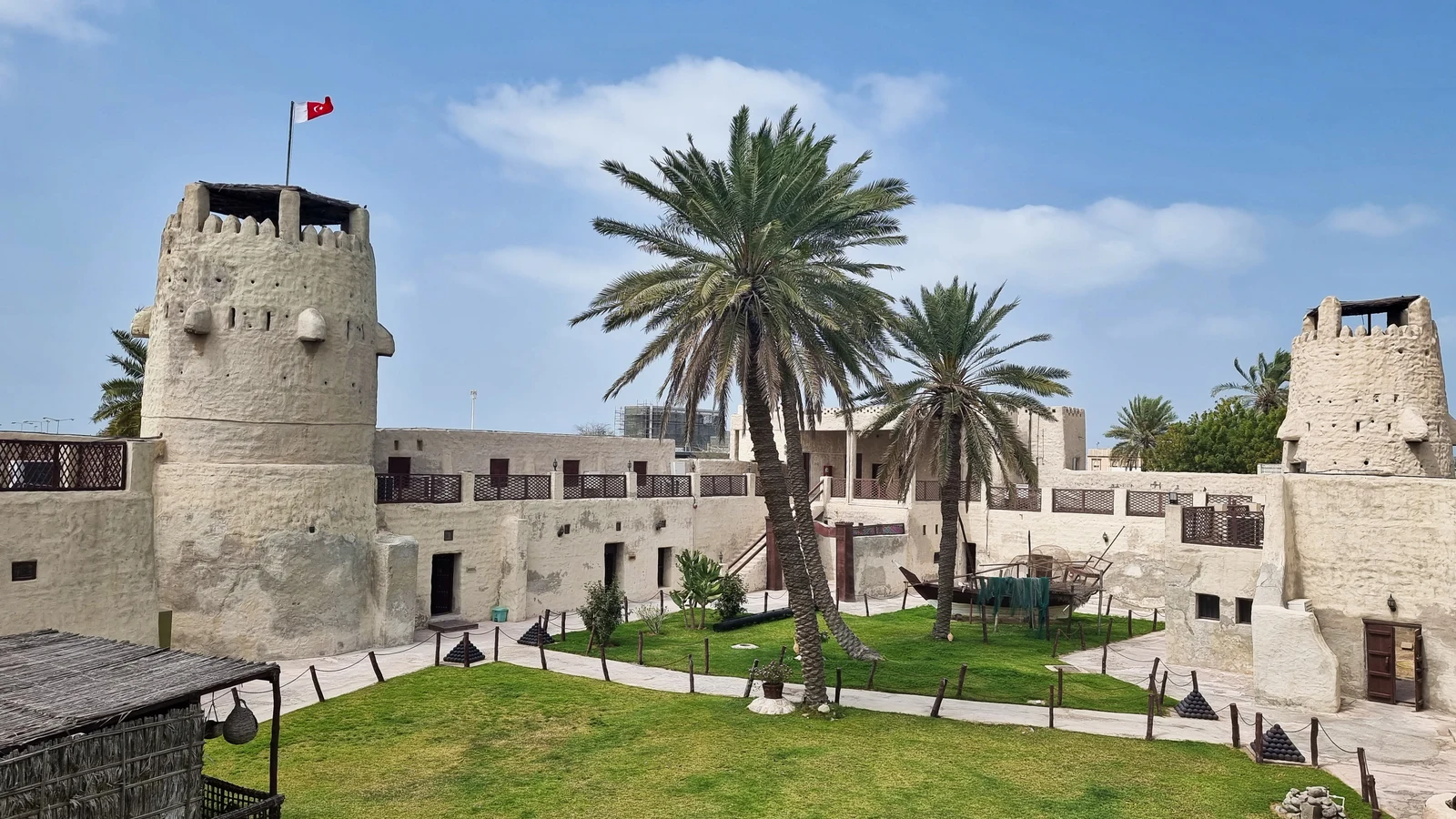
A museum visit becomes more useful when the building, the collection and the visitor's questions are allowed to work together. At Umm Al Quwain National Museum, that means resisting the temptation to treat the fort as a photographic backdrop and the objects as a list of things to tick off. The stronger experience is to ask what each form of evidence can tell you, and what it leaves unresolved.
The Ministry of Economy and Tourism places the museum inside Al-Ali Fort and describes its rooms and artefacts as an introduction to the emirate's culture and traditions.[1] This guide, checked on 6 November 2026, offers a practical method for exploring that setting. The suggested activities are CYUAE editorial recommendations, not a description of a guided programme sold by the museum.
Establish the place before interpreting its contents
The federal National Cultural Map describes the fort as having served as a seat of government and a residence of the ruling family. It records its restoration and conversion to a museum in 2000.[2] Those functions give the visitor three different questions: how a building supports authority, how it accommodates domestic life, and how its later museum use changes the way people experience it.
Related reference: Ed Dur in Umm Al Quwain: How to Understand an Ancient Port Through Evidence, Place and Trade.
Keep those questions separate. A room now containing a display does not automatically prove that the objects were originally used in that room. A restored surface does not, by itself, establish the exact appearance of the building in an earlier period. Look for labels, plans or staff explanations that identify the relationship between a space and its present contents.
Before entering, write one question in a phone note or notebook. For example: “How does the museum connect household life with the wider history of the emirate?” A clear question makes it easier to choose where to spend attention without pretending that one visit can produce a complete history.
Confirm access rather than copying an old timetable
The official pages consulted establish the museum's identity and cultural purpose, but they do not provide a complete, unambiguous current booking and access specification. This guide therefore does not repeat ticket prices or opening hours from commercial travel listings. Confirm the actual date, opening period and admission arrangements through the responsible museum or local tourism channel before travelling.
Ask about the whole visit if anyone has a specific access need. An answer about the entrance may not cover movement between rooms, seating, toilets, lighting or the route from the parking area. Describe the practical requirement rather than relying on a broad label such as “accessible”. Ask whether the intended group needs advance arrangements.
Related reference: Akab and the Early Coastal Communities of Umm Al Quwain: Reading Archaeology Without Inventing Certainty.
| Before leaving | Question to settle | Evidence to retain |
|---|---|---|
| Date and time | Is the museum receiving visitors during our intended period? | Current reply or booking confirmation |
| Entry | What admission or group arrangements apply? | Instructions for this visit |
| Movement | Can the whole group use the planned route comfortably? | Specific access information |
| Learning | Is a tour, explanation or activity available separately? | Confirmed inclusion, language and timing |
| Photography | What may be photographed in the building and galleries? | Staff guidance on arrival |
Read the fort as evidence of organised life
Begin with what is visible, then ask what explanation supports it. Notice the relationship between entrances, circulation, rooms and open spaces wherever visitor access permits. Consider how movement is directed and how spaces are connected. These are observations a visitor can make without assigning an unsupported defensive purpose or historical date to every feature.
A useful three-column note separates observation, interpretation and question. “This doorway connects two spaces” is an observation. “It may have helped control movement” is an interpretation. “What is known about its original function?” is a question. Keeping the columns separate prevents an attractive guess from becoming a remembered fact.
Restoration deserves the same discipline. Ask whether a feature is original, repaired, reconstructed or adapted for visitors if that distinction matters to the story being told. An honest gap in the available explanation is more informative than a confident account assembled from the appearance of a wall.
Give a small number of objects serious attention
Select a few objects that genuinely interest you. Start with material, shape, scale, construction and visible wear. Then read the label and compare its explanation with your initial impression. If an object is unfamiliar, describe it before deciding what it was used for.
Related reference: Falaj Al Mualla: An Inland Heritage Journey Through Water, Work and Defensive Architecture.
The next questions concern context. Where was it found or collected? What date range is given? Is its function established, suggested or uncertain? Does the label identify a maker, user or place? The same type of object can support different historical interpretations depending on its origin and the evidence accompanying it.
Avoid making social claims from a single example. An elaborately made object does not demonstrate that every household owned something similar. A tool does not establish that everyone performed the same work. Ask whether the display gives a broader comparison or whether you are looking at one distinctive item.
A simple object-reading exercise
Choose one item, make a short description without copying the label, and identify the most important fact you learned from the museum's explanation. Finish with one unresolved question. This produces a useful memory of the object while preserving the difference between what you observed and what the institution established.
Connect the collection to the emirate without flattening its history
Umm Al Quwain's history should not be reduced to one economic activity or a single architectural image. A museum can provide an introduction, but it does not make every period or community equally visible. Ask which people, activities and time periods are represented, and which require further reading.
Related reference: Visiting Umm Al Quwain’s Coastal Environment Responsibly: Access Checks, Group Planning and Better Nature Observation.
If another local site is part of the itinerary, give it a distinct purpose. A museum display and an archaeological landscape offer different kinds of evidence. Do not assume that an artefact's appearance tells you it came from the next site on the route. Use the stated provenance and chronology to establish a connection.
This is especially valuable when travelling with children. A question such as “What makes us think this object had this purpose?” teaches more than a competition to remember the greatest number of dates. Children can compare their observation with a label without being asked to accept an adult's improvised explanation as history.
Plan a visit that leaves room for attention
Consider a hypothetical family combining the museum with another stop in Umm Al Quwain. One person wants architectural photographs, another wants to understand local history, and a child has limited patience for long explanations. The planning problem is to accommodate those purposes without making the quickest visitor set everyone's pace.
Agree on an initial shared circuit, then allow a short period for individual interests where appropriate. Choose a meeting point and a flexible departure decision. If someone is tired, reduce the number of rooms rather than rushing the entire collection. A smaller number of well-understood exhibits can be more rewarding than a comprehensive-looking walkthrough.
For a group leader, reserve some unallocated time for questions and practical needs. Do not promise a detailed tour unless the institution or a guide has actually confirmed it. Transport, entry and interpretation are separate arrangements; a vehicle booking does not establish the other two.
Leave with an accurate record and a next question
After the visit, keep a compact record: the museum's name, date visited, objects or themes examined, facts attributed to the institution and questions still open. If photographs are permitted, record the accompanying label where appropriate so that an image is not later detached from its explanation.
When sharing the visit, avoid adding a dramatic historical claim simply because it makes a stronger caption. Identify a photograph of a restored building as such when that distinction is relevant. If a detail remains uncertain, say what you observed and where the explanation can be checked.
The useful outcome is not a claim to have “done” Umm Al Quwain's history. It is a clearer understanding of one place and a better set of questions for the next encounter with the emirate's heritage.
Questions visitors commonly ask
Is the museum simply the fort?
The museum occupies Al-Ali Fort, but the building and the collections provide different layers of interpretation.[1] Give attention to both rather than assuming a photograph of the exterior represents the whole visit.
Can this guide confirm today's ticket price or opening time?
No exact figure is asserted here because the official material consulted does not establish a complete current visit specification. Confirm the actual date and arrangements directly before travelling.
What should a first-time visitor prioritise?
Choose one architectural question and a small number of objects. Read the institutional explanations carefully, distinguish observation from inference and leave time to ask what remains uncertain.
Official sources and editorial method
Sources checked on 6 November 2026. Numbered references support the official facts stated. Planning frameworks and hypothetical scenarios are CYUAE editorial analysis, not individual legal or tax advice. Photographs are contextual; image credits identify their source and licence. They do not document a particular application or case.