
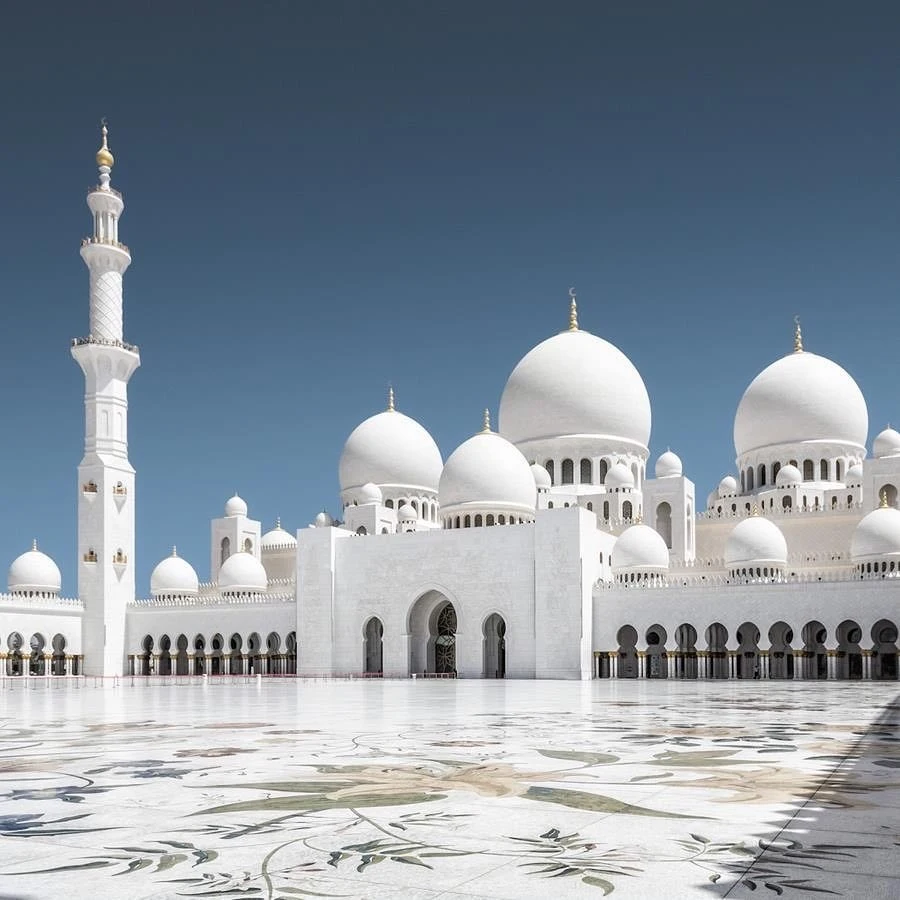
A museum district creates an unusual planning problem: proximity can make several institutions appear easy to combine, while each one asks for a different kind of attention. A traveller may be able to move between buildings quickly and still leave with little understanding because the day was designed around admissions rather than experience. Saadiyat is most rewarding when the visitor chooses a coherent cultural question and gives it enough time.
This guide develops a practical approach to Saadiyat Cultural District in Abu Dhabi. It uses the official destination description and Louvre Abu Dhabi’s own visitor guidance as starting points. Institutions, exhibitions, access and ticket arrangements can change. Confirm the current programme directly before booking. The itinerary examples are editorial proposals, not a claim that a particular combination is available through one pass or within a guaranteed duration.
Distinguish the island from the cultural district
Experience Abu Dhabi distinguishes Saadiyat Island as the wider setting from the cultural district within it. Its current destination page names institutions including Louvre Abu Dhabi, Zayed National Museum, Natural History Museum Abu Dhabi and teamLab Phenomena, while describing Guggenheim Abu Dhabi as upcoming. [1] Check each institution’s own current status rather than inferring availability from the district’s long-term vision.
This distinction helps a visitor plan geography and purpose. A beach, hotel, residential area and museum are not interchangeable stops simply because they share an island name. Record the actual destination and entrance for each activity. A broad map label may not be enough for transport or meeting arrangements.
Avoid presenting the district as a completed fixed list that will never change. Cultural places develop through openings, exhibitions, programmes and operational changes. A good visit plan records what has been checked for the intended date and leaves space to revise an assumption before it becomes an expensive commitment.
Choose the question that will organise the day
Ask what the group hopes to understand or experience. Art across cultures, the presentation of national history, natural history and immersive contemporary experiences can lead to different choices. A broad interest in culture is a useful starting point, but it does not require visiting every institution at once.
Select one primary institution and identify why it matters to the group. Then decide whether another stop genuinely complements it. The second visit should add a perspective rather than simply increase the count. This makes the itinerary easier to explain and gives participants a way to evaluate whether the day is working.
For a family, choose a question that allows several levels of engagement. Children may notice materials, colours or animals while adults investigate how an exhibition frames a narrative. The group can share observations without expecting identical knowledge. A good cultural day creates conversation; it does not require everyone to experience every gallery in the same way.
Read current programmes before choosing tickets
An institution’s permanent identity and its current visitor offer are different kinds of information. Check exhibitions, booking requirements, opening arrangements and any restrictions relevant to the intended date. Use the institution’s own website for the decision rather than relying on an old travel article or an undated social post.
If a bundled pass is being considered, read which institutions, dates, bookings and conditions it covers. The district’s destination page refers to museum-pass options, but the current product and terms should be confirmed at purchase. [1] A bundle is valuable when it fits a realistic plan, not simply because it makes additional admissions look inexpensive.
Record the cancellation and change terms for consequential bookings. A family with an uncertain travel schedule needs different flexibility from a resident planning a local day out. Do not let the desire to complete the transaction quickly prevent a review of what happens if the itinerary changes or a participant cannot attend.
Budget for attention as well as time
A timetable should include arrival, entry procedures, orientation, the main visit, a pause and travel onward. It should also recognise that attention is finite. A visitor can spend several hours in a building without being able to absorb another demanding exhibition immediately afterwards.
Plan a point at which the group can decide whether to continue. Treat a shorter itinerary as a valid option rather than a failed attempt. This reduces the pressure to hurry through a meaningful experience because another ticket has already been purchased.
For residents, repeated visits may offer better value in understanding than one exhausting cultural marathon. Returning with a new question allows the visitor to notice different relationships and revisit an earlier impression. The decision should reflect actual access, interest and budget; it should not be driven by the assumption that a museum has been fully understood once its entrance has been crossed.
Use Louvre Abu Dhabi’s guidance as a model of institution-specific preparation
Louvre Abu Dhabi’s visitor material asks guests to respect artworks and provides its own guidance on devices, bags and other practical arrangements. Its app is presented as a way to explore and navigate the museum. [2][3] These instructions illustrate why each institution should be checked separately rather than applying one imagined district-wide policy.
Read the current guidance for what can be brought inside, how belongings are handled and what assistance is available. If accessibility or a particular family need matters, ask concrete questions before arrival. A general statement that a place welcomes families may not answer the exact practical issue.
Prepare the digital component too. If using an official guide or application, arrange access and any needed headphones in advance. Do not assume that every participant will be comfortable following a long digital experience. A device can support interpretation, but it can also distract from looking and discussing. Choose how to use it deliberately.
| Planning layer | Question | Practical output |
|---|---|---|
| Purpose | What do we want to explore? | One primary cultural question |
| Programme | What is available on our date? | Current institution-specific information |
| Tickets | Which conditions apply? | Confirmed booking and change terms |
| Access | What does this group need? | A workable arrival and support plan |
| Attention | When will we pause or shorten the day? | A realistic sequence with a fallback |
Compare objects, displays and the institution’s interpretation
A museum experience becomes more thoughtful when visitors distinguish the object or installation from the explanation around it. Ask what is being shown, how it is arranged and what argument the display invites the visitor to consider. The institution’s choices are part of the experience.
This does not require specialist vocabulary. A visitor can ask why two objects are placed together, which information a label provides and what remains unexplained. Those questions encourage close attention without assuming that every personal response is a historical fact.
Keep a small record of one or two items that prompted thought. Note the institution and relevant information where permitted. An accurate record is more useful than a large collection of images that cannot later be identified. It also gives the visitor a path for further reading instead of relying on memory to reconstruct an explanation.
Design a family visit that permits different experiences
Agree on a few shared moments and allow some flexibility in between. A family may want to begin together, compare observations at a pause and finish with a short discussion. Within that structure, participants can be drawn to different parts of a gallery without turning the visit into a disagreement about pace.
Ask children specific questions: what surprised them, which material they noticed, what they would ask the person who made an object or designed a display. Avoid turning every room into a test of recall. Curiosity is more likely to survive when questions are invitations rather than a demand to prove that the ticket was educationally worthwhile.
Consider practical needs honestly. Rest, food, sensory demands and travel can shape a child’s experience as much as the programme itself. Confirm institution-specific arrangements and adjust the plan to the actual group. A thoughtfully shortened visit may create interest in returning, whereas an overloaded day can make culture feel like endurance.
Plan transport and transitions using actual destinations
Identify the entrance, arrival time and intended transport for each stop. Allow for the transition from vehicle or public transport to the institution itself. A short distance between map points does not necessarily mean the complete journey is effortless for every visitor.
Where walking is planned, assess conditions and the group’s needs. The official district description presents it as a walkable setting, but the practical decision still depends on the date, route and participants. [1] Do not convert a destination’s general description into a guarantee of comfort in every circumstance.
If a group splits up, establish a precise meeting point and communication plan. A broad phrase such as “outside the museum” can be ambiguous at a large venue. The goal is to keep administrative friction from consuming the attention intended for the visit. Good logistics are valuable because they become almost invisible once the group can move calmly.
Photography should support, not replace, engagement
Follow the rules of the institution and exhibition. Permission to photograph one area should not be assumed to apply everywhere or to every use. Respect other visitors and staff, and avoid making someone central to an image without appropriate consideration of consent.
Before taking a photograph, consider what it is meant to preserve. An object detail, a spatial relationship or a label reference can support later understanding. Photographing constantly can also prevent the visitor from looking directly and noticing scale, texture or the relationship between works.
When sharing publicly, identify the institution and distinguish factual interpretation from a personal response. A striking image should not carry an invented story about the object or the artist. If a claim matters, check it against the institution’s information. A precise caption can make cultural content more compelling because it offers the reader an actual point of understanding.
A hypothetical two-institution day
Imagine two adult visitors interested in how museums connect local and global narratives. They select a primary institution based on its current programme and consider a second that adds a genuinely different perspective. They book only after checking the live arrangements and leave a substantial pause between visits.
At the first institution, each person chooses one example that shaped their understanding. During the pause, they compare why those examples mattered and identify a question for the second visit. If attention or practical conditions make another institution unsuitable, they shorten the day without treating the first visit as incomplete.
Afterwards, they write a brief account separating official information, observed display choices and personal interpretation. This method produces a richer result than a checklist of buildings. It also makes a return visit easier to plan because the next question emerges from the experience rather than from the need to repeat a standard itinerary.
A resident’s approach to repeat visits
A resident can treat the district as an ongoing learning resource. Choose different themes across visits, follow official programme updates and invite companions with different interests. The same institution can be encountered in another way when the visitor asks a new question or sees a different exhibition.
Keep the cost decision realistic. A membership or pass should be evaluated against the actual frequency and conditions of use, not an idealised intention to visit often. Compare what the product includes and what remains separately booked or charged. The most expensive option is not necessarily the most useful one.
A repeat-visit habit can also improve cultural writing. The author becomes less dependent on a single first impression and more able to notice how interpretation, programming and the visitor experience change. That perspective should still be attributed honestly. Repeated attendance does not turn a personal judgement into an official institutional conclusion.
What a successful visit should leave behind
A strong cultural itinerary leaves the visitor with a few clear observations, an understanding of where those observations came from and questions worth pursuing. It does not need to produce agreement about every work or display. Different responses can enrich the conversation when they are connected to what was actually encountered.
Saadiyat’s concentration of institutions makes comparison possible, but comparison requires attention. The district should not be reduced to a backdrop for prestige or a contest over how many admissions fit into a day. Its value grows when visitors engage with the ideas, evidence and experiences each institution presents.
The planning standard is therefore practical and intellectual at once: confirm current access, design a sustainable sequence, respect the institution and preserve context. A calm visit gives the visitor the freedom to be surprised. That freedom is easier to sustain when the logistical and financial assumptions have been understood before arrival.
Choose one conversation to continue after the visit
Before leaving, ask each participant which idea deserves further attention. It might concern how objects are compared, how a display presents a history or how an installation changes the experience of space. The answer provides a useful reason for further reading or a later visit.
Record the institution and relevant programme information with the question. This keeps the conversation connected to the actual experience instead of allowing it to drift into a general opinion about museums. A short, accurate note is sufficient. The purpose is continuity, not an academic assignment.
For residents, this habit can make the district part of an ongoing intellectual life. A visit generates a question; reading and conversation deepen it; a later visit provides another perspective. The value comes from the relationship between those stages rather than the number of buildings entered on one day.
Frequently asked questions
Should a first visit include every institution? No fixed count is necessary. Choose a coherent purpose and a realistic schedule using current official information.
Is Saadiyat Island the same as the cultural district? The district is a dedicated cultural setting within the wider island. Use precise destinations for planning.
Does a museum bundle automatically offer the best value? Read the current conditions and compare them with the itinerary the group can actually enjoy.
Can one institution’s visitor policy be applied to all others? Check each venue and exhibition separately, especially for bags, devices, photography and accessibility.
What should be recorded after a visit? A few identified examples, their official context, the visitor’s response and unanswered questions. This is more useful than unsupported superlatives.
Official sources and editorial method
Sources checked on 31 October 2026. Official facts are distinguished from CYUAE analysis and clearly labelled hypothetical examples. Confirm current access, eligibility, fees and service requirements with the responsible institution before acting.



